


It’s critical for businesses to show up on relevant search results since that’s when buyers are focused on finding solutions.
But what about all the time people spend browsing online without a specific goal? How do you connect with people when they’re scrolling new sites, reading the latest sports scores, or doing a little online “window” shopping?
That’s where display advertising comes in. While search advertising lets you meet buyers when they’re actively looking for specific answers and solutions, display ads put your business in front of consumers when they are passively browsing.
In this article, you’ll learn everything you need to know about display advertising. We’ll explain how it works, share its pros and cons, and provide heaps of examples so you can grab the attention of all those people who don’t know how awesome you are yet.
Contents
- What is display advertising?
- How does display advertising work?
- What are the types of display ads?
- What are the advantages and disadvantages of display advertising?
- How do you buy display advertising?
- 5 elements of a successful display ad
- How to measure display advertising success
- 5 brilliant display advertising examples
What is display advertising?
Display advertising is a form of online marketing that uses visual elements like images, banners, videos, or interactive media to promote a brand, product, or service. These ads typically appear in designated placements on webpages and are designed to attract attention, build awareness, and drive clicks or conversions.
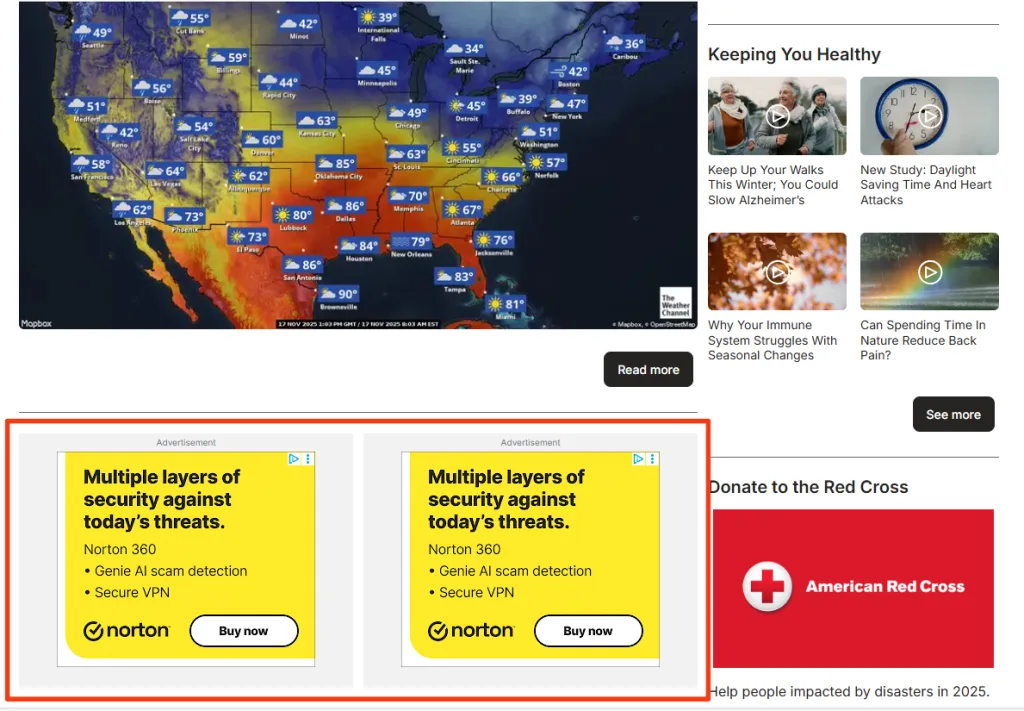
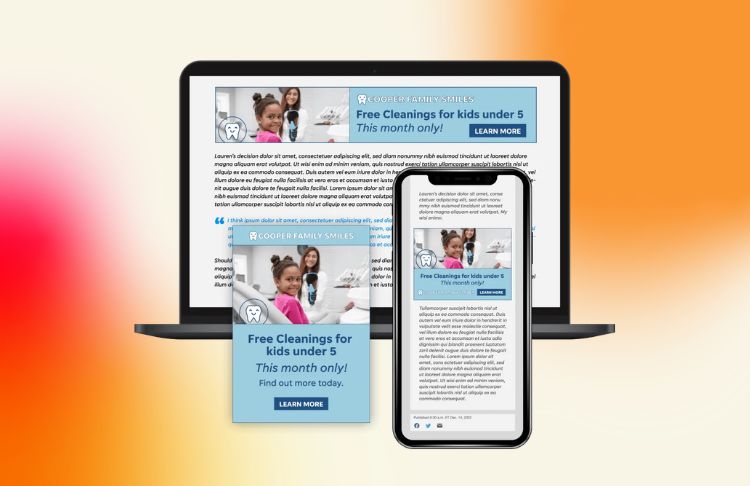
A simple display ad example.
Unlike search ads, which target users actively looking for something, display ads reach audiences where they browse. They rely on targeting data like demographics, interests, or browsing behavior to serve relevant ads to the right audience at the right time.
🛑 Are your Google Ads performing at their peak? Get an instant audit from the Free Google Ads Grader to find out.
How does display advertising work?
Display ads work by tracking users who exhibit specific online behaviors or belong to certain demographics, enabling you to target your ads to the ideal audience for your business.
You’ll typically work within a display ad system, like Google’s Display Ad Network. Those platforms then show your ad to your pre-determined target audience on websites within their network.

A local grocery store ad which was featured on a national news website.
When running display advertising, you pay when someone clicks on your ad (like in search advertising) or once you reach a certain number of impressions (views of your ad). This is because display ads show passively instead of only in response to a search, so they usually get more eyeballs on your ad than a search ad would.
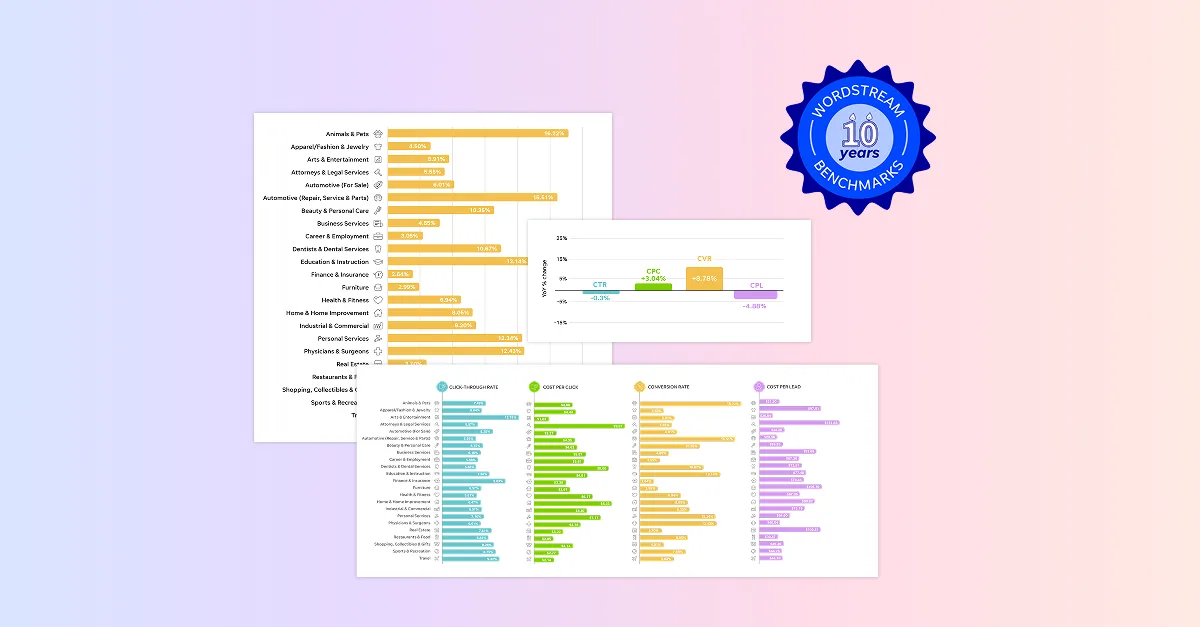
👀 How do your display ads stack up to the competition? Find out in our Display & Video Ads Benchmarks.
What are the common types of display ads?
There are many types of display ads. They differ either by their appearance, how they’re targeted, where they show up, or some combo of these elements.
Banner ads
Banner ads are simple, general awareness advertisements that you can implement to expose your brand and familiarize searchers with your business. If you have a specific message you want to send to a targeted audience, a way to drive visitors to your website, or just want to get your name in front of potential customers, utilizing banner ads is the way to go.

A standard banner ad example.
Responsive display ads
Responsive display ads automatically adjust their size, format, and appearance to fit different devices and placements. Common in Google Ads, they dynamically mix text, images, and logos.
Video ads
This type of display includes a short promotional video that plays on websites, apps, or social platforms to capture attention and tell a brand’s story. It combines motion, sound, and visuals to capture attention.
Native ads
Native ads differ from other types of display ads because they are designed to blend in with the surrounding content, rather than stand out. When you see ads that look like news stories at the bottom of an editorial article, those are native ads.

Native ads, like these, appear to be additional news articles, but they are actually sponsored ads.
Remarketing ads
Remarketing ads are a type of display advertising that target people who’ve already visited your website or interacted with your brand online. They use tracking data like cookies to show tailored ads across the web. Their goal is to remind visitors to return to your website, complete a purchase, or take some other action.
What are the advantages and disadvantages of display advertising?
Display ads can introduce your brand to people who aren’t aware of it yet. But they can also be seen as interruptive. Consider these advantages and disadvantages of display ads to help strike the perfect balance between generating interest and being annoying.
Advantages of display advertising
Display ads have been around for a long time for a reason. They’re helpful because they:
- Are great for brand awareness: Display ads don’t wait for your customers to search for your brand. They can show up where people browse, leading to a brand awareness lift (of 12% from this research).
- Make a quick impression: Display ads use visuals to convey your message quickly, meaning even if people don’t click right away, they may process and remember it later.
- Can increase conversions: Retargeting ads, a common type of display ads, have been known to increase conversions by 70%.

A display ad with a simple but compelling message.
Disadvantages of display advertising
It’s essential to understand the drawbacks of display ads so you can apply them for the right reasons. Remember that display advertising:
- Often has a low click-through rate: Search ads respond to user intent, while display ads are usually shown to people who aren’t actively looking for your solution. That leads to display ads having a lower click-through rate than search ads.
- May not be consumers’ favorites: 70% of consumers say they find digital advertising annoying or unpleasant. While this isn’t just about display ads, they can be a common culprit.
- Can be blocked: Ad-blocking software can block many types of display ads, whereas most search ads aren’t stopped by those filters.
The key to using display advertising in a way people don’t hate is to make your ads as relevant to your audience as possible. We’ll show you how to do that coming up.
How do you buy display advertising?
As an advertiser, you have options in how you buy ad space and where you buy it from, like:
- Buying direct: You can negotiate directly with a website or media publisher to place your ads on their site. This usually involves fixed pricing (like a fixed cost per thousand impressions) and guaranteed placements. This is best for high-visibility campaigns or premium sites.
- Buying from an ad network: In this option, you buy ad inventory through an ad network like the Google Display Network or the Facebook Display Network, which gives you access to many websites. You target ads based on viewer demographics and behavior or keywords instead of targeting specific websites. Display networks offer scale and convenience but less control over exact placement.
- Buying via programmatic platforms: Programmatic platforms, also known as demand-side platforms (DSPs), let you purchase ad impressions in real-time through auctions. With programmatic ads, you get access to inventory from multiple ad exchanges. Use this option when you want to scale beyond even the large networks offered by Google, Meta, and Microsoft.
- Through a marketing partner: Your marketing partner runs the purchase of display advertising for you. These partners have expertise in optimizing the placement process, and they have access to a range of ad networks, making sure your message reaches its intended audience at the most efficient price possible.
🤓 Boost the return on your Microsoft and Google Ads! Download The Fool-Proof Guide to Smart Bidding (+How to Get Started Fast)
5 elements of a successful display ad
You’ll want to give your display ads the best chance of generating lots of awareness and clicks. To do it, make sure they include these elements.
1. A landing page optimized for conversions
The landing page is where your visitor lands after clicking one of your ads. The best ones provide a visual and informational connection to your display ad. That lets people know they’ve landed in the right place.
A great landing page will also give them a compelling reason to stay on your page and take another step, like making a purchase, registering, or downloading an ebook.
Here’s the landing page you’d find if you clicked the Capital One ad we shared before. How the copy offering “Real rates. Real payments” ties into the ad copy “Qualify in minutes…”

A landing page with clear copy and a compelling CTA
2. Targeting that reaches your actual customers
Once you identify your target audience, you can create display ad campaigns that specifically target those people, whether by geography, interests, or online behavior.
You can, for example, choose to have your ads served to people who are local and have shown interest in competing products. Audience targeting is quite flexible, allowing you to identify your most likely buyers and focus on capturing their attention and purchases.
3. Stand-out design and copy
Designing ads that stand out sounds fairly simple, but it’s actually an area where many businesses miss valuable opportunities.
Start with the most important elements, which are the basic components of your visual branding: your logo and the fonts and colors you’ve chosen to represent your brand. Staying consistent in using these elements helps build public recognition of your brand and its values.
In small spaces like banner ads, a clean, uncluttered design is most effective, so think about how you can let your visual branding do most of the “talking,” and use as little text as possible. This example uses a modern design as the backdrop of its technical message.

Give a short, attention-grabbing explanation of why someone should accept your invitation, and leave it at that.
4. A CTA that motivates action
A call to action (CTA) is an absolute must in display advertising because, without that nudge to take another step toward conversion, you’re really just showing people a nice picture that they will forget almost instantly. The most effective CTAs work because they don’t simply “call” viewers to action, but actually create a compelling reason to take it.
Three of the most basic and proven ways to create that urge are to:
- Show them the benefit of clicking with a simple statement: Consider options like “Sign up for a free trial,” “Get your free information guide,” or “Schedule a complimentary consultation.”
- Use design to point the way: Use a clear, bold font, minimal text, and colors that highlight the offer while staying in harmony with your visual branding.
- Make it obvious where you want the viewer to click: Include a button that contrasts with its surroundings and label it something like, “Yes, I want a free ebook!” or “Sign me up!”

This display ad has a strong, contrasting CTA button and a clearly defined action.
5. A sound tracking system that shows results
To understand the success of your display advertising campaign, it is essential to know which metrics are most important and how to track them effectively. We’ll dive deeper into this next, but for now, just note that it’s critical to getting the most out of display ads.
How to measure display advertising success
To measure the success of your display advertising, track the metrics that best align with your specific goals and business objectives. These are the most common and influential metrics to consider:
- Impressions: How many times your ad appears on a page that is being viewed by a potential customer.
- Click-through rate: The ratio of people who click on your ad to the total number of people who saw it.
- Conversion rate: The ratio of people who took a desired action (buy, download, subscribe) to all the people who clicked your ad.
- Cost per click: This is the amount you pay each time a user clicks on your ad.
- Cost per acquisition: The total cost of the campaign divided by the number of people who converted (meaning, they completed your desired action).
You can use these metrics to refine and re-optimize your display advertising strategy. For example, if you’re getting a lot of clicks on your display ads but not many conversions, that’s a sign that you should update your landing page. If you’re getting a lot of impressions but not many clicks, that indicates that either your offer isn’t compelling enough or you need to refresh your ad creative to make it more appealing.

Updating your display ad creative can significantly boost your click-through rate.
5 brilliant display advertising examples
It takes a lot of creativity to create display ads that grab the attention of the right people when they’re focus is elsewhere. These examples do that and more. Use them to guide your next campaign.
Amazon keeps it simple
A successful display ad doesn’t need to be flashy. It just needs an interesting offer clearly stated.
This Amazon ad doesn’t have any theatrical video or unexpected animation. It simply provides two benefits that Amazon shoppers would enjoy and gives an unmistakable CTA button.
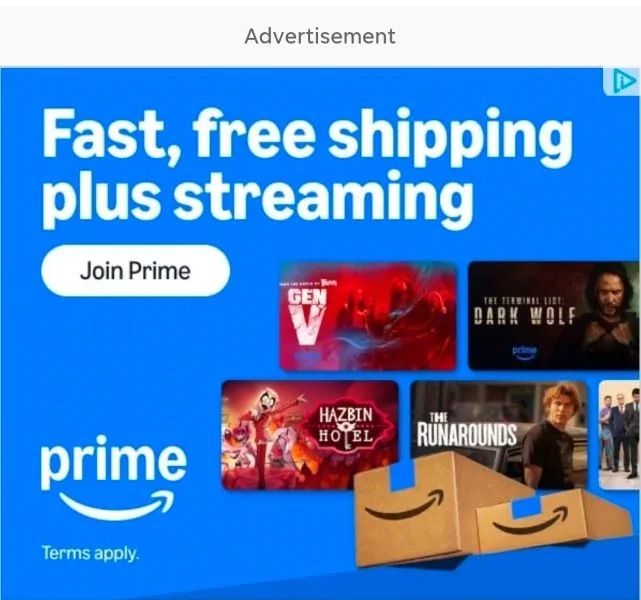
Notice also the power of branding here. The color and Prime logo connect the ad to Amazon, even without the business’s name being used.
Vanguard makes it human
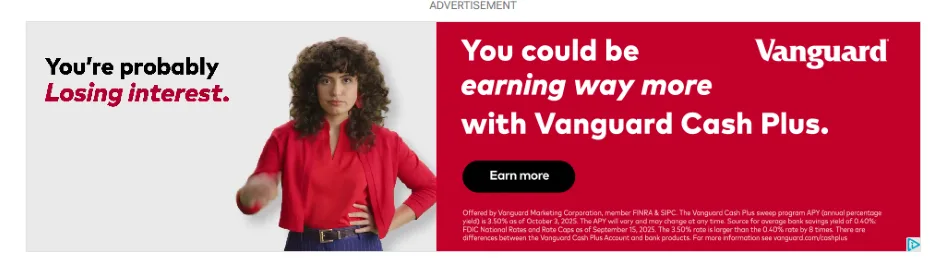
People connect with people more than brands. That’s why you see so many ads include a human in their images.
Vanguard understood the assignment. Yes, this ad’s copy is great at instigating FOMO (losing valuable interest isn’t good). But they include video of a woman motioning along with the copy. Seeing a person moving on your screen is more likely to snap you out of browsing other content.
McDonald’s shows you where to go
Display ads are great at stoking a new need. They can pop up and suggest what to have for lunch while you’re reading an article about food-based travel.
McDonald’s knows that the next question will be, ‘Where can I get it?” Their genius display ad includes an interactive map. Click it and it’ll show you the closest Micky-D locations.

Dexcom tells a story with animation
You don’t have a lot of time to make your case in a display ad. You need to be creative if your value proposition is novel or more complex.
Dexcom G7 is a glucose monitoring system. Its ad starts with a clever animation that makes viewers want to know what happens next. It morphs into a video of a human similar to the animated character. It’s a great way to hook viewers, tell a story, and bring it back to the real world.

Dayforce makes it relatable
If an ad tries to appeal to everyone, it’ll probably appeal to no one. This is especially true for display ads. You need to identify your ideal customer so you can show them something familiar that keeps them from scrolling.
Dayforce offers its human capital management solutions to a very wide range of businesses. It chose to highlight one segment, restaurants and chefs, in its display ad. Sure, this might leave accountants and pediatricians out, but it’ll grab the attention of restaurateurs struggling with payroll.

This is where great targeting comes into play. Dayforce could target people who shop for restaurant equipment or who search for other solutions important to restaurant owners. That will help keep their click rate up and their cost per acquisition down.
Get started with display advertising
Display advertising catches all those consumers who aren’t yet actively searching for what you sell. It can generate awareness for your brand, introduce you to new customers, and drive significant traffic and leads from websites across the internet.
It can feel a little intimidating to manage at first, though. Use this guide to get started. Test a few ads. Try some different variations. And track your results. You’ll quickly find what works best.
If you’re ready to scale your display advertising results, reach out, and we’ll show you how our digital marketing solutions can help.

Recommended for you




Unlock your business potential
We offer innovative technology and unparalleled expertise to move your business forward.