


Search ads, social feeds, inboxes—your competitors are everywhere…they’re getting seen, but are they getting noticed?
Marketers use these channels for a reason. They’re reliable ways to reach potential customers and drive leads. But, on the other hand, these channels have gotten so common and competitive that it’s hard to stand out.
The brands we’ve seen pulling ahead of the competition are showing up differently, expanding beyond their core channels to find the overlooked, high-impact places where attention is still up for grabs.
In this article, we’ll explore lesser-used marketing channels and how they can help you cut through the noise, capture attention, and drive stronger results.
Underused marketing strategies that drive real results
So, where are these overlooked opportunities hiding?
They’re not always the newest or most talked-about channels, but they’re places where attention is still available, trust is high, and competition is often lower. When used strategically, they can help your brand stand out in ways traditional placements alone can’t.
Digital news ads
Trust plays a bigger role in marketing performance than many people realize. Audiences are constantly exposed to content, so where your message shows up can make as much of a difference as what you’re saying.
Platforms like local news sites and national publications offer something that’s harder to replicate elsewhere: built-in credibility. Audiences on these platforms are actively reading, learning, and engaging, and when your brand shows up in those moments, it benefits from the trust already established with that audience.
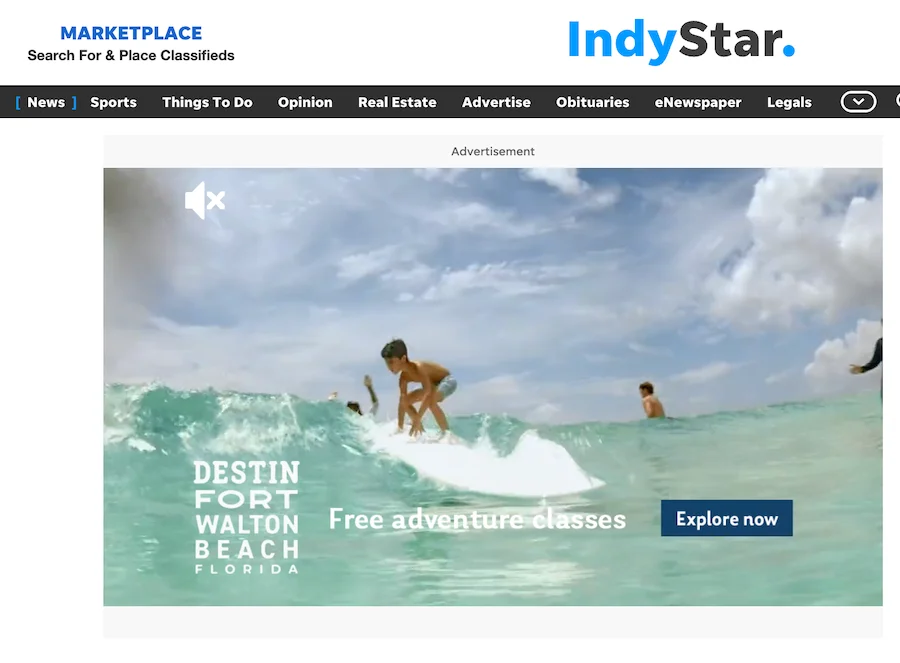
This is called the halo effect: When the credibility of the surrounding content carries over to your brand. In other words, it’s not just that your ad is seen, it’s seen in a context that makes people more likely to trust it.
Despite this, many businesses still overlook these channels when building their marketing plans. People still believe that they’re “old school,” but utilizing these channels can be just as strategic and impactful as any other digital channel.
A few simple ways to get started here:
- Test placements on local (or national) news outlets your audience is already engaging with.
- Make sure your messaging aligns with the content around it.
- Use advanced targeting options to reach the right audience.
✅ Free guide >> 6 Simple Steps to a Complete Small Business Marketing Plan (+Template!)
Direct mail (yes, really)
While so much of marketing has shifted online, something interesting has happened along the way: People don’t get as much actual mail, in their actual mailboxes.

With fewer brands competing for space, physical mail stands out. In fact, direct mail response rates average around 4.4%, compared to just 0.12% of email, which says a lot about what happens when you’re not fighting for attention.
Direct mail today looks a lot different than it used to. It’s highly targeted, personalized, and backed by real data, so you’re not just sending something out and hoping it sticks.
These campaigns can be tailored to specific audiences, triggered by behaviors, and even connected to your digital strategy through tools like QR codes, personalized URLs, and retargeting.
When combined with digital channels (like search and social), direct mail can strengthen your strategy. It puts the touch in touchpoint, leaving a tangible impact on your audience.
If you’re thinking about testing out direct mail, try:
- Pairing your mailer with a clear next step, like a QR code or personalized URL.
- Keeping the design simple and visually engaging so it stands out immediately.
- Following up digitally with retargeting ads to reinforce your message after it’s seen.
Location-based intent targeting
Sometimes, the most powerful time to reach someone isn’t when they’re scrolling—it’s when they’re strolling (haha) out in the real world, actively making decisions. That’s where local and behavior-based targeting come in.
Solutions like geofencing make this possible, allowing brands to target specific locations—even down to the household level—and then continue the conversation across channels like display and video after that initial interaction. This approach focuses on reaching people based on where they are and what they’re doing in real time.
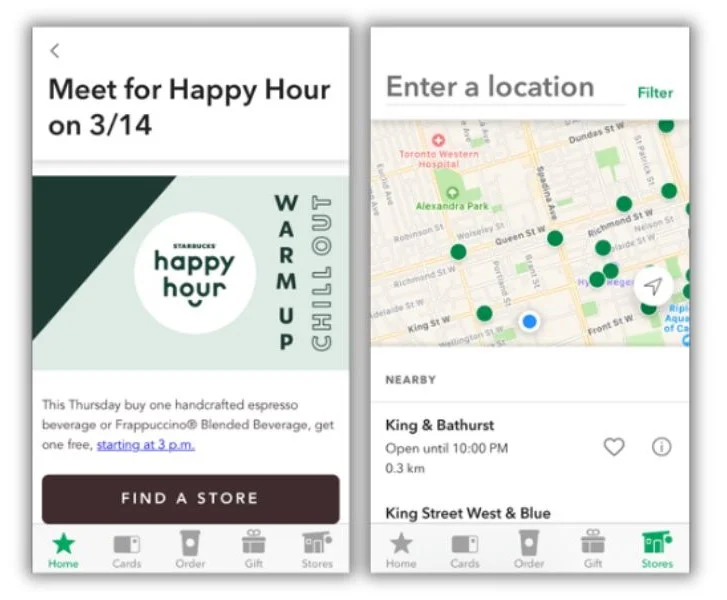
Despite its effectiveness, many brands still overlook this strategy. It often requires more advanced setup, like geotargeting or device-based data, which can make it feel more complex than traditional digital campaigns.
But the payoff is hard to ignore.
When your message aligns with a real-world moment, it becomes instantly more relevant, and relevance drives action. Instead of interrupting someone’s day, you’re showing up within it when your brand is most likely to be considered.
Timing is the name of the game here: The right message delivered at the right place at the right time.
If you want to test this strategy, start simple:
- Target around competitor locations, local events, or high-traffic areas your audience already visits.
- Use follow-up ads across display or video to stay top of mind after that first interaction.
- Track which locations drive the strongest engagement so you can refine your strategy over time.
Quick scheduling tools
The brands we’re seeing rise to the top know that conversion is about speed, convenience, and follow-up.
Think about how often a potential customer is this close to converting. They clicked on your ad, they’re interested, they’re on your site… and then they hit a wall. A long form. A “we’ll get back to you” message. A vague contact page.
That friction? It’s costing you.
Quick scheduling tools solve for this in a really simple way. Instead of asking someone to fill out a form and wait, you’re giving them the option to book time instantly, right when their interest is highest. No back-and-forth, no delay—just a clear next step.

In action, this looks like:
- Adding a “book now” or “schedule a call” button directly on product pages.
- Embedding a scheduling tool on landing pages to reduce clicks and time.
- Offering flexible options (quick call, demo, consultation) so it feels low-commitment.
At the end of the day, people don’t want to wait. The brands that make it easiest to take that next step are usually the ones that win the business.
💗 We put together lead generation ideas for you! Free download >> The Definitive Guide to Lead Generation
Why these lesser-used marketing strategies are essential
We see an insane number of ads (upwards of 10,000 ads a day), so it’s not enough to simply show up. You have to show up with intention, and ideally, with a little bit of an edge.
Core channels like search, social, and email are still critical to any marketing strategy. But as competition grows exponentially, brands need to think more holistically about how and where they engage their audience.

Brands that win are thinking about more than just visibility. They prioritize relevance, timing, and trust because that’s what actually drives action.
1. They align with mindset, not just placement
Marketing strategies like display ads, geofencing, direct mail, and online scheduling work because they meet consumers in the right context. Whether someone is actively reading, researching, or exploring options, these environments naturally support deeper engagement.
Native and content-driven experiences, in particular, have been shown to drive higher engagement than traditional display ads, as much as 3X higher click-through rates compared to standard display.
2. They reduce competition for attention
As more businesses invest in the same high-traffic channels, standing out becomes harder and more expensive. Expanding into less saturated placements can help your message break through more effectively without competing against the same volume of noise.
3. They reach audiences at the right moment
It’s not just about where you show up—it’s also about when and who. Businesses that connect with audiences actively researching or comparing options are more likely to drive action than those reaching passive scrollers.
In fact, brands using three or more channels see up to 287% higher purchase rates, highlighting the impact of a more diversified, well-timed approach.
What the most effective marketing strategies have in common
The businesses seeing the strongest results right now aren’t necessarily spending more—they’re approaching their strategy differently.
Instead of relying on a single channel or doubling down in the same crowded spaces, they’re building more connected, intentional marketing ecosystems. Ones that prioritize not just visibility, but relevance, timing, and trust.
That means combining multiple approaches most of the time:
- Using intent signals to reach audiences when they’re actively researching or ready to act.
- Showing up in trusted environments that reinforce credibility.
- Mixing it up with physical and digital touchpoints to capture attention in different ways.
- Tapping into real-world context to deliver messages at the right moment.
Individually, each of these strategies is effective. But together, they create a more seamless and impactful experience, one that meets customers wherever they are in their journey.

Recommended for you




Unlock your business potential
We offer innovative technology and unparalleled expertise to move your business forward.