


Sure, marketing is changing. And of course, AI is the biggest disruptor. But what does that really mean? And how are marketers making it work to their advantage?
I was curious about how successful pros in our industry are experiencing the actual shifts we’ve all seen. Not on a theoretical level, but in tactical, practical ways that impact how they do their jobs (and how they might help us all do ours).
So, I asked seven experienced marketers from a range of disciplines:
- What is one marketing trend you’ve seen take shape in 2026?
- What’s one action businesses can take now to leverage that trend for success in the second half of the year?
Here’s the big (and, IMO, very cool) theme that permeates throughout: Marketers are talking less about scaling their work with AI and more about how human creativity and experience can elevate it.
And even better, we’re seeing platforms like Google and LinkedIn support the move with new guidelines and features.
If you’ve felt a bit of whiplash trying to track everything that’s changed this year, take a deep breath and read what these pros had to say. It’s both insightful and comforting.
Contents
- Marketing fundamentals matter more than ever
- A little weirdness bests AI output
- AI is now an important audience
- Visibility everywhere is the new SEO
- Getting noticed by AI takes a human touch
- Influencers now influence SEO
- Cross-channel marketing is a must
7 ways marketing has evolved in 2026
Here are the biggest trends seven experienced marketers see happening and their best advice to turn them to your advantage.
1. Marketing fundamentals matter more than ever
I’m leading with this message from Fio Dossetto, brand and marketing lead at Float and author at contentfolks, because it sets an important context for every other trend on the list.
The gist is that no matter what new technology or behaviors bubble up, the foundational aspects of successful marketing still apply.
“Has marketing really changed in 2026?” Fio said. “We’ve obviously seen big shifts in where and how people find information (search vs. LLMs vs. AI Overviews), and we’re all deeply inside an AI echo chamber. But those are tactical shifts; the fundamentals of human behavior that marketing tries to influence haven’t moved in hundreds, if not thousands, of years.”
Whether you’re building a host of Claude skills that fully automate blog post production, or you type out each and every bit of copy, one keystroke at a time, you have to start with what moves people.

Stories, trust, and personal relevance still matter, no matter the marketing method.
“We’re still moved by stories, we still (mostly) buy from folks we trust, and we still make decisions with emotion and post-rationalize them with logic.”
How can you use this trend?
While you can’t ignore new channels and technology, you have to address them with a baseline of marketing-first principles.
“A lot of marketers think they need to constantly go chasing the new and the timely, without having mastered the timeless underneath,” Fio said. “Of course, if we don’t understand how the market moves or what is currently relevant, we will struggle to keep a business afloat. But unless we understand what makes our prospects and customers behave as they do, no amount of tactics will make our marketing work, in 2026 or at any other point.”
It’s the ability to stay grounded while reaching for new opportunities that will win. “Most growth opportunities exist in the overlap between the timeless and the timely—the real job for us is finding a balance between the two,” Fio said.
💡 No matter how things change, you always need a plan. Download How to Create a Small Business Marketing Plan (The Complete Guide + Template)
2. A little weirdness bests AI output
Generative AI is a prediction machine. Its main party trick is correctly guessing what the next word (or image, or bit of code) is in a series. To be fair, it’s REALLY good at it. But when applied to marketing content, its output lands closer to the mathematical mean than an outlier that’ll get you noticed and remembered.
And here’s where Jillian Richardson, ghostwriter and founder of Make LinkedIn Weird, told me she sees opportunity.
“A big marketing trend I’ve seen in 2026 is the rise of content that plays in the face of AI,” she said. “For example, LinkedIn posts with bizarre humor or typos, billboards that look like a Microsoft Word doc, and hand-drawn logos that are a little shitty.”
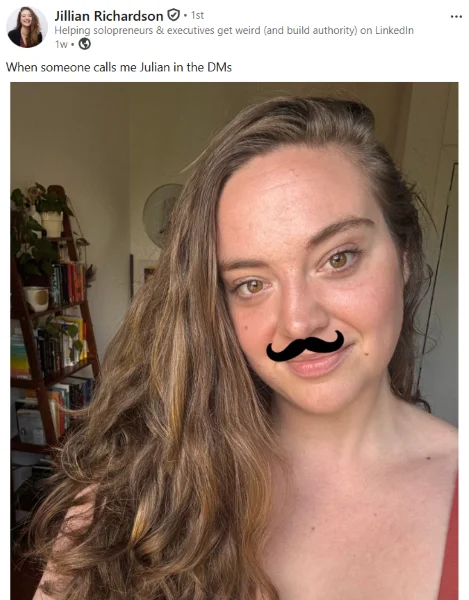
Jillian Richardson is leading a movement to make LinkedIn a little weirder in the best possible sense.
LinkedIn, in particular, is supporting this trend. It made moves to build a creator economy on its platform. It’s also recently released an option to flag content as “AI slop.” So you can expect its algorithm to give original, offbeat posts a boost.
How can you use this trend?
This may be my favorite trend because it reopens the creativity door that scaled AI content shut.
“Your company can leverage this trend by having more fun with your content,” Jillian said. “How can you make things a little messy? How can you incorporate humor? This is what’s shareable and memorable right now.”
A few businesses, like Duolingo, do this in their brand accounts. But most will find a faster route via employee-generated content. Followers will find that human-to-human connection and personal quirkiness more endearing than posts from a faceless brand.
3. AI is now an important audience
Search used to act like a librarian. You asked Google a question, it prowled the virtual stacks of available literature, and pointed out options to answer it.
With AI in the mix, search is more like an advisor that “reads” pages and answers questions for you. For Ann-Marie Burrage, Founder of Purple Octopus, that’s one of the most important evolutions marketers need to understand.
“AI is changing how people search,” she explained. “Instead of simply typing keywords into Google and clicking through websites, people are increasingly asking detailed questions and getting answers directly from AI-powered search results and tools such as ChatGPT.”
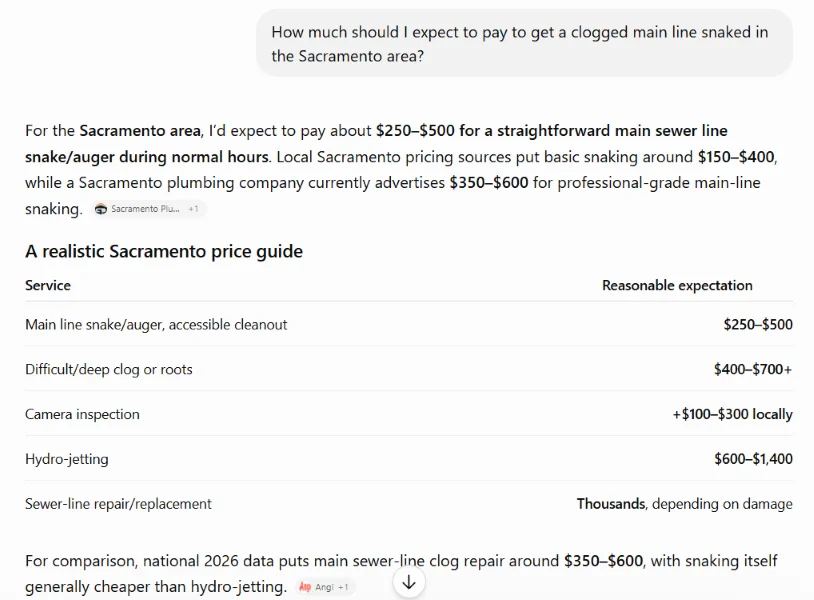
People ask AI more complex questions than they would traditional search.
It’s not just humans asking more and more detailed questions. AI systems complete what’s called a query fan-out, where they run searches on several related topics based on the single query entered (read more about how query fan-outs work here).
How can you use this trend?
As people get more comfortable with AI’s ability to provide complex answers, they’ll ask even more detailed questions and continue the conversation beyond an initial query. That shifts the job of content creators and marketers.
“Start creating content around the real questions your customers are asking,” Ann-Marie said. “Use Google’s ‘People also ask,’ autocomplete suggestions, and Google Search Console to identify those questions, then create genuinely useful content that demonstrates your expertise and gives your business a better chance of becoming the answer AI and search engines recommend.”
Here’s a primer on finding keywords that drive results in AI search.
4. Visibility everywhere is the new SEO
Search engine optimization is often focused on your website. It’s mapping keywords to sales pages and blog content. And it’s a lot of backend technical fixes that help algorithms understand your pages.
The big change Kelly Fillion, senior internet marketing consultant at LocaliQ, pointed out, is that getting found online now has a lot more to do with what happens outside of your site.
“More purchase journeys now start with AI recommendations, not search results,” she said. “If AI can understand and trust your brand to recommend you, customers are more likely to find and choose you too.”
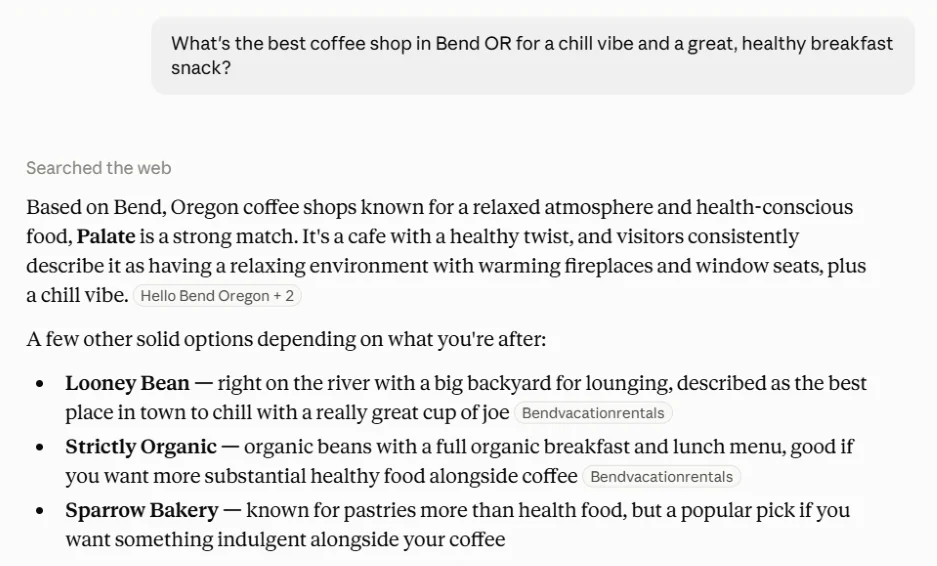
More people are seeing AI recommendations as they start their path to purchase.
AI learns differently than standard search algorithms. It’s far more capable at processing what’s said about your business outside of your website. “Those AI and language models look for information from around the web,” Kelly said.
So while on-page SEO is a great place to start, marketers are thinking a lot more about how their business is represented in other digital spaces.
How can you use this trend?
Kelly said this trend requires a different approach. “Stop thinking only about SEO and start thinking about visibility everywhere.”
She specifically called out the need to invest in content that offers real expertise on your site while building strong reviews and having accurate business data wherever it’s displayed, like in your business directory listings.
This is a tricky trend to tackle because there are so many moving parts. I’ve collected a few guides to help:
- 8 Google Business Profile Optimization Tips to Stand Out in Search Results & Map Listings
- 19 Best Free Business Listings Sites to Get Discovered
- 7 Ways to Get 5-Star Google Reviews (& Why It’s So Important)
🔎 Get found in AI search. Get The Complete AI Search Toolkit: Practical Strategies to Get Found by AI
5. Getting noticed by AI takes a human touch
The original narrative around AI search optimization was about chunking content and LLMs.txt files. But Goran Mirkovic, Senior Organic Growth Specialist at BX Studio, has tracked the GEO factors that matter and sees something different.
“The trend I keep coming back to is how much Google is rewarding content that reads like it was written by a real person who’s actually done the thing, not content built to rank,” Goran said.
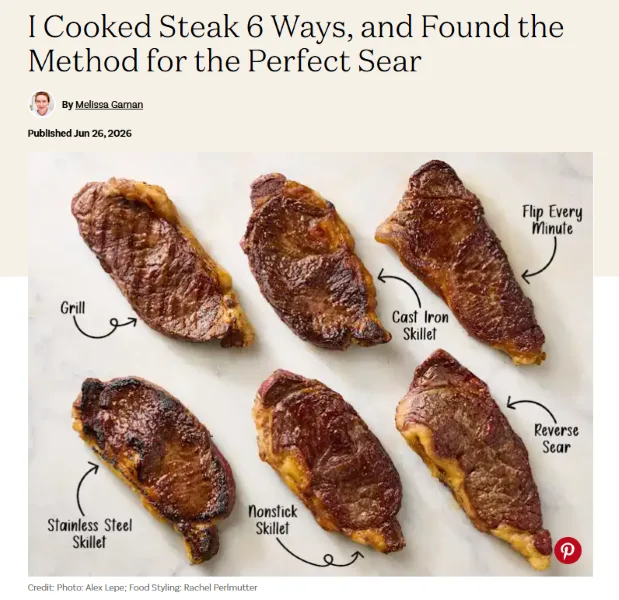
AI search rewards first-person experience.
He points to two recent developments that back his case. “Google expanded Preferred Sources into AI Overviews and rolled out new AI performance reports in Search Console within weeks of each other this year,” he noted. “Both point in the same direction: that Google is getting better at identifying which sites are actually trustworthy sources.
Google’s new AI Search guidelines confirm Goran’s point. The document says its AI systems prioritize “non-commodity content.” That is, content built from a first-hand account rather than a summary of existing advice that anyone can replicate.
“For content people, that changes the job,” Goran added. “It’s not enough to hit the keyword and structure the headers correctly anymore. You need first-hand experience in the piece, specific numbers, screenshots, a point of view someone could disagree with, the kind of detail that signals a human actually did the work.”
How can you use this trend?
Here’s an important point to remember: you don’t need to wait to create a piece of content. You can update existing assets for a quick boost in visibility.
“My advice for finishing the year strong is to go back through your best-performing pages and ask whether a reader would trust the person who wrote it, not just whether the page is optimized,” Goran said. “Add the details only someone with real experience would know, cut the generic advice paragraphs, and start checking your new AI performance data in Search Console alongside your normal rankings.”
6. Influencers now influence SEO
Influencer marketing has always been a solid strategy for engaging an audience in an authentic way. The right influencer can help you quickly build trust and affinity with a niche audience in a way that’s hard to accomplish on your own.
Through an interesting twist of marketing, it looks like those online personalities can also help you get noticed and mentioned by AI.
“According to Ahrefs, YouTube is the most cited source for ChatGPT,” said Colby Flood, Founder at Brighter Click. “YouTube also feeds into Google’s AI Overviews. Taking a step back, we are in the process of seeing a new avenue for influencer marketing. Aligning YouTube influencers’ content strategy into your SEO strategy can give a brand the opportunity to extend the value provided by an influencer’s content.”
A recent study we did over at WordStream backs this up. It showed that YouTube was the most frequently included source in AI Overviews.
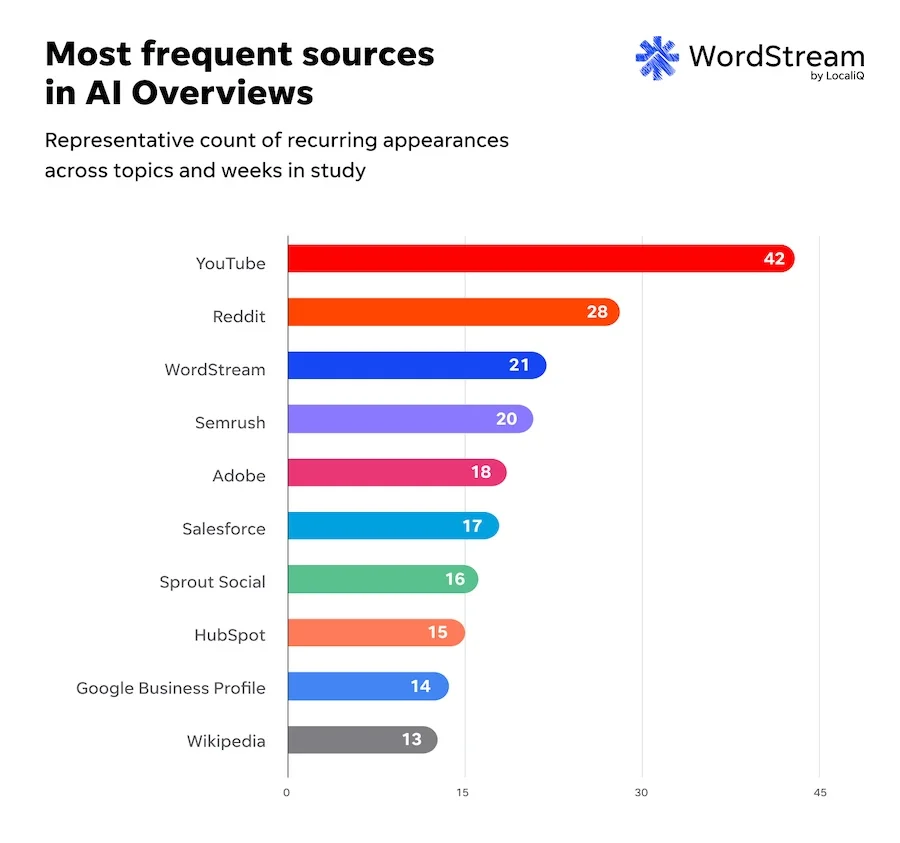
Here’s how that shows up in the real world. Ask Google for the best skincare routine on a budget, and you’ll find links and a thumbnail from an influencer’s YouTube channel.

I found this trend really interesting. We’ve seen reports that AI search is keeping more clicks for itself. Colby’s observation shows that influencer marketing is actually an unexpected tactic to work alongside AI search results.
“Dedicated videos generated with titles, chapters/descriptions, and content based on SEO keywords with rankability can help push the brand’s name into mentions for AI Overview and LLMs,” he said.
How can you use this trend?
Among other things, AI seems to be blurring the lines between marketing disciplines even more than they were before.
“For businesses with active SEO and influencer marketing efforts, have your SEO team feed its current opportunities and objectives to the influencer marketing team,” Colby said.
Here’s where I see an opportunity for smaller, more nimble businesses. A large brand, where influencer marketing and SEO are somewhat siloed, may not be able to move quickly here. But a smaller team that naturally works across strategies (or even a marketing team of one) can shift their influencer program into SEO mode in a matter of days.
Colby said that success comes down to knowing where you want to end up before you try to get there. “Set clear expectations on goals to be met in terms of influencer post output and keyword coverage.” That will make sure you’re targeting real business outcomes while you work.
7. Cross-channel marketing is a must
The buyer’s road map looks a lot more like a plate of rice noodles than a traceable path between two points. In part, that’s because shoppers bounce around between social, search, in-person, and business websites to figure out what they want.
It’s also a result of the way AI search surfaces information. Depending on the query, you might get a link to a YouTube video or a Reddit post alongside a product or blog page.
“Customers are discovering, researching, and making decisions across search, social media, video, reviews, and AI-driven results,” said Jon Broughton, an account executive at LocaliQ. “We know marketing in 2026 takes more than one channel.”
You might generate initial demand through a display ad, build trust on social media, educate through your newsletter, and convert back on social with a shopping ad. “That’s why a full-funnel strategy matters more than ever,” Jon said.

Each channel has a job to do in your marketing funnel.
How can you use this trend?
Having such a non-linear path to purchase presents some challenges, for sure. But when coordinated, those touchpoints can build a moat around your brand so buyers don’t think about the competition.
“To finish the year strong, businesses should connect the dots from awareness to consideration to conversion,” Jon said. “The goal is to stay visible, build trust, generate quality leads, and make every marketing dollar work harder.”
We created a guide to cross-channel marketing that’ll help you coordinate your messaging across platforms so they work in sync towards the common goal of conversion (instead of simply overwhelming shoppers with the same messaging).
Stay on top of the changes in marketing
Staying ahead of all the new tools and rules of marketing feels like a full-time job these days. There are ways to make it a little easier.
First off, follow your favorite marketers on LinkedIn (like the pros in this article!). I find a LOT of education and inspiration from scrolling my curated feed of smart marketers each day.
It’ll also help to pick three or four marketing newsletters. I like a mix of those with original ideas and a couple that share content roundups.
And finally, give yourself a little grace. It is nearly impossible to know everything as soon as it happens. Focus on the bits that’ll have the greatest impact on your business, and expand out from there.

Recommended for you





Unlock your business potential
We offer innovative technology and unparalleled expertise to move your business forward.