


This year, the influencer marketing industry is estimated to reach a record of approximately $33 billion. That big number might seem like it’s representing big companies, and it is. But the good news is that influencer marketing is possible—and, more importantly, profitable, for small businesses, too. You just need to tailor your strategy to your business size.
In this guide, we’ll cover everything you need to know about influencer marketing for small businesses, like how it can work for small brands and budgets, and what you can do to start taking advantage of influencer marketing fast.
Contents
- What is influencer marketing for small businesses?
- What are the different types of influencer marketing?
- Why influencer marketing works for small businesses
- How to get started with influencer marketing
What is influencer marketing for small businesses?
Influencer marketing is a social media marketing strategy where businesses engage with people who have significant followings to promote their brand, product, or offering. This straddles the line between traditional ad spots and word-of-mouth marketing in the most effective way. Influencers already have engaged followers who are familiar with their content, their focus, and, in most cases, their trustworthy recommendations. Even though followers don’t know influencers in real life, their product links feel like word-of-mouth suggestions.

When you’re working with an influencer, you’re paying—or trading, more on this later—for this credibility. And, like traditional ad spots, you’re also paying for the reach. That’s why influencer is such an effective strategy. It’s no wonder we’re on pace for 86% of US marketers in companies with over 100 employees to work with influencers this year.
Companies with more than 100 employees might stand out there. According to the US Small Business Administration, companies with fewer than 500 employees are classified as small businesses. But day-to-day operations in a company with over 100 employees look different than a small but mighty team under 50, or even under 10. And at any of these sizes, influencer marketing can seem unattainable.
But keep in mind that, for small businesses especially, influencer marketing doesn’t mean working with celebrities or accounts that have millions of followers. In fact, micro-influencers and nano-influencers are often the most effective. Micro-influencers have 10,000 to 50,000 followers, and nano-influencers have fewer than 10,000 followers. These smaller (relatively, of course) accounts tend to have stronger relationships with their communities. Plus, the investment is lower.

📅 Download our free social media marketing calendar to brainstorm influencer content ideas for every day of the year!
What are the different types of influencer marketing? (By campaign type)
There are many different ways to run an influencer marketing campaign—which is great news for small businesses working with limited resources, whether that’s time, stock, or money. Here are some of the most effective campaign types for influencer marketing:
- Sponsored posts: This is the classic approach: You pay an influencer a set fee to create and share content featuring your brand. Even a single post or story can boost visibility if you choose someone whose audience aligns with your ideal customer.
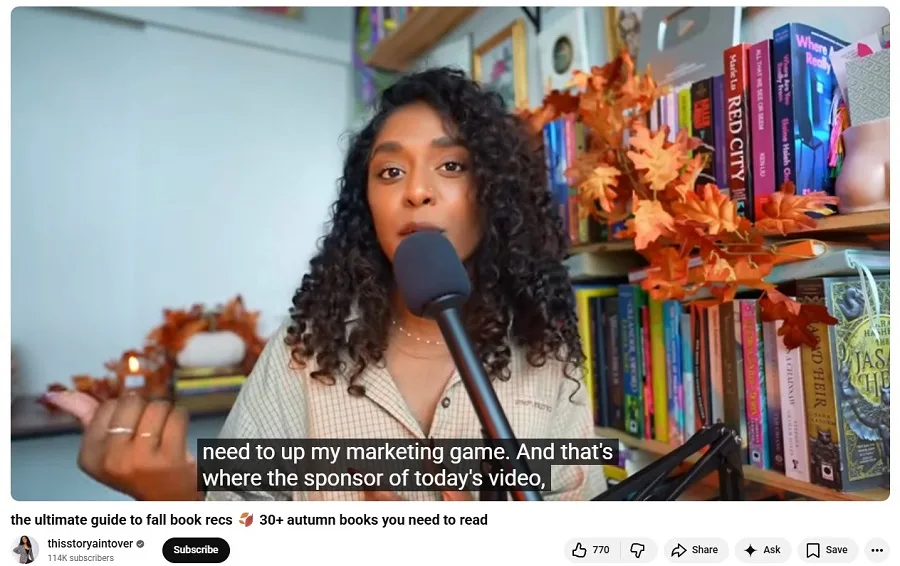
An example of influencer marketing in the form of a quick ad break during a YouTube video.
- Gifting: Another campaign type that’ll be familiar if you spend any time online. You provide an influencer with free products, services, or experiences in exchange for social posts or mentions. This is a great way to test out influencer marketing without a large budget, especially with nano or local influencers.
- Affiliate partnerships: Instead of paying or gifting upfront, you give influencers a commission on every sale they generate through a unique link or promo code. This model ensures you only pay when you get results, making it very budget-friendly.

The shower curtain is cute!
- Discount codes for followers: This is similar to affiliate partnerships in that there’s no upfront cost or goods. You can offer influencers a custom discount code for their followers, a reason to buy, and make it easy for you to track results.
- Giveaways and contests: Influencers invite their followers to enter the contest by liking, sharing, or tagging friends, which expands your reach and builds brand awareness fast.
- Pop-ups and events: Partnering with an influencer for an in-person event—like a pop-up shop, product launch, or workshop—can generate buzz both online and offline. The influencer promotes the event to their followers, building excitement and sending interested prospects your way. All while you get a chance to showcase your brand in a personal, memorable way.
- Product co-creation: This could be a limited-edition flavor, style, or collection, if it works for your business and makes sense for your brand. Co-created products are great because they not only generate excitement but also give the influencer a personal stake in promotion. Their names and likenesses are attached.
- Long-term ambassador programs: Instead of a one-off collaboration with any of the campaign types above, you can build an ongoing relationship with an influencer who genuinely loves your brand. They become a brand ambassador, regularly featuring your products or services over time—building trust and loyalty with their audience.
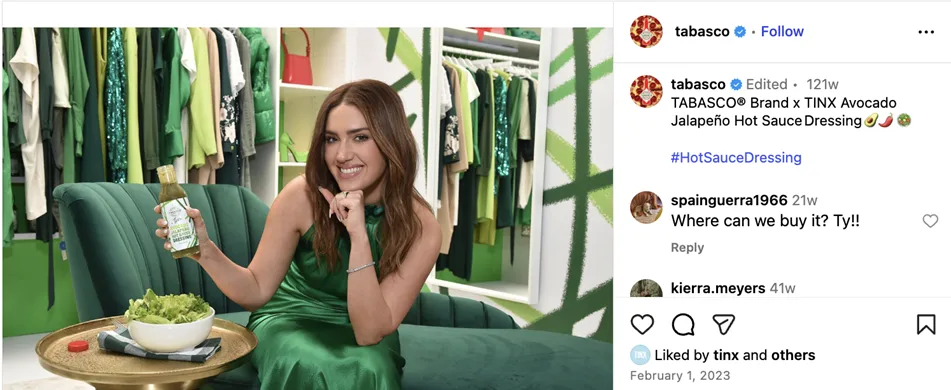
Influencer Christina Najjar, also known as Tinx, co-created a limited edition hot sauce dressing with Tabasco.
Why influencer marketing works for small businesses
Here’s how influencer marketing works for small businesses:
- Builds trust and provides social proof: When an influencer promotes a product or mentions a brand, it acts as a form of social proof—showing others that a trustworthy source thinks the product is reliable and worth trying.
- Expands reach to niche, engaged audiences: Influencers often have specific audiences who are already interested in a particular topic, lifestyle, or product category. Small businesses can tap into these communities, gaining exposure to potential customers who are more likely to be interested in what they offer. This reach is often more effective than broad, untargeted ads.
- Drives sales through authentic recommendations: When influencers genuinely like and use a product or service, their recommendations feel more personal than a standard ad. This authenticity helps drive sales, as followers are more likely to act on advice that feels like it’s coming from a friend—even an online, parasocial one—rather than a brand.
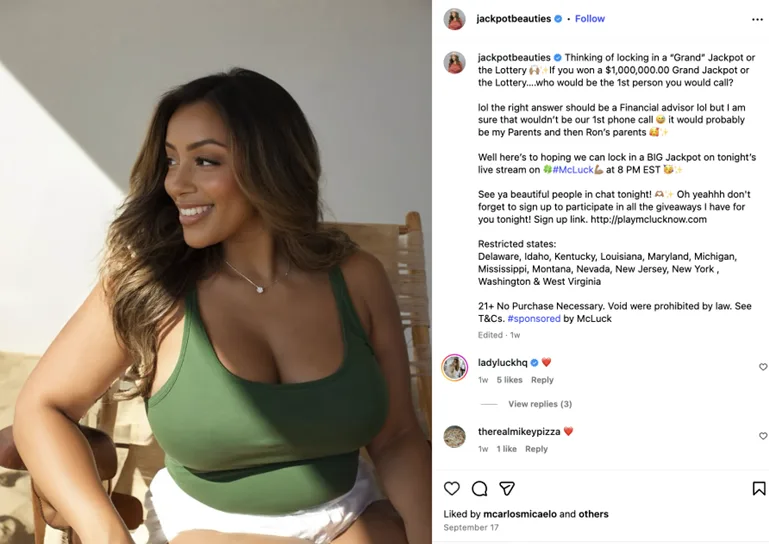
A sponsored post from influencer @jackpotbeauties.
🌱 Make a plan to grow your business using influencer marketing this year with our free, easy-to-use growth strategy template!
How to get started with influencer marketing
Getting started with influencer marketing can seem intimidating. The process of finding an influencer, engaging them, planning a campaign, following through—it’s overwhelming. There are a number of moving pieces to manage, and there’s a learning curve, that’s true. But the most successful campaigns for small businesses start simple. Think about setting clear goals, finding the right partners, and getting creative. And even better, you don’t need a significant budget or a fully stacked marketing team to test it out.
Here’s a brief step-by-step.
1. Define your goals
The first step is defining your goal. Are you hoping to build brand awareness? Drive traffic to your website? Increase sales for a specific product? All of these are great fits for an influencer marketing campaign, but they might look different. For example, it might be most effective to send gifts to multiple influencers in order to build brand awareness, while an affiliate partnership would be better for driving sales of a specific product.
Bottom line? Your goals will guide every decision you make, from which influencers you choose to how you measure success. Make sure you’re clear on the aims of this campaign before you get any further in the process.
2. Identify your target audience
Remember, for small businesses, it’s not just about finding influencers with big followings. It’s about finding influencers with the right audience. You need to know who your target audience is first.

A yarn store co-hosting a retreat with knitting influencers? Perfect.
That’s why your second step is to take time to understand who your ideal customer is and where they spend their time online. Are they active on Instagram or TikTok or YouTube? Do they follow lifestyle creators, local community pages, or niche experts? You need to know that in order to find the right influencers to work with.
3. Find the right influencers
Figuring out the right influencers to work with for your business is critical to the success of your campaign. For small businesses, micro (10K–100K followers) and nano (under 10K followers) influencers are usually the right targets. They’re often more affordable, more engaged with their audience, and more open to creative collaborations.
So how do you find them? Start by searching for hashtags relevant to your industry, your products, or your location. Check and see who your top customers are already following. Take a look at trending videos. Consider using influencer discovery tools, like Modash or HypeAuditor.
And remember to think of complementary focuses, too. Take this example below. The small jewelry brand Abbott Lyon gifted rings to the nail artist and influencer behind she_naild_it—a great way to highlight the rings and get in front of an audience likely to be interested.

4. Perfect your outreach
Okay, you’ve got your goals, your audience, and your short list of influencers. When you’re ready to reach out and engage these individuals, skip copy-and-paste DMs, as tempting as it might be to save time.
The first step is to check their profile and see what the best way to get in contact is. Many influencers work with agents or managers, and even more ask for partnership and marketing queries to reach out to a specific email address.
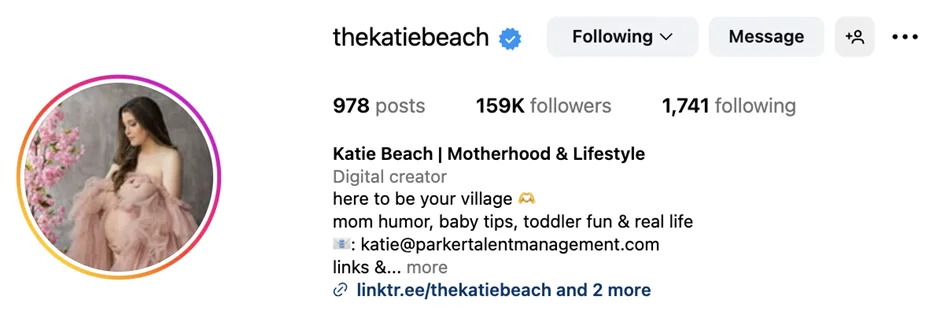
The specific email for partnership inquiries for the influencer @thekatiebeach is clear.
Once you’re clear on the outreach medium, whether it’s email or a DM, spend some time to ensure that your influencer outreach is personalized. Succinct, but personalized. Introduce yourself, explain why you think they’re a great fit for your brand, and outline what kind of collaboration you have in mind, which brings us to the next tip.
5. Set clear agreements
When running an influencer marketing campaign, setting clear agreements is essential to ensure everyone is on the same page and expectations are met. Start by outlining specific deliverables in a written agreement. This should include:
- The number of posts.
- The type of content (e.g., Instagram stories, Instagram Reels, TikToks, YouTube videos).
- The key messages that should appear in the campaign materials.
- The brand hashtags, guidelines, colors, and any other brand guidelines to follow.
When you’re talking through the partnership and drawing up the agreement, be as detailed as possible to avoid miscommunication. Set realistic deadlines for the campaign. Clearly state who owns the content, whether the influencer can reuse it, and if your business has the right to repurpose it for your own marketing, and, if so, for how long.
And finally, be upfront about disclosure requirements. Influencers are legally required to disclose sponsored content ( most often by using #ad, #sponsored, #affiliate, or #gifted), so make sure they understand and follow FTC guidelines. This is in your best interest, too.
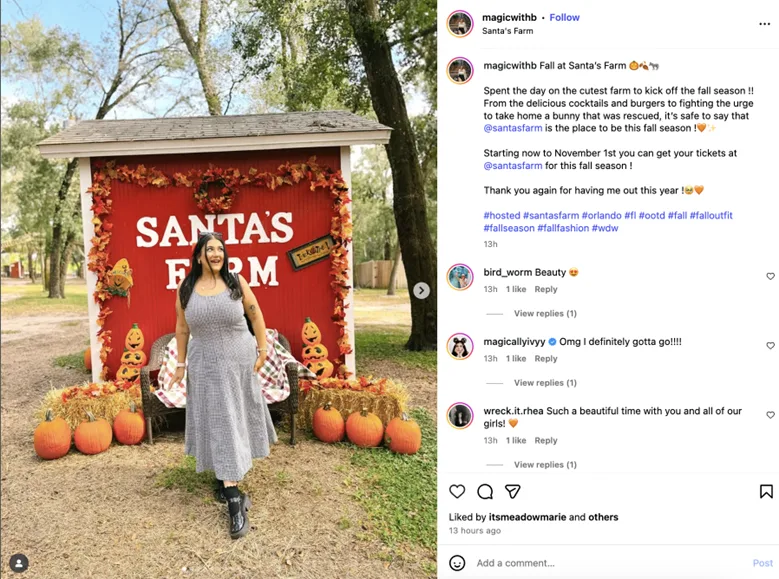
A hospitality business could offer #hosted or #gifted experience for an influencer marketing campaign.
6. Encourage creativity
When you’re working with influencers, you want them to use their authentic voice and style. This keeps the promotion natural, the partnership more collaborative, and, ideally, the campaign more effective.
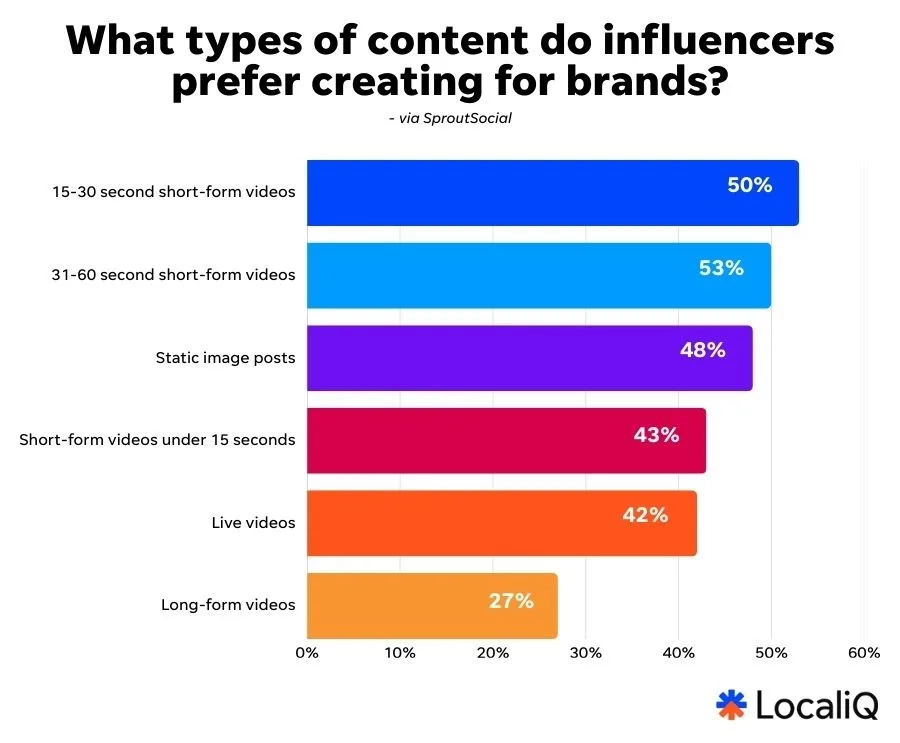
65% of influencers would rather be involved in conversations for product development or campaign creative early in the process, rather than get bogged down by a prescriptive brief. Influencers know their audience best, after all, and they have their own preferences as creators. Sprout Social found in the same report that 53% of influencers prefer to create short-form video content for brands.
7. Track performance
This one is simple, but it’s important: Set up ways to measure success before the campaign begins. The method depends on your campaign type and your goals. It could be a unique discount code, affiliate links, or tracking referral traffic to your website.
In some cases, this data may impact your partnership and payout to influencers. But it’s necessary to measure either way so that you can understand what’s working or what’s not, so you can improve future campaigns.
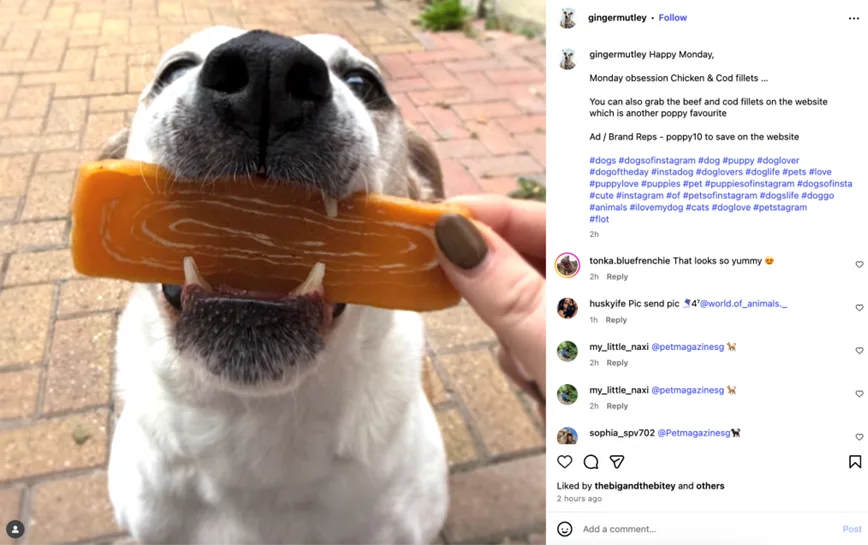
You’ll want to track affiliate links, like the ones here shared by @gingermutley.
8. Build long-term relationships
The most powerful results come when influencers repeatedly showcase your brand. If you find someone who is a great fit, generates solid results, and gets excited to work with your brand, consider turning them into an ongoing partner or ambassador. This type of long-standing consistency builds credibility and customer trust.
It could also save you money. 71% of participating influencers offer discounts for longer-term partnerships, and another 25% would consider doing so in the future. The discount makes sense—it saves influencers or their teams time on sourcing or negotiating net-new sponsorships. And it could leave you some room in your budget while getting better results. A win-win.

A great example of a co-hosted Instagram giveaway.
Make influencer marketing work for your small business
Influencer marketing can be a powerful tool to build brand awareness, drive sales, and connect with new audiences—even on a small business budget. As a reminder, here’s a quick recap of how your small business can get started with influencer marketing:
- Define your goals
- Identify your target audience
- Find the right influencers
- Perfect your outreach
- Set clear agreements
- Encourage creativity
- Track performance
- Build long-term relationships
Now, time to go get started partnering with influencers to grow your business. For more help with your influencer marketing strategy, see how our solutions can maximize your social media marketing and advertising approach!

Recommended for you




Unlock your business potential
We offer innovative technology and unparalleled expertise to move your business forward.