


A LocaliQ survey of over 1,800 bank account holders found that despite the challenging and changing economy, nearly half of consumers feel good or excellent about their financial condition. This was just one key finding in our finance study to uncover how people engage with, research, and make decisions about financial institutions.
LocaliQ’s 2026 finance industry study provides a deep dive into:
- How and where consumers are banking (spoiler: it’s mostly online).
- What drives bank switching, and what incentives are most appealing.
- The advertising tactics and messages that most resonate with them.
- And much more!
What we found is not only insightful information you can’t get anywhere else, but it can help build the foundation for your finance and banking marketing strategy. Here, we’re sharing the top takeaways from our study plus what they mean for your finance marketing.
Contents
- Findings from our finance and banking study
-
- Digital banking is now the default
- Many consumers are satisfied with their banking experiences (but they’re open to improvements)
- Younger generations are turning to online-only or app-based banks
- Younger generations are also more open to switching banks
- Major life events drive financial provider switching
- Incentives are key to enticing bank switchers
- Consumers are increasingly using multiple financial institutions
- Investment interest is growing, but risk concerns many
- Consumers turn to social media, video, and website content for financial research
- Consumers notice video and social media finance ads
- Finance advertising drives meaningful action
- Banking and finance ads should highlight brand reputation and transparent pricing and fees
- More finance stats to inform your marketing
- Finance marketing infographic
12 major findings from our finance and banking study (+what they mean for your marketing)
Let’s dive into the most important data to know from our study and what it means for your finance marketing strategy.
1. Digital banking is now the default
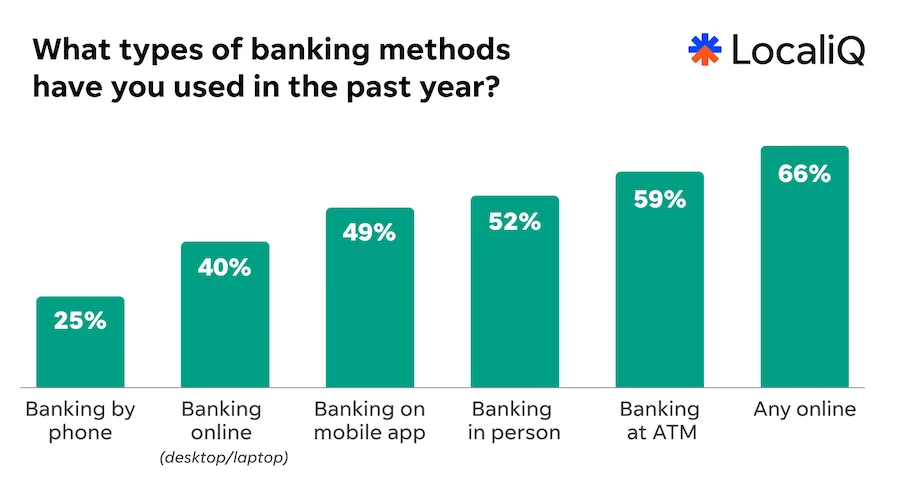
More people than ever are turning to online banking—66% of respondents said they used any form of online banking in the past year, including banking on a mobile or desktop device or through an app.
However, 59% said they visited an ATM and 52% said they banked in person, which means a physical presence is still important for many consumers.
What this means for your marketing
Consumers are performing almost all their banking activities online, including paying bills and checking their balances, so investing in a highly functional mobile-first experience for your financial institution is crucial.
2. Many consumers are satisfied with their banking experiences (but they’re open to improvements)
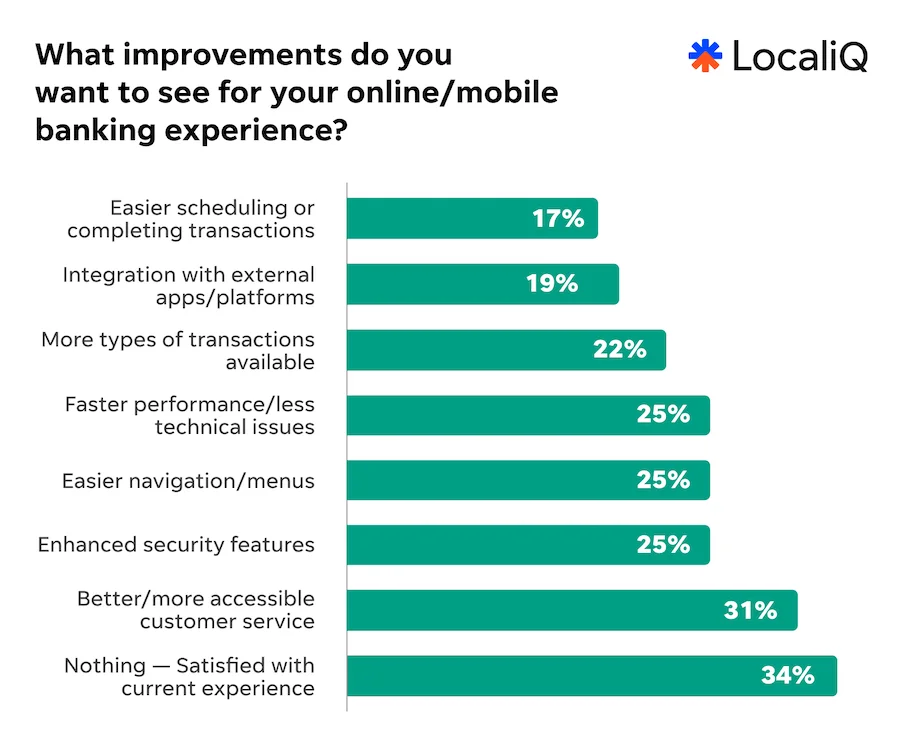
While many people (34%) are satisfied with their online banking experience, they’re also looking for better and more accessible customer service (31%), enhanced security features (25%), and easier and faster online experiences (25%).
What this means for your marketing
Prioritize the consumer experience and look for ways to not only improve your online banking features but highlight the improvements you’re making. If you can focus on these areas of importance for customers, you can potentially entice new banking customers or increase retention.
🤔 What are the biggest challenges businesses are facing? Find out that and more in our Small Business Marketing Trends Report.
3. Younger generations are turning to online-only or app-based banks
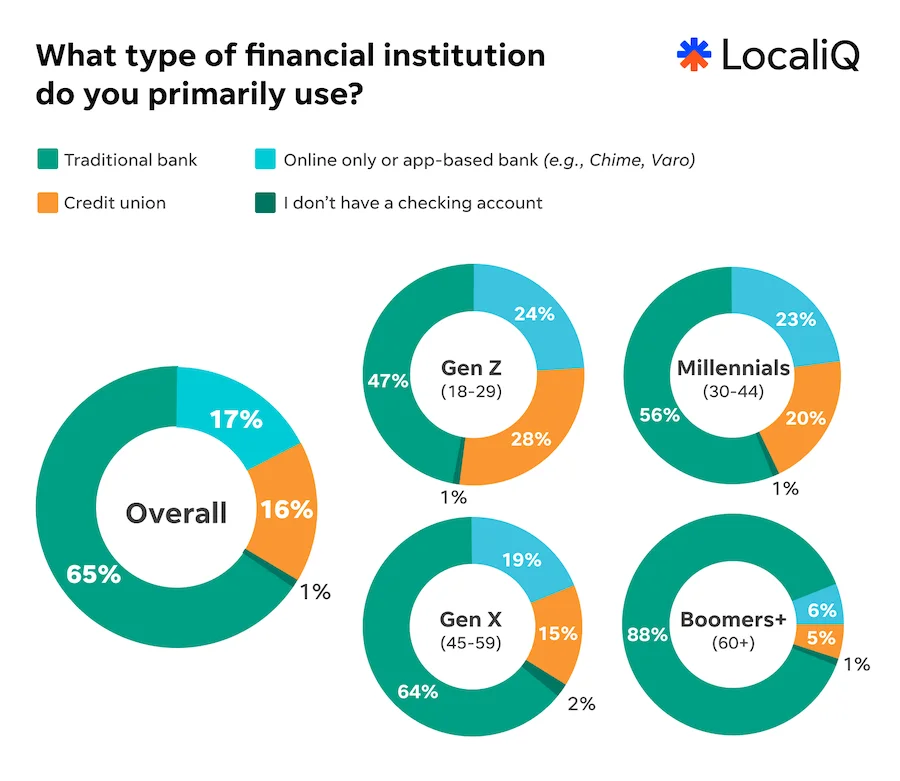
65% of respondents use traditional banks, but when we broke that down by age range, we found that Gen Zers are increasingly using online-only or app-based banks or credit unions (24% and 28%, respectively). Millennials are also increasingly turning to these financial institutions.
What this means for your marketing
If you’re marketing an online-only or app-based institution, then targeting Gen Z and millennials is a no-brainer considering this data. If you’re marketing a traditional bank, you may need to get creative to reach this audience, homing in on features like convenience and differentiating your bank from one that is online-only or app-based.
4. Younger generations are also more open to switching banks
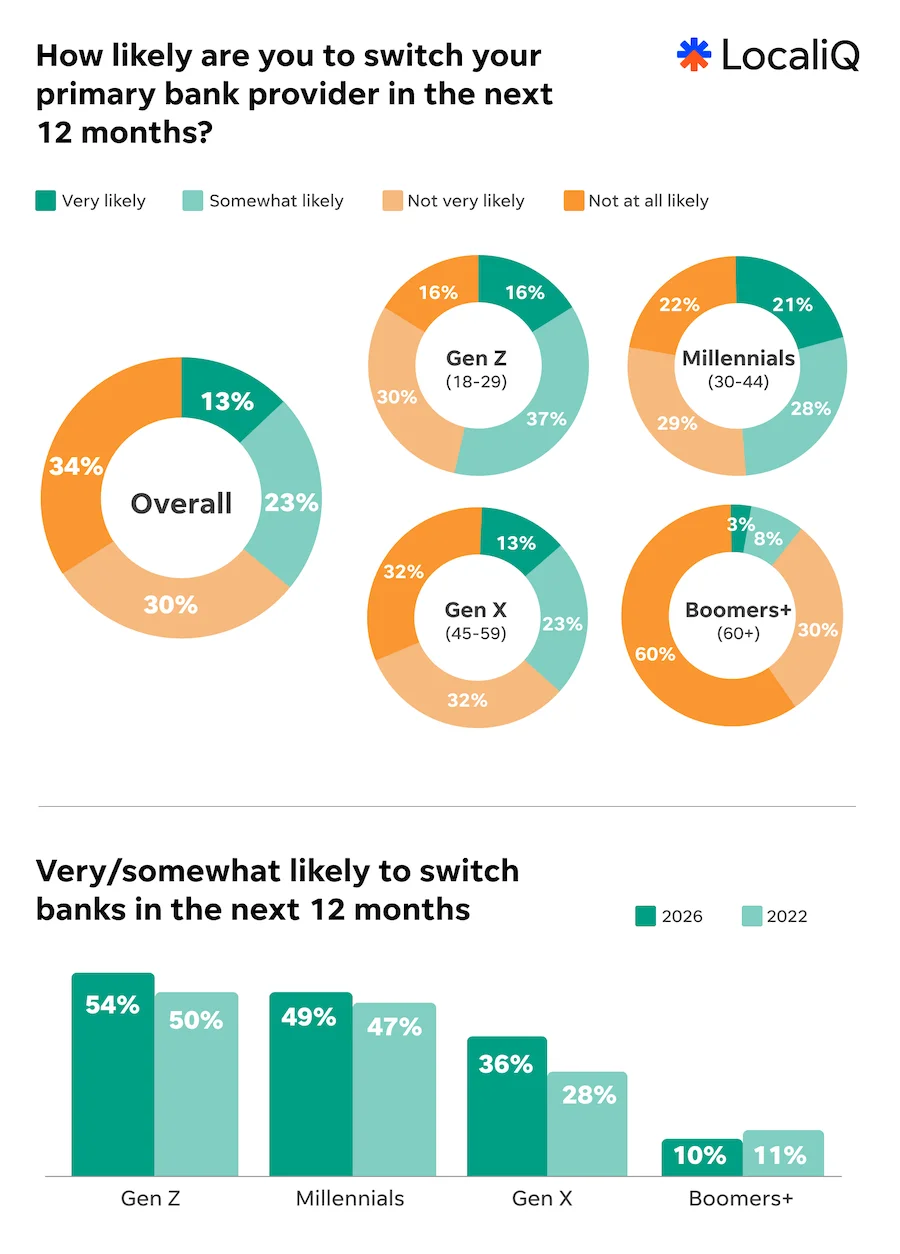
While most respondents overall aren’t planning to switch banks in the next year, younger consumers are most likely to consider a change, with 49% of millennials and 53% of Gen Zers saying they’re somewhat or very likely to switch. This has increased for all but Boomers since 2022.
What this means for your marketing
If you’re not targeting these younger generations with your finance marketing, this data proves that you should be. Millennials are big financial contributors who account for 28% of all US retail spending, and Gen Zers’ spending power is the fastest-growing in the world.
With these consumers open to switching financial providers, it’s important to focus on the times they’re most apt to switch and the incentives that best drive switching, which we’ll cover next.
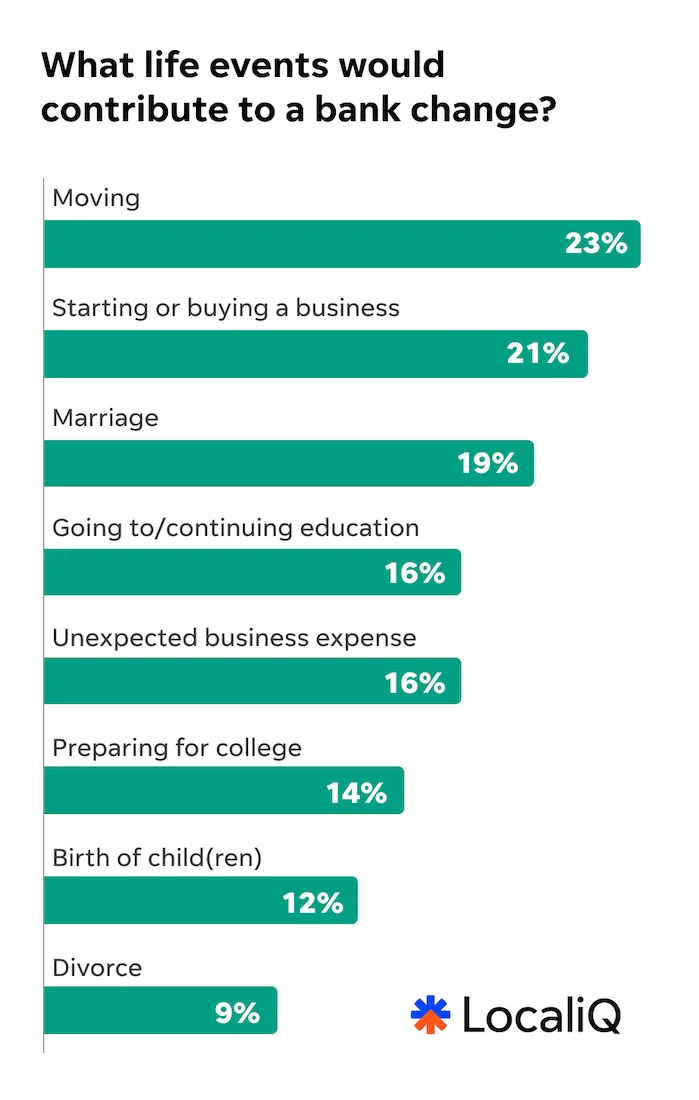
5. Major life events drive financial provider switching
The factors that influence changing banks are largely tied to life events, including moving, starting and/or buying a business, and marriage.
What this means for your marketing
This data aligns nicely with the generations that are open to switching. Millennials and Gen Zers are of the age to get married, move, and start or buy a business. If you can target them at the right time in their lives, you can increase your chances of being the provider they turn to.
Many advertising platforms allow you to target your ads by life event. This, coupled with the right messaging, can improve your chances of finding new or ready-to-switch customers.
6. Incentives are key to enticing bank switchers
The factors that drive bank changes include no monthly fees, no ATM fees, and higher interest rates.
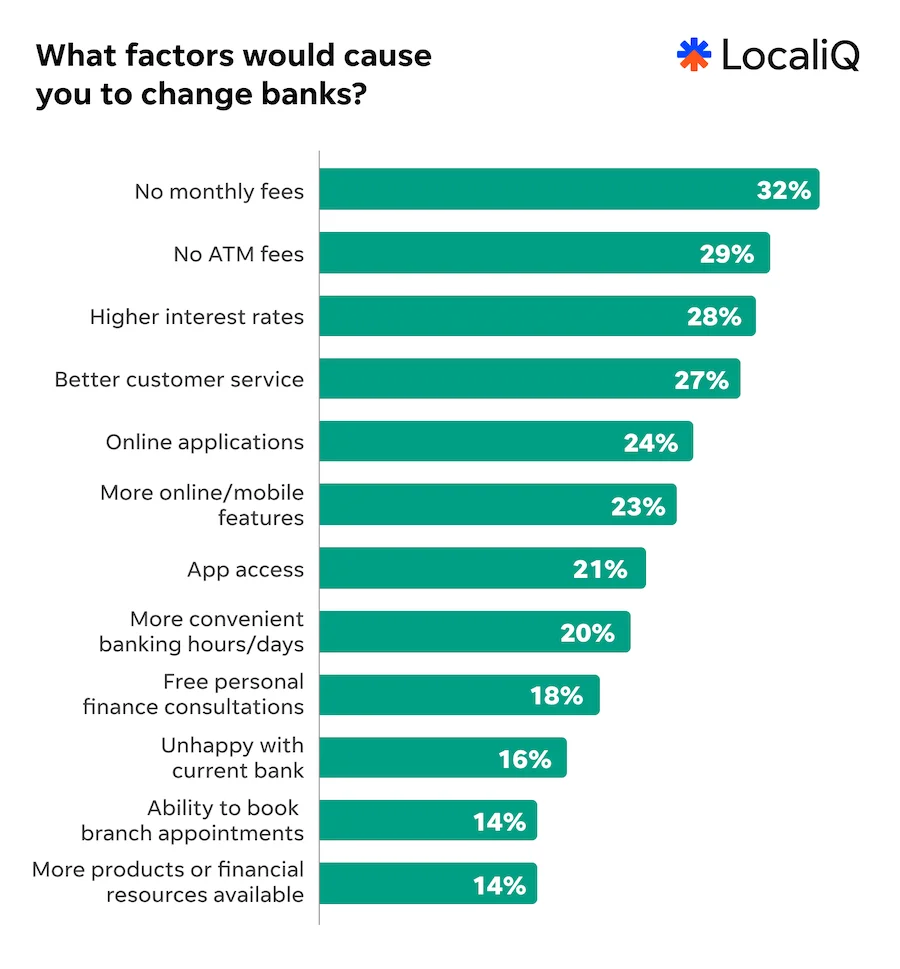
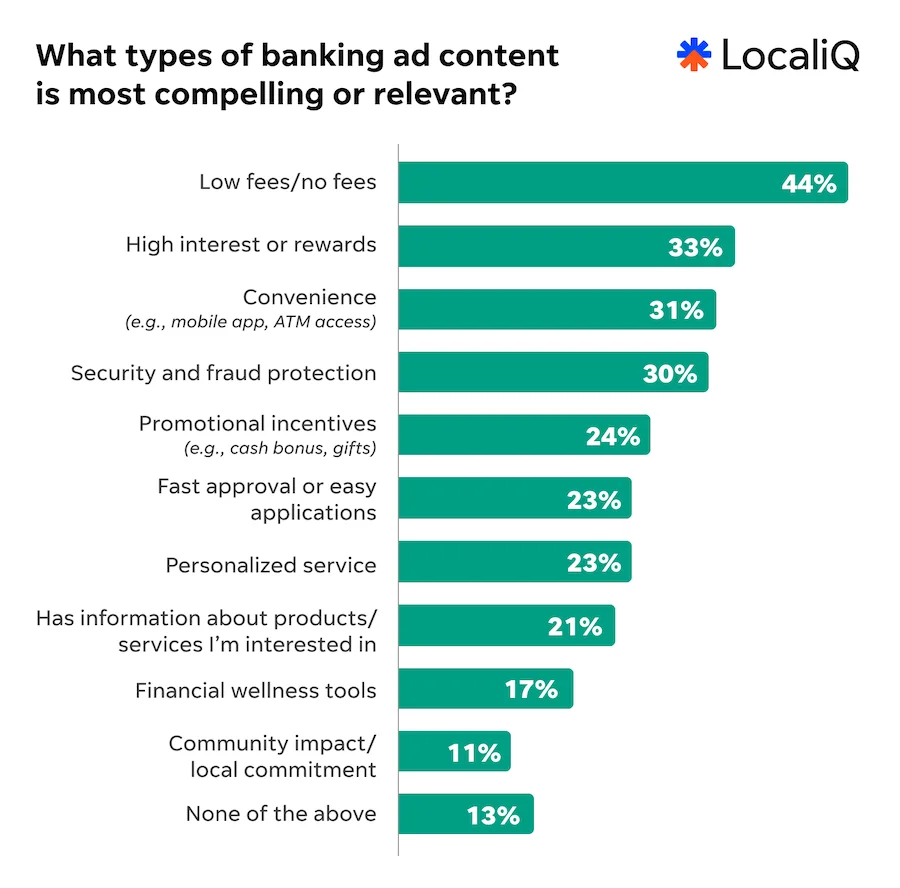
These also align with the marketing messages that resonate best with prospective customers.
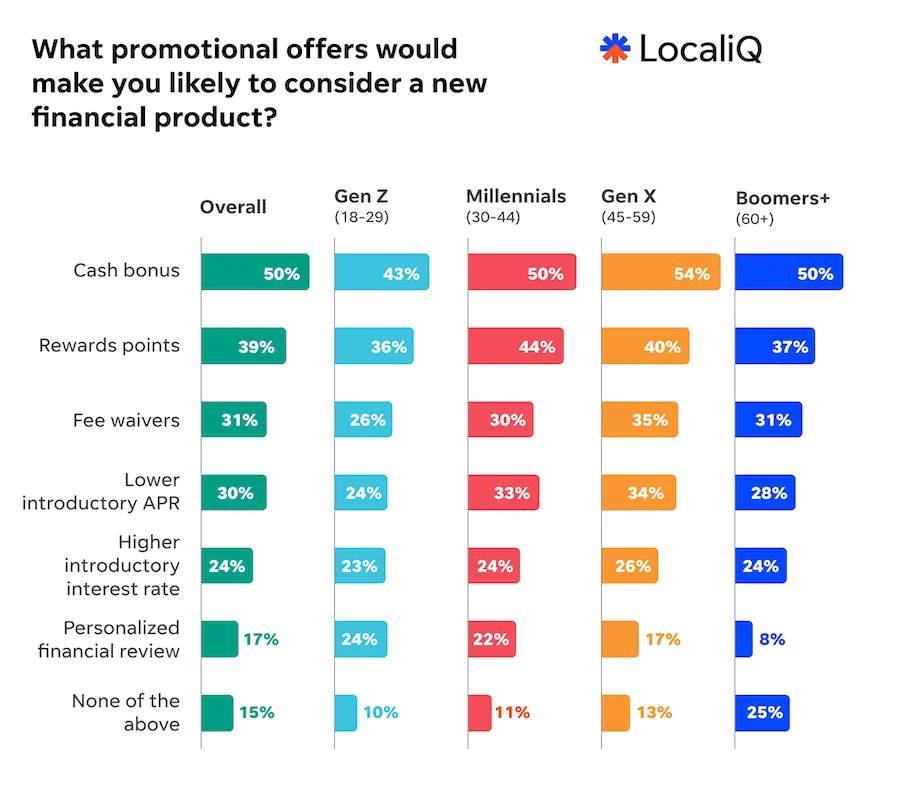
Other incentives consumers look for when determining what financial institution to go with include cash bonuses and rewards points.
What this means for your marketing
This data shows what you should be highlighting in your marketing messages so you’re focusing on what matters most to prospective customers. By leading with the messages and incentives they care about most, you can increase your chances of getting their attention and moving them down the funnel to become a customer.
⭐️ Free guide: 37 Ways to Promote Your Business (Whatever Your Budget!)
7. Consumers are increasingly using multiple financial institutions
While most consumers use a primary bank for personal checking, many also have secondary bank accounts for credit cards, savings accounts, and loans.
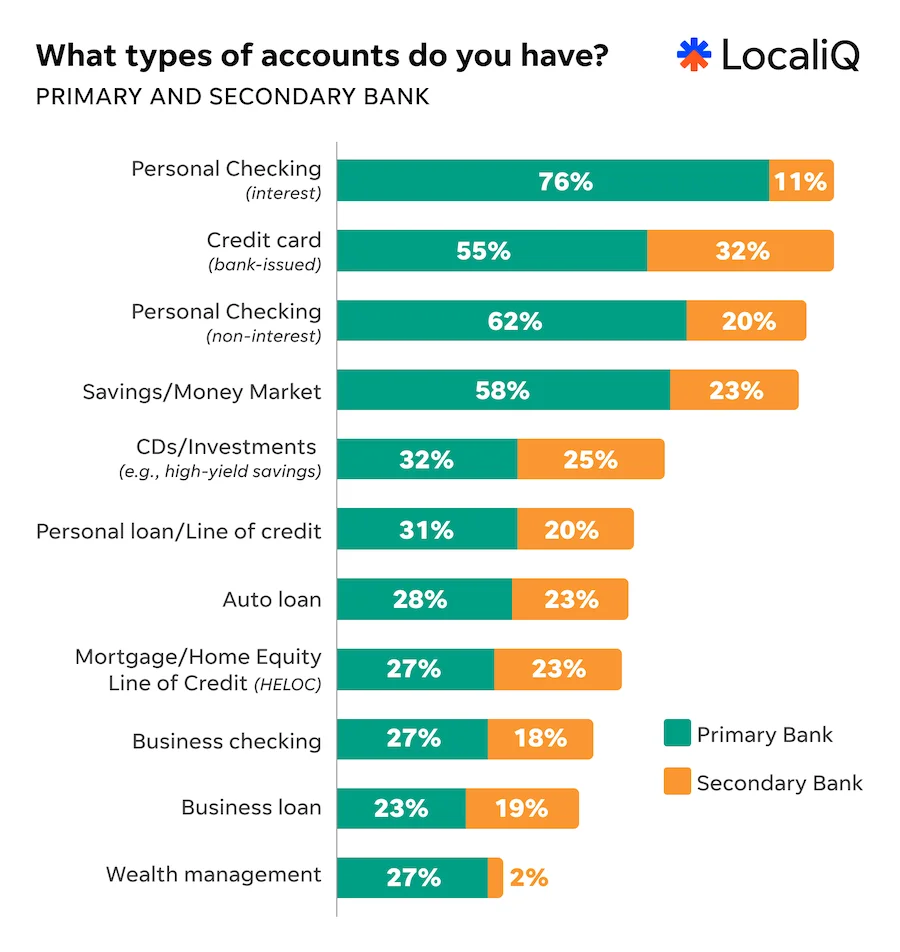
Reasons for opening a secondary bank account include maintaining different accounts by savings goals, getting sign-up bonuses or perks, and staying organized overall financially.
What this means for your marketing
You can compete for specific financial needs (loans, savings, and investments) rather than assume full-wallet relationships by highlighting these key benefits consumers look for in their secondary bank provider.
8. Investment interest is growing, but risk concerns many
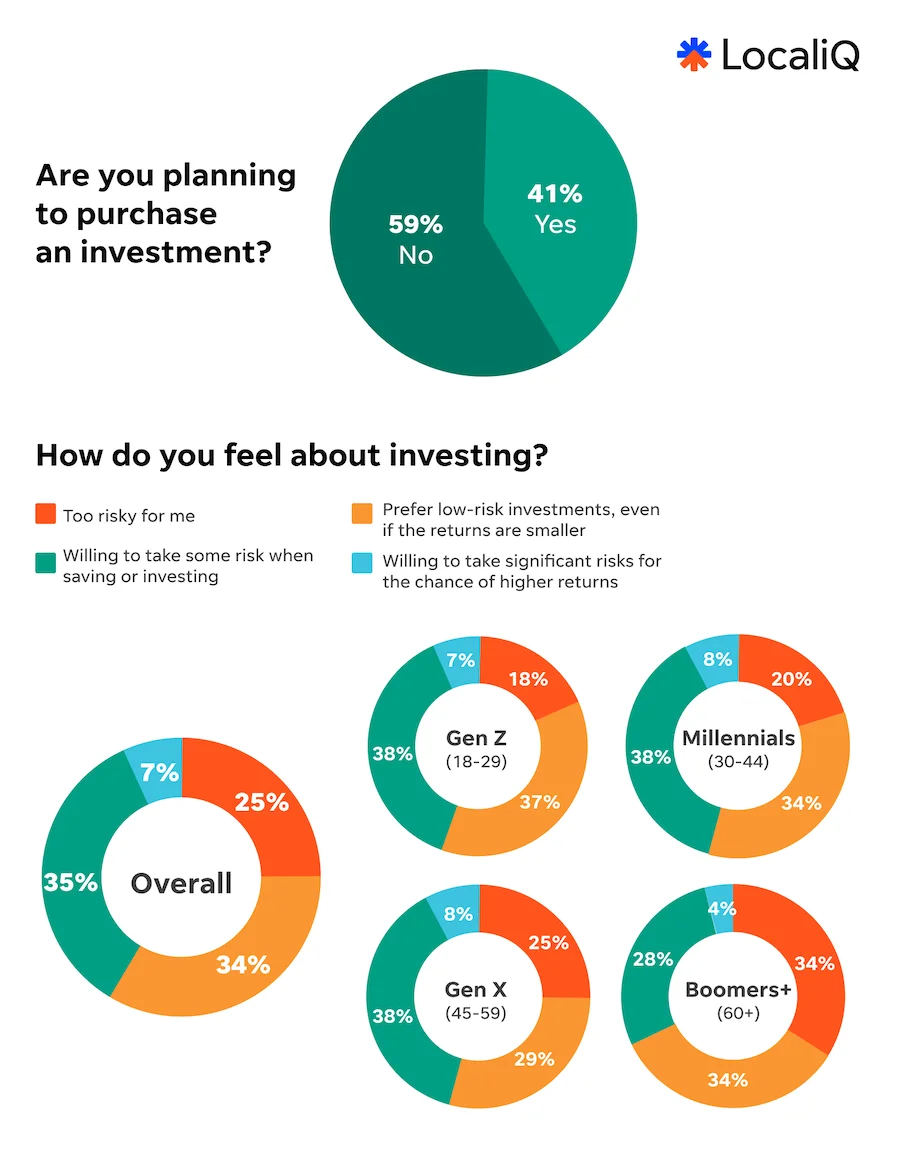
41% of respondents said they plan to purchase an investment (such as a stock, bond, or mutual fund) in the next 12 months.
Most consumers are cautious, gravitating toward low to moderate risk investments. Mature adults are more likely to believe investing is too risky.
What this means for your marketing
Educating your consumer base on the benefits of investing, explaining the risks vs. rewards associated with investments, and acting as a trusted advisor can help you overcome these barriers and drive more investments with your financial institution.
9. Consumers turn to social media, video, and website content for financial research
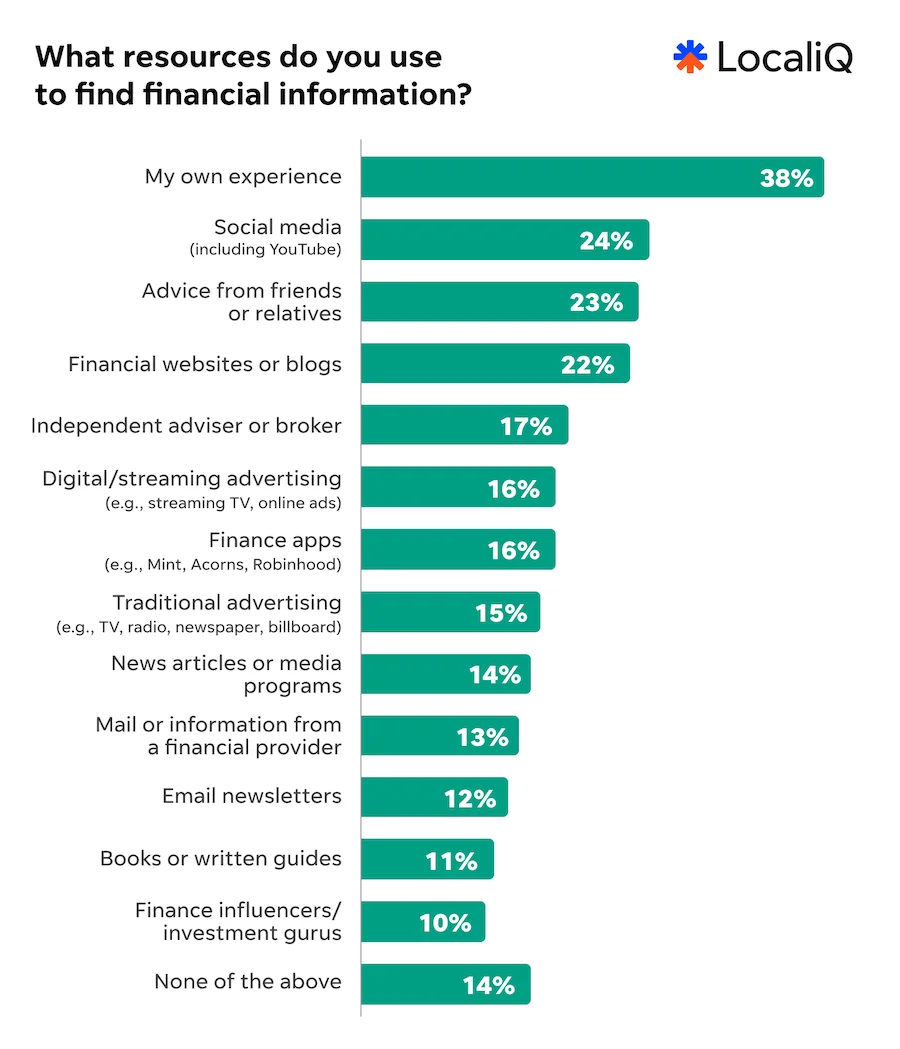
People are largely dependent on their own experience to find financial information, but they’re also seeking resources on social media (including YouTube) and financial websites or blogs.
What this means for your marketing
This data shows that creating educational, relevant, and helpful content for your website, social media sites, and YouTube channel can help you become a top resource for current and prospective customers.
When breaking down the social media channels consumers turn to most frequently, we found that the top sources were YouTube, Facebook, and Instagram.

By creating and promoting content from your website to these channels, you can become a trusted source of information in the places your customers are already seeking financial advice and education.
💡 Get marketing, promotion, and social post ideas for every month of the year >> The Mega Must-Have Marketing Calendar
10. Consumers notice video and social media finance ads
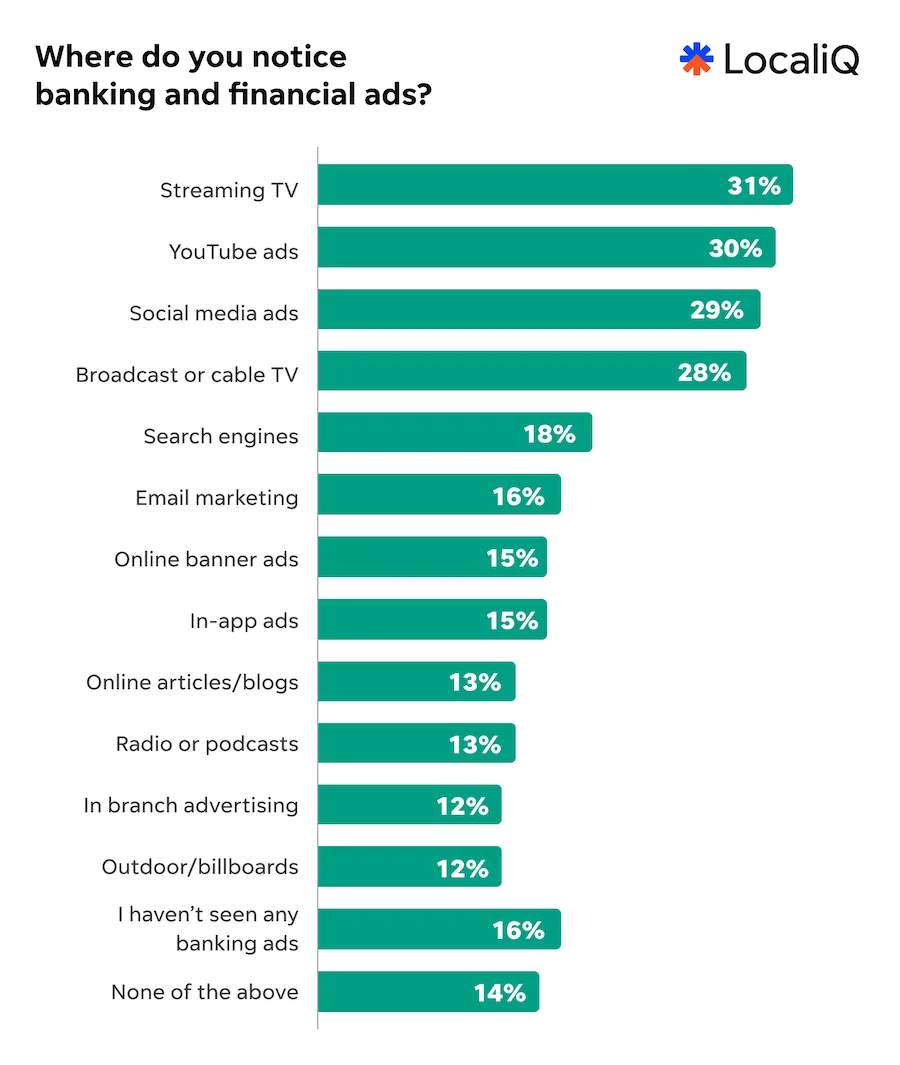
When asked where they notice banking and financial ads, respondents noted streaming TV, YouTube, and social media as the three most prominent placements.
What this means for your marketing
Video proves to be a huge asset for financial institutions looking to advertise their business, whether on streaming TV, YouTube, or cable TV. If this isn’t already part of your finance marketing strategy, you’re likely missing out.
You can also repurpose those video ads on social media—another top placement source for finance ads.
11. Finance advertising drives meaningful action
Our study found that people who see finance ads take actions like visiting the bank website, applying for an account, or downloading the banking app.

What this means for your marketing
Finance ads are driving meaningful actions that can help you grow your customer base. By advertising in the channels we identified as top placements, you can see real results that help you increase your bottom line.
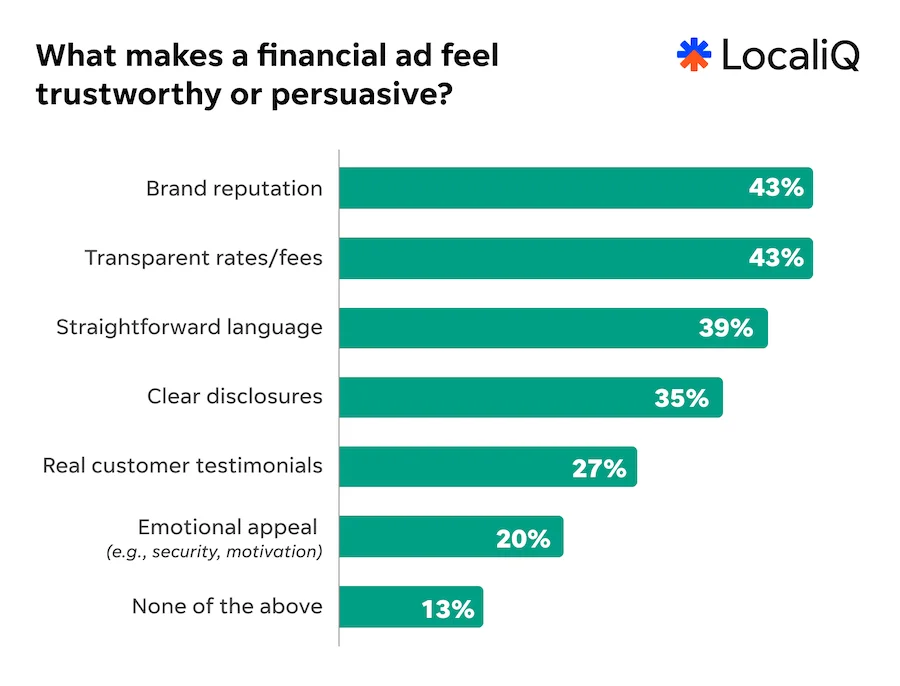
12. Banking and finance ads should highlight brand reputation and transparent pricing and fees
When it comes to building trust in financial ads, customers are looking at brand reputation, transparent rates and fees, and straightforward language.
What this means for your marketing
This data can guide the foundation of your advertising strategy and influence your marketing messaging to build trust with customers and persuade them to take one of those meaningful actions we outlined above.
More finance marketing stats to drive your strategy
While we’ve highlighted our top findings, there were plenty more insightful stats from our study that can help inform your finance marketing strategy.
Stats about financial health and confidence
- About 70% of consumers rate their financial management skills as good or excellent.
- Nearly 50% say their current financial situation is good or excellent.
- About 75% of people feel confident in their financial knowledge.
- About 66% of consumers report having a good or excellent credit score.
- Around 50% expect their finances to improve in the near term.
Digital banking and fintech stats
- 66% of consumers use online or mobile banking.
- 75% regularly pay bills or check balances digitally.
- 76% of consumers use payment apps like Zelle, Venmo, or PayPal.
- Mobile banking apps are now used more than desktop banking.
- 36% have not tried newer fintech tools, signaling room for growth.
Stats about banking behavior
- Most consumers (65%) still primarily use traditional banks.
- Secondary institutions are commonly used for loans, CDs, and investments.
- More than 50% of credit union users choose them for lower fees and better rates.
Bank switching stats
- Most consumers (64%) do not plan to switch their primary bank in the next year.
- Younger generations are significantly more likely to consider switching banks than older generations.
- 80% of consumers say life events (moving, marriage, new job) influence bank switching decisions.
- Lower fees and higher interest rates are the top reasons people would switch banks.
- 25% say better digital experience or customer service would motivate a switch to a different bank.
Debt and financial obligations stats
- 80% of consumers have at least one form of debt.
- Credit card debt is the most common type of debt.
- 21% of consumers report having no debt.
- Most consumers carry under $25,000 in unsecured debt.
- About 80% feel confident in their ability to repay debt.
- 25% have used or would consider debt consolidation services.
Stats about financial research and information sources
- Personal experience is the #1 source for financial decision-making.
- About 25% of consumers use social media or friends/family for financial advice.
- YouTube and Facebook are the top social media platforms for financial information.
Finance advertising stats
- Streaming TV, YouTube, and social media are the top channels where financial ads are seen.
- Ads most often drive users to visit a website, apply, or download an app.
- The most compelling ad messages include low fees, high rates, rewards, convenience, and security.
- Trust is driven by brand reputation, transparent pricing, and clear messaging.
- Cash bonuses are the most effective promotional offer.
Finance marketing infographic
Here’s a wrap-up of some of the important takeaways from our study in a handy infographic.

Bank on good finance marketing
Finance marketing can be complicated when you don’t have a clear picture of your customers or their motivations for making decisions. The data from our study can guide your finance marketing strategy so you’re focusing on the channels, messaging, and benefits that resonate best with finance and banking customers.
For even more insights or help creating the perfect marketing strategy, reach out to talk with one of our finance marketing experts.
Data source
This data is sourced from a LocaliQ online survey conducted in January 2025 of 1,883 US adults with a checking or savings account.

Recommended for you


Unlock your business potential
We offer innovative technology and unparalleled expertise to move your business forward.