


Famous furnituremaker Thomas Chippendale is credited with printing one of the first trade catalogs of its kind, “The Gentleman and Cabinet-Maker’s Director,” in 1754. So, the furniture industry has been hip to the power of marketing for centuries.
Thankfully, now, you’re no longer limited to catalogs. Instead, there are countless furniture marketing ideas to explore. Whether you’re selling new or vintage furniture, or involved in the restoration, reupholstery, or repair of existing pieces or antiques, these tactics can help you connect with new customers.
Here, we’ll explore everything from tried-and-true digital tactics to cutting-edge, AI-powered solutions that anyone in the furniture business should know about.
Contents
- Build a user-friendly website
- Embrace local SEO tactics
- Use visual-first social platforms
- Get your local listings in order
- Try influencer marketing
- Build up your email marketing list
- Nurture professional partnerships
- Create customer loyalty programs
- Encourage customer reviews
- Get involved in local online communities
- Run YouTube ads
- Create paid search ads
- Launch an online promotion
- Invest in display ads
- Create seasonal marketing messages
- Offer free design consultation services
- Incorporate augmented reality into your online shopping experience
- Get to know agentic commerce
17 fundamental furniture marketing strategies
Get a leg up on the competition with these marketing strategies.
1. Build a user-friendly website
With 81% of consumers doing research online before making a big purchase decision, it’s vital for furniture businesses to have a discoverable online presence. That starts with a mobile-friendly, fast website.
What makes a website design effective and user-friendly? Lay out your content in a way that makes sense to visitors, from your site hierarchy and navigation to the words written on each page. Create specific product or service pages, so people can easily find the information they need. Put your contact details front and center, including store location and hours. And use accessible design principles so all visitors can find what they need on your site.
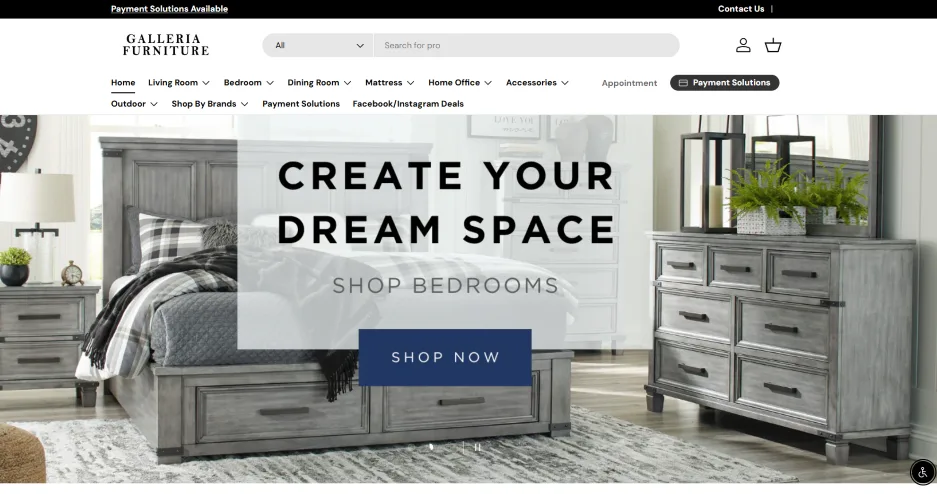
An attractive, functional, accessible website is the foundation of great marketing.
2. Embrace local SEO tactics
If your furniture business has a local presence, you need to lean on local SEO tactics to get found by consumers in your geography.

A lot of local SEO work happens on your website, and some of it is part of broader SEO best practices, like ensuring your website is fast and responsive. Targeting local keywords in your website copy, title tags, and meta descriptions is also crucial.
But offsite factors impact your local SEO standing, too. Focus on the basics, like claiming your Google Business Profile, then move on to more time-intensive tactics, like growing your social media presence and building up your online reviews. It all contributes to stronger local SEO.
📈Rank higher, faster! Download How to Do SEO Right—Right Now!
3. Use visual-first social platforms
Prospective furniture buyers are assessing both the form and function of your products; people want furniture that’s durable and attractive. That’s why turning to social platforms with a visual component is one of the strongest furniture marketing ideas.
Create an organic presence for your business on platforms like TikTok, Instagram, and Pinterest. Once you’ve done so, you can post videos and photographs showing off your products.
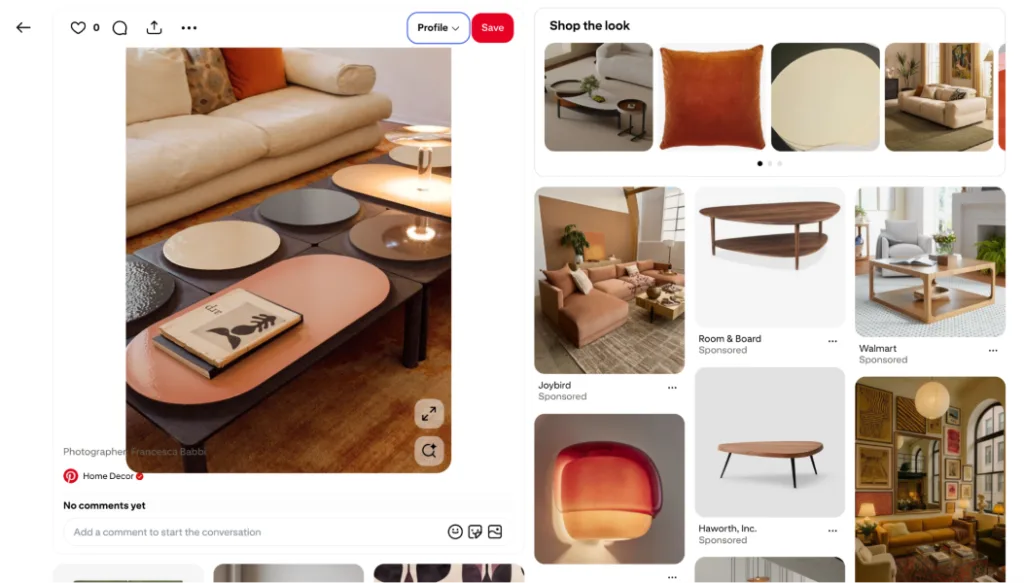
A Pinterest search for living room furniture ideas turned up a mix of organic content and paid results featuring specific products from furniture retailers.
Show your furniture in real rooms so visitors can get an idea of scale and how the products make a space look and feel. Use photography to show your products from all angles, and video to demonstrate how people interact with your furniture.
Once your organic social media channels are up and running, try adding paid social media marketing into the mix. It’s a great way to expand your reach and stay top-of-mind with those who’ve already interacted with your brand.
4. Get your local listings in order
Local listings sites help your business get discovered by those seeking furniture solutions in your area. A Google Business Profile helps you rank in Google search results and Maps results, while sites like Yelp can get you in front of consumers looking for nearby furniture brands.
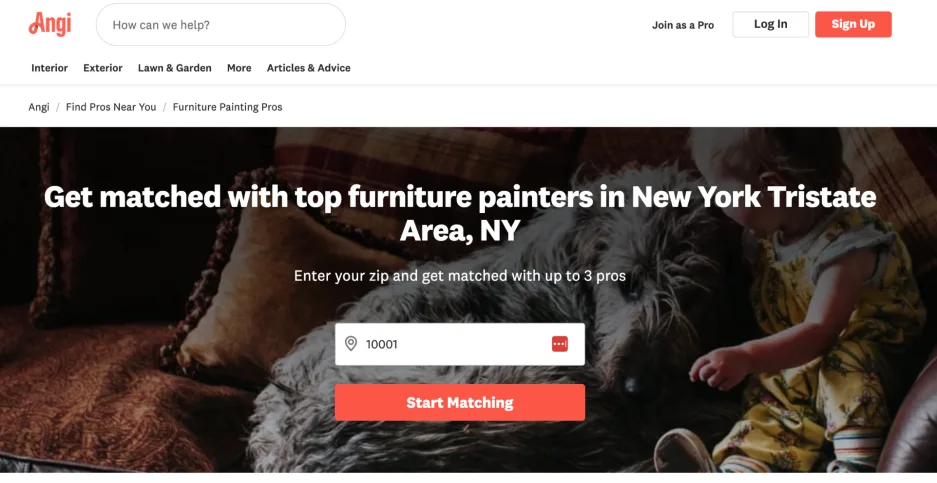
Prospective customers can connect with furniture painters in their area using Angi’s matching feature.
And those who are in the furniture business have another local listings avenue to explore: there are industry-specific directories, like Houzz, Angi, or Thumbtack. Because these sites are exclusively focused on home services and products, it’s a great place to connect with high-intent searchers who are specifically seeking home improvement solutions.
5. Try influencer marketing
86% of companies with over 100 employees reported that they’d work with influencers. Influencer marketing’s effectiveness drives its continued growth.

By finding influencers who’ve built up a relevant audience, you gain access to followers who already care about what you do. Looking to advertise your line of children’s furniture? Reach out to mom-fluencers. Want to connect with people who may need furniture restoration services? Find influencers who take their followers on antiquing journeys and show off their finds.
Micro-influencers, who have tens of thousands of followers, can be surprisingly cost-effective to work with—even for smaller brands.
6. Build up your email marketing list
Email marketing continues to deliver as a digital marketing tactic. 35% of companies see an ROI of $36 for every $1 spent on email marketing efforts.
To make email marketing work for your furniture business, start by building up your mailing list. There are myriad ways to get people to subscribe to your emails. When people make a purchase, ask them to opt into future communications. Gather emails in-person at your stores. Create a discount offer for new website visitors, and give them access when they sign up for your emails.

Then, create a strategy to keep your list engaged. Use your email to spread the word about new products or to announce sales and promotions. Send educational content, like furniture care tips or advice on styling.
And remember to go through this email marketing checklist to ensure you’re sending an effective email that inspires recipients to read and click.
💥 Let’s put it all together! Free resource>> 6 Simple Steps to a Complete Small Business Marketing Plan (+Template)
7. Nurture professional partnerships
Individual homeowners or renters can be a great source of revenue for your furniture business. But, chances are, they’ll do one big purchase when they redo a room or move into a new place. Then they might go dormant for a while or buy only one-off small pieces here and there.
For furniture businesses to generate recurring revenue streams, it’s helpful to focus on building professional partnerships.

This realtor tagged the vintage furniture store responsible for some of this room decor in her listing’s feature in Dwell magazine. That’s great promotion for everyone involved!
To get started, think about the types of professionals who are involved in the home furnishing space. Interior designers, home organizers, real estate agents, and their staging companies—these are all examples of people who might need a steady stream of furniture-related support.
Research local providers in your area, and begin to nurture relationships with folks in these industries. You might even consider creating a formal loyalty or rewards program for professionals who return to you time and again.
8. Create customer loyalty programs
Speaking of loyalty programs, this furniture marketing idea doesn’t just work for professional partnerships. You can also craft a customer loyalty program to keep individual consumers coming back for all their furniture needs.
If you’re a furniture retailer, you might launch a program where buyers earn points with each purchase, which can unlock special perks (like free shipping) or rewards (like a percentage off their next purchase). For those in the furniture repair or refurbishing space, you may create a loyalty program that offers a discount on every Nth item someone brings in for service.
There are dozens of ways to build a loyalty program to encourage return purchasers. Finding the right one for you will depend on your business model. Confer with your finance team to structure an offer that makes sense.
9. Encourage customer reviews
People trust online reviews, and what they read there has the power to convince them to buy. That’s why building up positive customer reviews is one of our favorite furniture marketing ideas.

Great customer reviews help your furniture store stand out.
To get more customer reviews, sometimes all you need to do is ask. When you send a sales receipt email or a follow-up sequence after a purchase, include a link to your Google profile or ecommerce site, with a request for buyers to share their honest feedback on the product and shopping experience.
Sometimes, people don’t think to write reviews when they’re happy with a purchase, so even a little nudge can go a long way to encouraging more people to draft something. Once people have posted their feedback, respond to their review, regardless of whether it’s good or bad! That shows future readers that your business cares about the customer experience and stands by your offering.
10. Get involved in local online communities
When your business operates in a specific community, many of the best marketing ideas focus on strengthening ties in that area.
Furniture business owners should look for opportunities to join locally-focused online communities, whether that’s a city Facebook group, a local Subreddit, or your town’s Nextdoor. It’s common for people to come to these spaces seeking advice from neighbors, and sometimes that advice will be related to what you do.
If someone’s seeking a recommendation for a local business, you can toss your own hat in the ring or ask a happy customer to recommend you. If a post is asking for advice on your area of expertise (e.g., “Does anyone know how to fix this big rip in my couch?”), provide some friendly advice without a direct sales pitch.
As you become a regular, helpful presence in the group, you’ll establish yourself as a trustworthy source that people will remember.

A question from a new neighbor in your local Subreddit could turn into a new customer!
11. Run YouTube ads
Video advertising used to mean running spots on television. But with streaming dominating viewership nowadays—and YouTube gobbling up 12.5% of that audience (more than any other platform)—it’s no wonder businesses are turning to YouTube advertising.
As with visual-first social media channels, YouTube advertising is a smart move for furniture brands. If you sell furniture, you can showcase pieces in different homes, with people living around and interacting with the furniture. If you provide furniture-related services, you can show your team hard at work repainting, repairing, or upholstering to bring pieces to life.
And as with other Google ad products, the YouTube platform allows for strategic audience targeting and uses AI to optimize both ad strategy and creative, helping you maximize your spend.
12. Create paid search ads
Incorporating SEO best practices into your furniture marketing work is smart, but turning to advertising and paid search tactics can give your brand a further boost. Google and other search engines offer a variety of ad types businesses can use to get noticed, from sponsored results that appear at the top of the blue links section to sponsored products with photos at the top of SERPs.

A search for “mid-century modern couch” turns up sponsored items at the top, plus furniture vendors in the sponsored results section immediately below.
A PPC marketing agency can help you identify the right paid strategy for your brand and products, and craft your targeting to ensure your advertising is seen by the right audience.
13. Launch an online promotion
If you want to drive new purchases, a custom promotion can help. How you structure your offer will depend on your business.
Businesses that want to hook new customers may offer a discount on their first purchase. Those who wish to build up their pipeline may run a sweepstakes offer, where people enter by sharing their email address. Once you have contact information, you can add them to your mailing list and nurture those leads until they’re ready to buy.
When you run a promotion online, you can easily track results and attribute new sales to your campaign, which allows you to calculate ROI.
14. Invest in display ads
Display ads are highly effective for furniture marketers because they allow you to target very specific audiences. If you want to reach parents in a certain age range who have shown interest in remodeling, you can find them with a display ad.
On top of that, you can use display ads for retargeting. So once someone has engaged with your brand, you can show them personalized ads featuring products they’ll like as they surf other websites.
15. Create seasonal marketing messages
Seasonal marketing tactics can help any business mix up their marketing, break through the noise, and generate leads during times that might otherwise be slow.
If you’ve ever seen a mattress store promoting their Presidents Day sale, you know just how effective seasonal messaging can be for those in the furniture space.

As you consider how to frame your own seasonal marketing campaign, think about how you can create an effective message that ties into the season. For example, toward the end of summer, you might use back-to-school-related messaging to promote your line of children’s furniture. Or, you could tout your furniture cleaning business in March, leaning into spring cleaning language.
15. Offer free design consultation services
Furnishing a new space can feel overwhelming. It’s a costly endeavor, and without a keen eye for design, there’s the risk of getting stuck sifting through thousands of pieces online.
This hurdle can become an opportunity for savvy furniture retailers. By connecting harried prospects with professional designers, you offer them a thoughtful plan for the entire room.
This is a win for the prospects, who free themselves of the mental load of picking pieces for their space. It’s also a win for your business. While this shopper might otherwise have only purchased a single item from you, offering suggestions for all pieces in a room invites them to spend more with you. Plus, it strengthens trust and the bond they feel with your brand. If they ever have furniture needs in the future, they’ll be eager to turn to you for guidance again!
16. Incorporate augmented reality into your online shopping experience
One of the trickiest things about buying furniture online is visualizing how it will actually look in a space. Will this chair match my existing design scheme? Will this bookcase dwarf the nearby side table?

Questions like these can be solved with augmented reality (AR) technology. Furniture brands can build an app that allows shoppers to point their phone camera at a corner of their room and virtually project an image of the furniture they’re considering into the space. It’s not perfectly realistic, but it can help consumers answer essential questions about how a product will look.
17. Get to know agentic commerce
Anyone selling online today needs to be aware of the future of agentic commerce. While AI is still a nascent technology, experts believe that the future of AI will enable consumers to completely outsource their shopping to intelligent agents.
Consumers will simply enter a prompt describing what they want, and the AI agent will handle the entire buying journey: sourcing options that fit, selecting a product, providing the consumer’s credit card and shipping information, and coordinating delivery.

To prepare for this agentic future, start taking steps now to make your brand more discoverable to AI agents. This starts with ensuring all of your product information is legible to AI systems. Invest in creating listings with rich, structured product data, containing standardized identifiers (like SKUs) and clear, concise descriptions.
Top-shelf furniture marketing ideas
If you’re in charge of getting the word out about a business in the furniture space, these marketing ideas can help. Remember, you’re working in a visually-driven industry, so relying on visual-first digital platforms is a smart move. Whether that’s building out a website with great product photography or showcasing your furniture on TikTok, there are countless ways to market your brand.
And if you’d like to learn how our solutions can help you manage, track, and improve all your marketing channels, reach out!

Recommended for you



Unlock your business potential
We offer innovative technology and unparalleled expertise to move your business forward.