


On any given day, there are likely hundreds—if not thousands—of people searching Google for a plumber, coffee shop, or yoga studio in your town.
If your business shows up at the top of those results pages, you have a great shot at getting a steady stream of new customers.
Local SEO is how you get search algorithms to pick your site over competitors. And in this guide, I’m going to give you the exact Local SEO tips you need to climb search engine rankings and appear at the top of the most relevant results pages.
If you want to get found on search engines, these are the tips and best practices you need to follow (+the mistakes you have to avoid!).
Contents
- What is local SEO?
- How does local SEO help your business?
- 14 best local SEO tips
- 5 Local SEO mistakes to avoid
What is local SEO?
Local SEO is the practice of optimizing your online presence so your business appears in search results when people look for products or services in a specific geographic area. It helps nearby customers find your business through platforms like Google Search, Google Maps, and Bing when they search for things like “plumber near me” or “best coffee shop in town.”

Local SEO puts your business at the top of Google’s local 3-pack.
The “local” in local SEO is important because it means your website will show up when people are looking for businesses in specific locations. Ranking for the term “coffee shop near me” takes a different set of tactics than showing up for the term “how is coffee grown?”
That’s what we’ll cover in this guide.
🚀 Get even more ways to rank! Download How to Do SEO Right—Right Now!
How does local SEO help your business?
Local SEO helps your business attract nearby customers by making it easier for people in your area to find you when they search for products or services you offer. When you get more visible in local search results and map listings, you’ll get more website visits, phone calls, and in-store traffic from people ready to buy.
Here are a few of the more specific ways Local SEO delivers big results:
- Local SEO puts you where the customers are: 72% of consumers use Google to find local business information.
- Local SEO builds trust: 68% of consumers say they are more likely to visit a business that appears in Google’s Map Pack.
- Local SEO delivers conversions: 76% of people who search for something “near me” visit a business within a day.
14 best ever local SEO tips
Local SEO is critical for your business’s growth. But there’s no time to waste on fluff. Each of these actions sends clear signals to search engines that your business belongs on the results page.
1. Claim, optimize, and update your GBP
Besides creating a website, one of the most important things you can do to improve local SEO is to set up and maintain your Google Business Profile (GBP).
When someone searches for a local service, your GBP is what Google shows them.
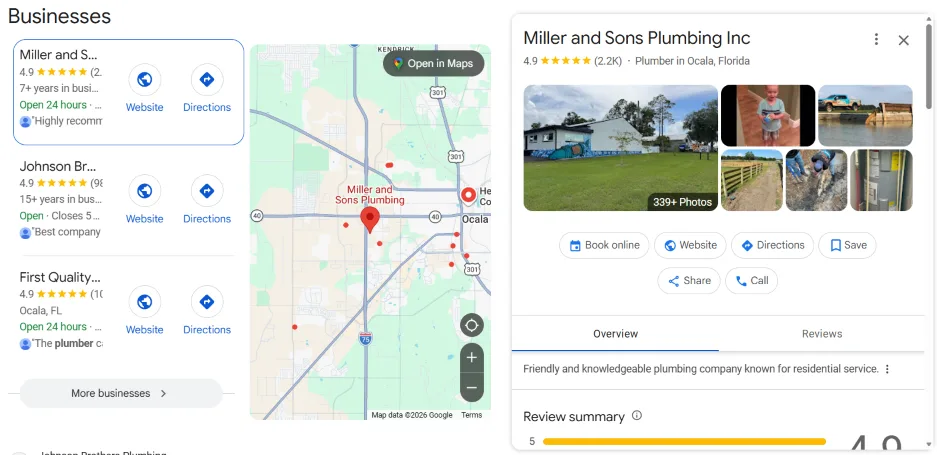
If you don’t have a GBP, or if the information is incomplete or incorrect, Google probably won’t pick your business.
Here are the three steps to get maximum benefits from your GBP:
- Claim it: Look for your business on Google Maps. If it appears, click “Claim this business.” If not, go to the Google Business Profile page and set it up. (Use this step-by-step guide to claiming your Google Business profile.)
- Optimize it: Fill in all fields, add images, choose business categories, add and answer FAQs, and include offers. (This guide breaks down how to fully optimize your GBP)
- Maintain it: Add new Google Business Profile posts, add new images, update your services, include new offers, and keep up with your reviews (more on that in a bit).
2. Get visible on business directories
There are hundreds of business directories beyond your Google Business Profile (think: Yelp, Angi, etc.). Search engines look at these directories to help choose which businesses to prioritize. The more local citations you have in those directories, the more search engines will trust you.
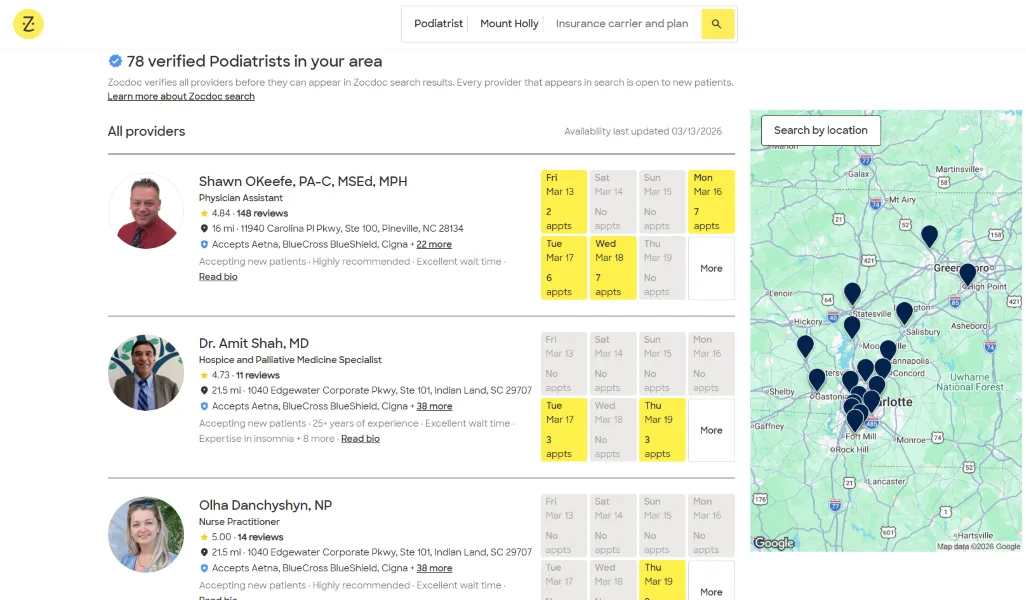
When your business information is consistent across many directories, search engines trust it more.
Here are the main types of local citations to consider:
- Search and map platforms: Google and Bing are the most common examples.
- Primary data aggregators: These companies collect and distribute business information to hundreds of directories; examples include Data Axle and Neustar Localeze.
- General business directories: Platforms such as Yelp, Yellow Pages, and the Better Business Bureau fall into this category.
- Local and regional directories: This includes chamber of commerce sites, downtown associations, and regional business networks.
- Social and app-based directories: Examples include Facebook business pages, LinkedIn company pages, and Nextdoor business listings.
In general, you’ll treat each of these as you would your GBP (claim, optimize, maintain). This guide to local citations success has everything you need to tackle this task.
💯 Get a fast, free review of your listings on the most popular directories with our Free Business Listings Grader
3. Get and manage your reviews
Search engine algorithms (and AI systems for that matter) are fueled by trust. A large number of great reviews and five-star ratings gives you a huge leg up on other businesses fighting for local search rankings.
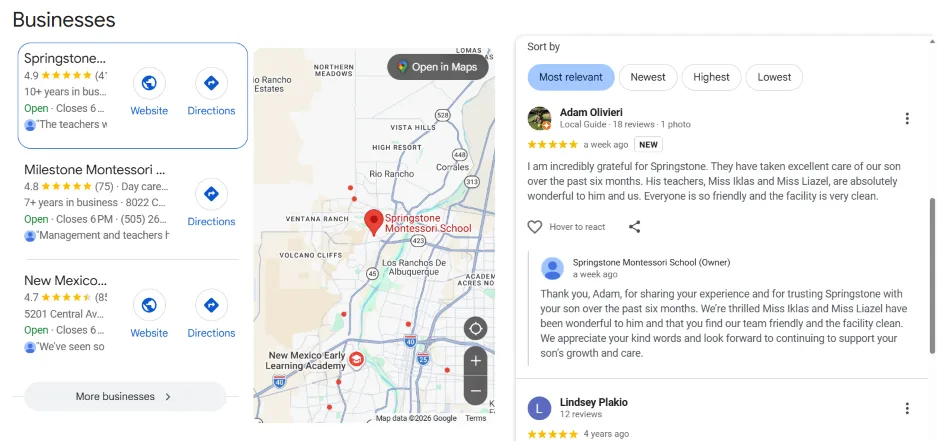
Reviews aren’t just displayed in search results; they’re used by algorithms to rank businesses.
Your main jobs here are to gather more positive reviews and engage with them whenever possible.
You can simply start by asking every customer for a review. But I’ve curated a list of guides to help you take your review game to the next level:
- 7 Ways to Get 5-Star Google Reviews (& Why It’s So Important)
- How to Ask For Reviews (With Copy/Paste Templates)
- How to Respond to Google Reviews (with Examples to Do It Right)
Bonus tip: Ask reviewers to mention the name of your business, the specific service, and the location in their reviews.
🚫 “Toby did a great job.”
✅ “I called Superior HVAC, and they installed a new heat pump at my house on the west side of Dallas the next day.”
4. Use location-based keywords
When describing your products and services, attach location-based modifiers to those keywords in your listings, social media profiles, and website pages.
For example:
- Instead of “gluten-free wedding cake,” use “Best gluten-free wedding cake in Sommerville.”
- Instead of “fast service,” use “Emergency and same-day service throughout the Charlotte metro area.”
This physical therapy business does a great job of including its location, Denver, in its page titles, subheaders, and service descriptions.

Need a little help finding the right terms? Read this guide to local keyword research.
5. Build localized service pages
Create a website page for each of your core services and locations. That’ll make what you do and where you do it super clear to search engines.
Check out this chiropractor’s website. First, it has localized pages for each of the major ailments the practice treats.

It also has pages optimized for specific neighborhoods around the city. People often search this way in larger cities so they don’t have to drive 45 minutes across town for an appointment.

Bonus tip: Include the location and main keyword in the H1, meta description, subheadings, and throughout the body copy of each page.
6. Add schema to your website
Schema markup is a type of structured code added to your website that helps search engines better understand details about your business and content.
In local SEO, it helps platforms like Google Search interpret your business information more accurately, which can improve how your business appears in local results.
There are many types of Schema markup to structure different types of information on your web pages. Here’s an example from Warby Parker of a well-structured FAQ schema.

If you’re new to schema markup, this guide goes into depth about the types of schema and how to use them.
8. Add alt text to images
Adding supporting images to your website pages enhances the user experience and earns them more favor in the eyes of Google.
However, Google can’t see images; it needs a text alternative for that image to detect and understand what it represents. Alt text (aka alt tags) does that job.
Your website or content management software will have a spot to enter alt text like this.

Include your keywords when appropriate, but make sure to be organically descriptive of the image.
8. Check your mobile load time
Most local searches are performed on mobile devices. If it takes a long time for your page to load, it’ll turn off those potential customers and signal search engines that your site isn’t the best option.
This one’s super easy to check. Go to Google’s PageSpeed Insights, enter your website’s URL, and see what it says.
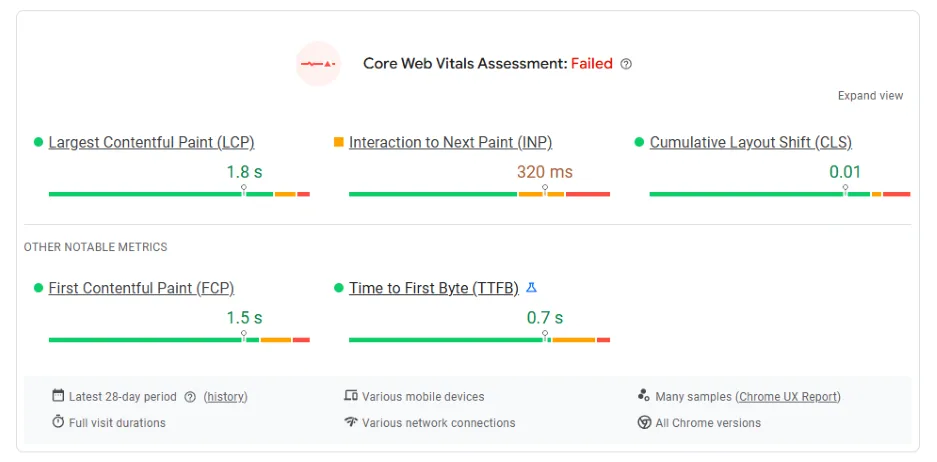
You want that First Contentful Paint number under two seconds. If it’s not, here’s how to increase your website speed.
9. Build internal links
If your website’s main URL is the highway search engines use to get to your site, then internal links are the surface roads they use to navigate once they’re there. If you have a good network of internal links, search engines will better understand what your pages are about and how they work together.
Here’s how one pediatric dentist website maximizes internal links from its home page.

Each patient-type image is a link to a page personalized for that age group. And every item on the checklist also links to service pages.
You can embed links just about everywhere, from product pages to blog articles. Just make sure the anchor text (the words used for the link) matches the page destination so users find what they’re expecting.
10. Get backlinks
Backlinks are links from other websites pointing to your site, and in local SEO, they signal to search engines that your business is trusted and relevant within your local community.
Here are several ways you can get trusted websites to link to your pages:
- Get listed in various directories (another reason to work on local citations).
- Partner with local charities or events.
- Write guest articles for local blogs.
- Publish content on your blog that others will link to.
- Earn mentions from local news outlets.
- Sponsor local teams or community groups.
- Collaborate with influencers.
Here’s an article that explains the cost of dental work. That blue-highlighted text links to a blog post from a local dentist in New York City’s Flatiron district.

There’s an art and a science to getting backlinks, and this guide will walk you through the link-building process.
11. Publish content for your location
Authentic content related to your industry is foundational to SEO of any kind. For local businesses, however, locally relevant content should also be part of your content marketing strategy.
For example, if you’re a locksmith in Sacramento, you could write a blog post entitled “5 Ways to Keep Your Home Safe in Sacramento,” or Yoga professionals could publish a post such as “Top 10 Natural Food Stores in the Bay Area.”
This local lawn care supply business publishes content specific to its Louisville, KY, territory, helping it to rank when locals search for yard tips.

Also, you should include information about local events and area partnerships, as this will help to draw in local users and enhance your local visibility.
Bonus tip: This is another great use for all those location-based keywords you found earlier!
12. Measure SEO performance and double down on success
Your business is unique, so are your products and audience. As you work through the local SEO tips on this, it’s really important to check the results and see what’s working for your business…then double down on the best tactics.
Here are the best ways to measure SEO performance:
- Learn SEO metrics: Take a minute to review common SEO metrics, so you know what to look for.
- Use SEO tools for ranking and backlinks: SEO tools like Ahrefs and Moz will show you which keywords you rank for, which you should target, and which websites link back to yours (and a lot more).
- Get friendly with Google Analytics: GA4 and Google Search Console are your best resources to track traffic from organic search.

Tools like Ahrefs can help you track which local SEO tactics are working.
Local SEO mistakes you can avoid
Here’s a quick list of five mistakes that’ll keep you off search results pages.
- Inconsistent business information (NAP): Make sure your name, address, and phone number are identical across your website, directories, and listings, since inconsistencies can confuse search engines and hurt local rankings.
- Ignoring your Google Business Profile: An incomplete or poorly maintained listing on Google Business Profile can reduce visibility in map results and cost you valuable calls and visits.
- Skipping local listings: Like your GBP, local listings give you free visibility to new customers and search engines, claim them, and keep them updated.
- Neglecting customer reviews: Failing to collect and respond to reviews—especially on platforms like Google Maps and Yelp—can weaken trust signals that influence local search performance.
- Not localizing website pages: Every important service or product-based keyword should be paired with the state, city, or neighborhood you operate in, or Google won’t associate you with those “near me” searches.
Get a jumpstart on local SEO
It doesn’t take a ton of technical know-how to convince search algorithms that your website is a good choice for their results. They mostly just need to understand what you do, where you do it, and that you’re a trusted provider.
This list of Local SEO tips will help you get there. If you’d like, talk with us, and we’ll show you how our solutions can accelerate your SEO, paid ads, and digital marketing results.

Recommended for you





Unlock your business potential
We offer innovative technology and unparalleled expertise to move your business forward.