


Market segmentation is the process of dividing your entire target market into smaller subsets based on shared characteristics, behaviors, or interests.
Grouping like customers and prospects this way lets you tailor and target your marketing to people so it’s much more relevant, which boosts engagement, lowers ad costs, and improves the return on budget.
There are several ways to segment a market. Think about a gym that targets working adults aged 25-45 within a 5-mile radius. That’s demographic and geographic market segmentation. The same gym sends a “get back on track” mailer to people who stopped coming, and a “refer a friend” message to people who’ve been active members for a year. That’s behavioral market segmentation.
In this guide, we’ll explain each of the five types of market segmentation, show you market segment examples from brands that do it well, and explain how you can apply their tactics to your own business.
Contents
10 market segment examples by segmentation type
Let’s review each type of market segmentation and look at some examples of marketing campaigns that target different market segments to illustrate how each one works.
Demographic segmentation examples
Demographic segmentation means dividing your potential customers into groups based on measurable personal characteristics. Things like age, income, or family status fall into this category. The idea is that people who share these traits often have similar needs, priorities, and buying habits.
For marketers and small businesses, demographic data is usually the easiest place to start because it’s concrete, widely available, and simple to act on. Your ad platforms, your CRM, and even basic customer surveys can surface this information without advanced analytics.
Common demographic characteristics include:
- Age and generation (Gen Z, Millennials, Boomers, etc.)
- Gender
- Income level
- Occupation
- Education level
- Marital or household status (single, married, parent, empty nester)
- Family size
🛑 Learn how to locate your next best customer! Download How to Find Your Target Audience in 6 Steps (With Examples!)
Stanley tumblers: Age and gender
Stanley has been making durable drink containers for over a century. During most of its history, the brand targeted construction workers and rugged outdoor adventurers.
In 2023, the brand began a deliberate pivot to make its products and marketing more appealing to millennial women and Gen Z. They introduced new colors and worked with influencers to seed the shift on TikTok. In doing so, the brand shifted to a different age and gender demographic segment.

How to apply this market segment example
Look for market gaps in unexpected demographics. You may sell services to retirees that a young parent needs, too. Learn what’s important to that new demographic, create marketing that speaks to it, and try it on the channels where those buyers spend time.
Capital One: Income and credit profile
Capital One promotes completely different pitches aimed at two different income segments. The campaigns for Venture X target a high-income segment of individuals with FICO scores above 720 and incomes exceeding $125,000. The messaging highlights premium travel benefits for an affluent audience.
On the other side, Quicksilver messaging is aimed at a mass market in a different income demographic. It focuses on everyday cashback simplicity.

Quicksilver ads highlight simplicity.

Venture X promotes adventure to an affluent audience.
How to apply this market segment example
People in different income brackets often experience different pain points. Say you’re a plumber. A portion of your customers need to know you’ll offer a competitive price on fixing emergency issues, while another group may be more interested in your ability to create unique bathroom remodels.
Geographic market segment examples
Geographic segmentation means dividing your market by where people are. The underlying logic is that where someone lives shapes what they need, when they need it, and how they think about buying it.
For local and regional businesses, geographic segmentation is often a natural place to start because your market is already defined by location. The real opportunity is going deeper, recognizing that even within your service area, a customer five miles away may have different needs than one right outside your door.
Common geographic characteristics include:
- Country or region
- State or province
- City or metro area
- Neighborhood or ZIP code
- Urban, suburban, or rural setting
- Climate or season (what people need for winter in Phoenix vs. Minneapolis)
- Population density
- Local culture or regional preferences
Atrium Health: Neighborhood
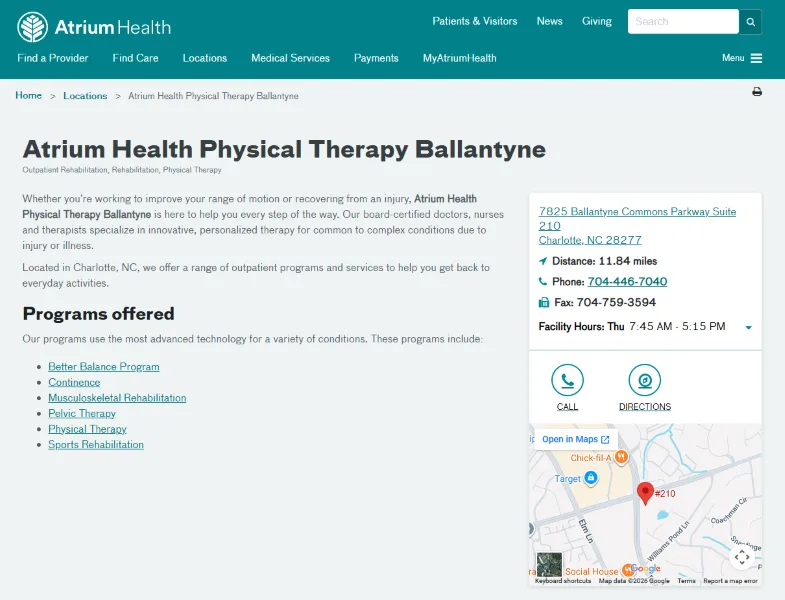
Sometimes, people search for solutions in their neighborhood. This is especially true for brick-and-mortar service-based businesses where things like drive time are a consideration.
Atrium Health is a large, regional healthcare provider that serves four states in the Southeast. But it segments its audience into much smaller geographic areas. In this case, it’s built product pages to target down to the neighborhood level.
How to apply this market segment example
This segmentation tactic is really useful for multi-location, locally based businesses. Applying neighborhood-level keywords to your web pages is a good start. But you can also use them on direct mailers, finely targeted social media ads, and even in your online business listings (which will help with your local SEO).
McDonald’s: Regional preferences
As a global food brand, McDonald’s has to segment its customer base by regional preference. What people eat is shaped by where they live, what food is available, and their cultural norms.
In India, where a large portion of the population is vegetarian, McDonald’s serves a spiced potato-and-pea burger called the McAloo Tikki, designed specifically for that market. In Japan, the restaurant offers the Teritama burger to celebrate the sakura (cherry blossom) season.

How to apply this market segment example
You may not need to worry about creating versions of your products for different parts of the world. But it’s important to remember that even a little distance can create cultural shifts. For example, the barbecue sauce in eastern North Carolina is vastly different than what’s preferred in the center of the state.
Music, fashion, and even the way houses are built can change by zip code. The lesson is to make sure your marketing sounds like it came from a local to build trust with that demographic.
🔎 See how your competitors segment their audience. Get How to Spy on Your Competitors: 7 Ways to Become a Competitive Supersleuth
Behavioral segmentation examples
Behavioral segmentation is when you group your audience based on the actions and behaviors they exhibit with your brand. Everything from signing up for your loyalty program to watching a video ad all the way through would qualify.
Behavioral data is a very actionable type of segmentation because it’s based on real observed actions (AKA, first-party data) rather than assumed traits. When you know that a customer has bought twice in the last 90 days, abandoned a cart, or only buys when there’s a discount, you can respond to that specific behavior directly.
Common behavioral characteristics include:
- Purchase history (first-time buyer, repeat customer, lapsed customer)
- Purchase frequency
- Spending level
- Brand loyalty (loyal advocates, switchers, deal-seekers)
- Buying stage (just browsing, comparing options, ready to buy)
- Usage rate
- Response to promotions (coupon redeemers, full-price buyers, seasonal shoppers)
- Engagement level (opens emails, clicks ads, ignores both)
Thermos: Purchase history
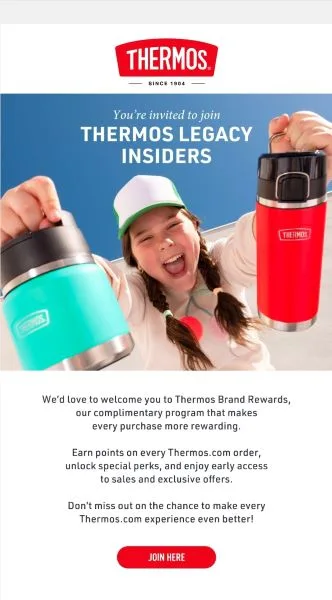
Purchase history is a great segmentation method for making your email marketing more successful. Even with just basic available data, like if someone bought something recently, you can make a message much more relevant.
That’s what Thermos does with its customer loyalty program outreach. Making a purchase triggers an email that offers all the perks of joining the Thermos club. The same email wouldn’t be as effective with someone who was just browsing.
How to apply this market segment example
This market segmentation tactic works well because you’re offering something of value to someone who has already shown purchase intent. Assuming they liked what they bought, your messages should get a pretty high engagement rate.
You can use this type of segmentation to offer add-on products just after the first sale, re-engage someone who hasn’t bought in a while, or ask a repeat buyer to share a review.
Shopbop: Buying stage
Shopbop is an online fashion and accessories brand that’s been a subsidiary of Amazon since 2006. That gives the brand access to some pretty powerful behavioral segmentation opportunities (especially since Amazon’s product recommendation engine is one of the best).
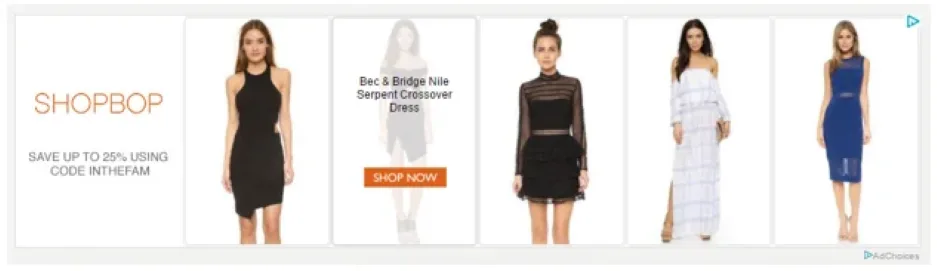
In this case, we’re highlighting Shopbop’s remarketing campaign that targets consumers based on browsing behaviors.
Say you see a Shopbop ad and click through to look at a few dresses. You don’t buy anything or even put anything in your cart. But for the next couple of days, you see the brand’s ad, complete with the dresses you viewed and a discount code. That’s Shopbop segmenting you based on your browsing behavior.
How can you apply this market segment example?
Remarketing is one way to take advantage of buying-stage segmentation. You can also use it in your email nurture campaigns by triggering messages to send after someone clicks on an offer or leaves something in a cart.
Technographic market segment examples
Technographic segmentation describes dividing your audience based on the technology they use. It considers the devices they own, the software they rely on, and how comfortably they adopt new tools.
This market segmentation category is a newer addition to the segmentation toolkit, but an increasingly useful one as technology shapes more and more of how people buy and how businesses operate.
Note that technographic segmentation works a little differently for B2B audiences than for B2C. For B2B marketers, it typically means understanding which tools a prospect’s business uses, such as its CRM, e-commerce platform, and marketing software. For B2C marketers, it’s more about consumer tech habits, like whether your customers are early adopters or late ones, whether they’re buying on mobile or desktop, and whether they’re cord-cutters or cable subscribers.
Common technographic characteristics include:
- Device preference (mobile, desktop, tablet)
- Operating system (iOS vs. Android, Mac vs. PC)
- Software or platform used
- Tech adoption behavior (early adopters, mainstream users, late adopters)
- Internet or connectivity access
- Streaming vs. traditional media consumption
- Comfort level with digital tools and self-service
Smart HVAC: Tech adoption
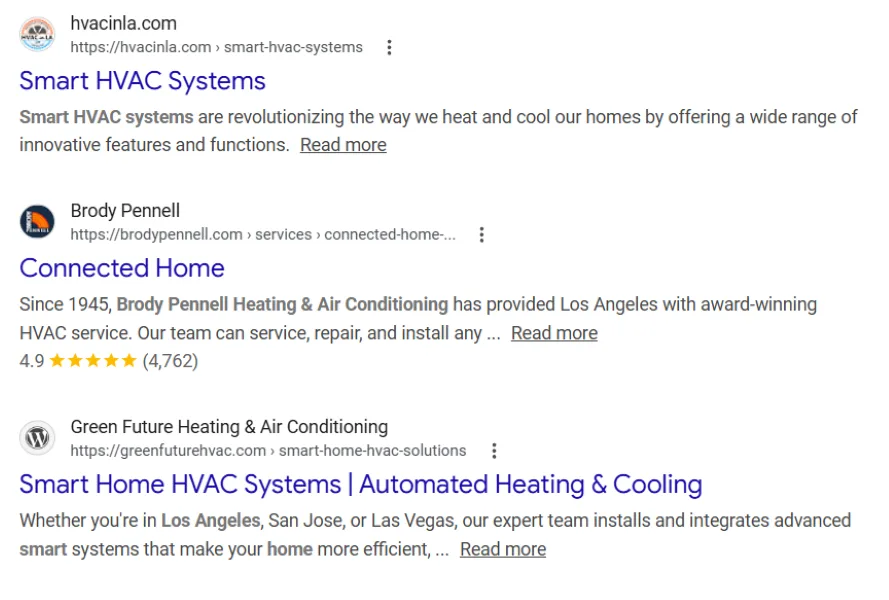
Roughly half of US homes use some version of smart home technology. One popular option is to incorporate your heating and air conditioning systems into smart home controllers.
Many legacy HVAC marketers have reacted to this trend. They’ve created service pages on their websites, published social media content, and targeted search engine marketing to capture this growing market segment of tech adopters.
How to apply this market segment example?
Think about how technology has changed in your industry, and segment your audience by the people who’ve adopted new tech. If you’re a CPA, it may be that some people are switching from Excel to more specific personal finance apps. You could promote your services as being “finance app-friendly.”
Microsoft 365: Device preferences
Microsoft 365 is a subscription-based software suite that includes familiar tools like Word, Excel, PowerPoint, and Outlook, along with cloud storage and collaboration features like Teams.
The products have two distinct user bases: business and personal. Business users tend to use MS 365 on desktops, while personal users often access it through their phones. And that’s one way that Microsoft segments its audience and marketing.
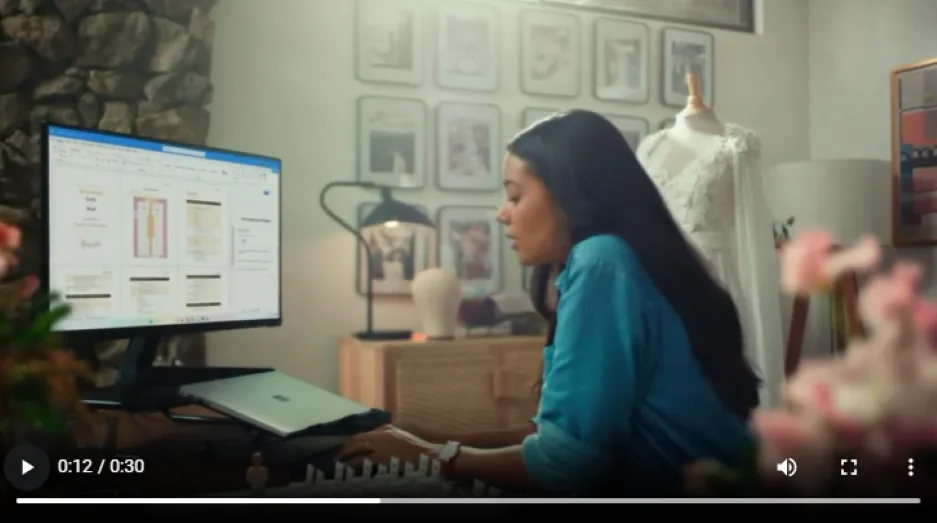
Microsoft often targets business users with desktop ads.
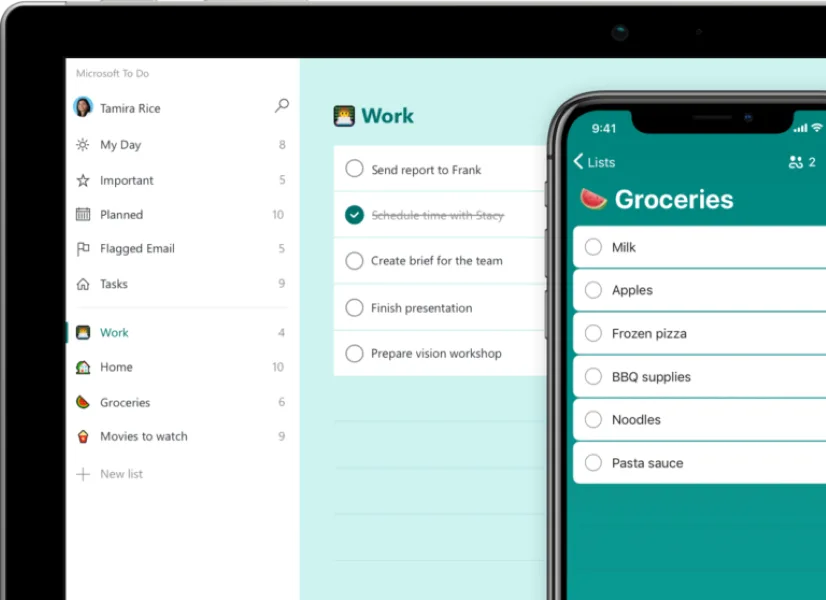
Microsoft’s marketing for personal users includes mobile applications.
How to apply this market segment example
The main takeaway here is to determine which devices get the most of your audience’s attention and invest your marketing budget accordingly. If they watch local sports or stream a lot of content on their televisions, a TV or streaming ad makes sense. If they’re spending more time scrolling, then social media or YouTube ads are the play.
Psychographic segmentation examples
Psychographic segmentation refers to dividing your audience based on psychological characteristics. Unlike demographics, which tells you that someone is a 35-year-old woman with a household income of $80,000, psychographics tries to answer a harder question: what does she actually care about?
For marketers, psychographic segmentation is where messaging gets its personality. Demographic data tells you who to reach, psychographic data tells you what to say and how to say it, making it the difference between an ad that gets scrolled past and one that stops someone mid-feed.
Common psychographic characteristics include:
- Values and beliefs (environmental responsibility, family first, religious faith)
- Lifestyle (outdoor enthusiast, homebodies, frequent travelers)
- Personality traits (adventurous, cautious, status-driven)
- Interests and hobbies (fitness, cooking, gaming, DIY)
- Social identity (community-minded, career-focused, counter-culture)
- Opinions and attitudes (political leanings, brand loyalty, skepticism of advertising)
- Aspirations (what they want their life to look like)
Pact: Values and beliefs
Pact produces certified organic cotton clothing that “protects farmers, reduces water usage, and removes toxic chemicals.”
Their t-shirts, leggings, and sundresses aren’t the cheapest on the market. But they’ve tapped into a segment of buyers who will pay a premium to support their values. Values-based marketing is a classic example of psychographic segmentation.

How to apply this market segment example
What is the “why” behind your business? Do you believe in making yoga accessible to everyone? Do you design landscapes that protect native environments? If so, find where the segment of your audience who cares about those things spends time, and highlight those attributes in messages there.
A word of caution. Targeting a market segment based on their values is one of the most powerful ways to generate customer loyalty. However, with great power comes great responsibility. You have to follow up on your brand messaging. If you talk about sustainability but take no measures to ensure it, the audience will be just as motivated to share that reality.
ZGrills: Interest and hobbies
Home cooks are a discerning and loyal audience who love to talk about their craft. People who cook on pellet smokers are a relatively small but passionate sub-segment in that category. They’ll discuss the finer points of oak vs cherry wood and happily tend to a “cook” that lasts 15 hours or more.
ZGrills connects with these culinary hobbiests in one of the best ways possible: with a branded subreddit. There, the brand can learn what its customers love and what challenges them. They can offer expert advice. And they can even, occasionally, promote products and sales (something that’s really hard to do on Reddit). All because they’ve identified an active niche market segment.
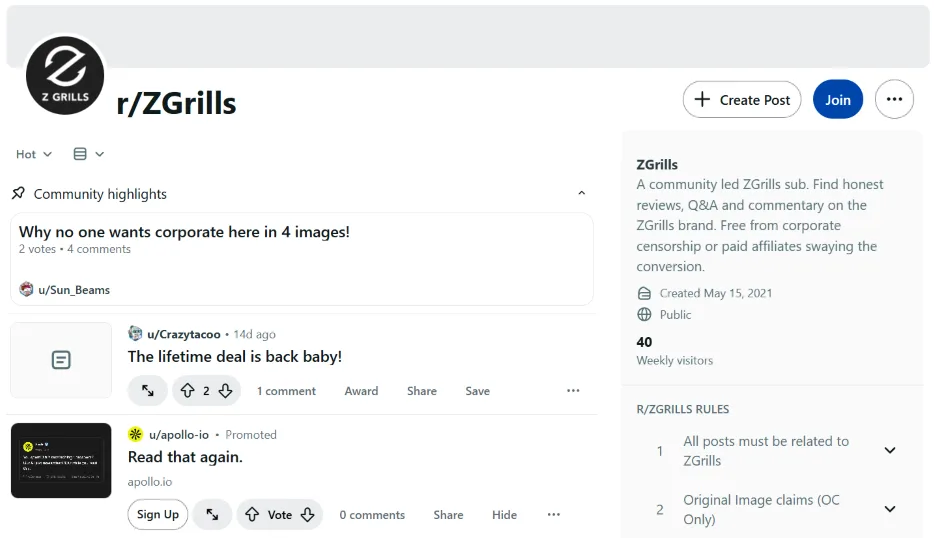
How to apply this market segment example?
Think creatively about how to segment your audience by interests and hobbies. Take a yoga studio, for example. Sure, many of its followers love yoga. But the studio could also connect with runners, weight lifters, or other amateur athletes who benefit from a regular yoga class.
Market segmentation examples FAQ
We’ve seen how several brands use market segmentation to make their marketing more relevant and timely. Let’s cover a few segmentation basics.
What is market segmentation?
Market segmentation is the practice of dividing your potential customers into smaller groups based on shared characteristics, behaviors, or locations so you can address each in a more relevant way.
What are the benefits of market segmentation?
The biggest benefit of market segmentation is relevance. When your message matches what a specific group of people actually cares about, it performs better than a generic campaign aimed at everyone. That translates directly into less wasted ad spend, higher conversion rates, and stronger customer loyalty.
Segmentation also helps you spot opportunities you might otherwise miss, like an underserved customer group or a product gap that your competitors haven’t addressed yet.
What are the five types of market segmentation?
The five most common types of market segmentation are:
- Demographic: Who your customers are (age, income, gender, family status).
- Geographic: Where they are (region, city, neighborhood, climate).
- Psychographic: What they value and believe (lifestyle, interests, personality).
- Behavioral: How they act and buy (purchase history, loyalty, buying stage).
- Technographic: What technology they use (devices, platforms, tech adoption habits).
Make these market segment examples work for you
It’s hard to imagine a business that won’t benefit from market segmentation in some way. Even an owner-operated lawncare business can separate their customers into people concerned with environmental impact and those just looking to save a little time.
The biggest takeaway from all of these market segment examples is that once you’ve segmented your audience, you have to understand what really motivates each group. Audience research, internal data, and even reviewing how competitors market to each segment will help you make messaging more relevant.

Recommended for you





Unlock your business potential
We offer innovative technology and unparalleled expertise to move your business forward.