


How are other small businesses investing their marketing budgets, how much are they spending, and what are their greatest challenges? Wouldn’t you like to know…
Luckily, we’ve got the answers to your most pressing small business marketing questions—with the data to back it up—in our second annual Small Business Marketing Trends Report! We surveyed over 300 small business owners to understand the current state of their marketing strategies, what exactly they’re planning next year, how they’re using AI, and so much more.
In this report, we’re sharing all the data we gathered plus a wealth of strategic information and insights to help you understand the competitive landscape and inform your small business marketing planning in 2026.
Contents
- The who, what, and where of this report
- The most popular and effective small business marketing strategies
- Future planning: How small businesses will evolve in 2026
- Time and tech: How small businesses are managing their marketing
- Key takeaways: The big picture
🛑 Want this report sent directly to your inbox? Download it here!
The who, what, and where of this report
Here’s a breakdown of the locations and industries of the businesses we surveyed to build the foundation of this report.
Industry breakdown
We were thrilled to have such a wide range of survey respondents that truly reflect the small business landscape. Businesses surveyed were spread out across industries, location (although the vast majority—87%–were in the US or Canada), and size (which we’ll cover more next).
Business size

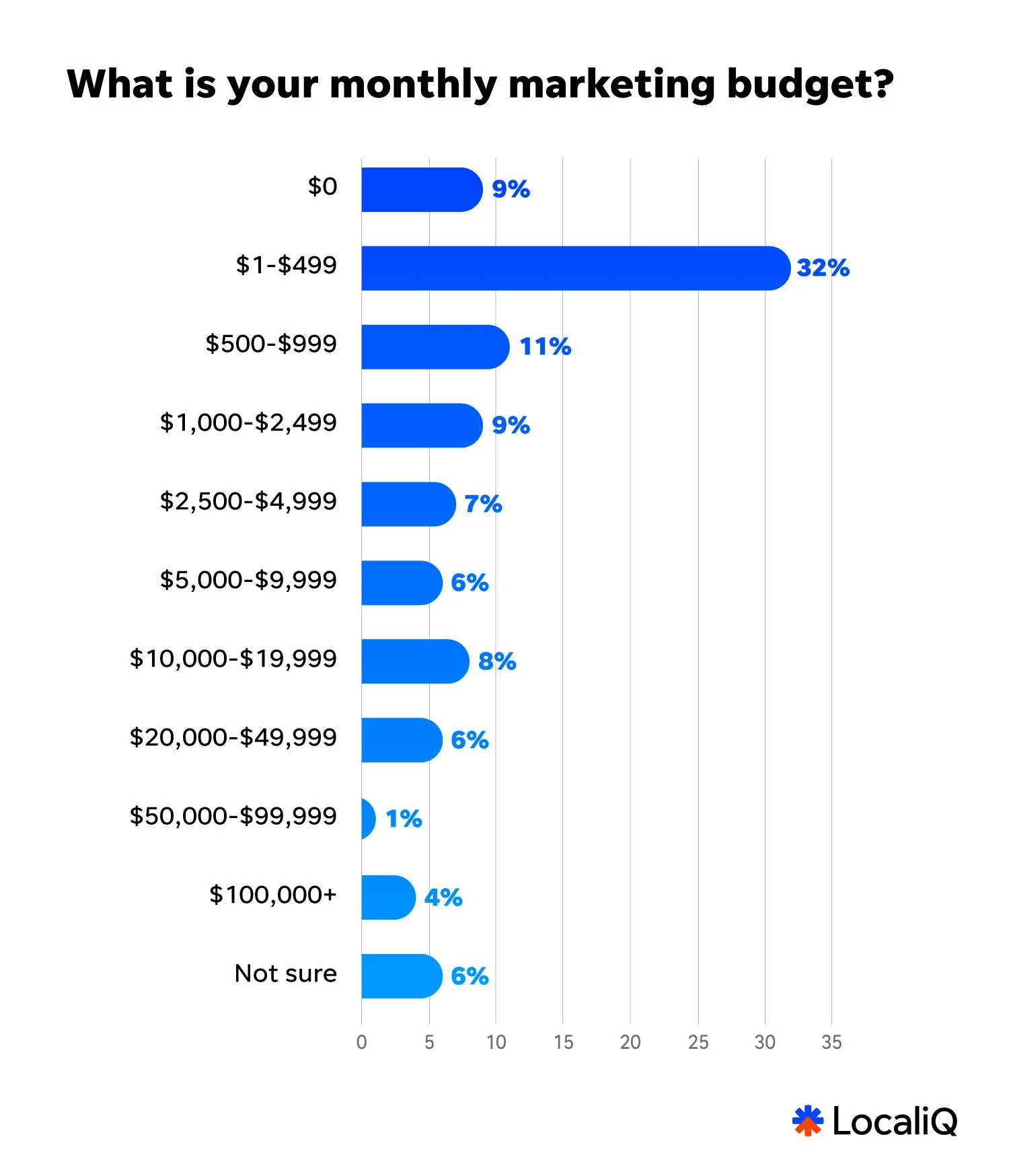
Monthly marketing budgets
Dedicated marketing staff

To get a peek into how the small businesses we surveyed operate, we wanted to know their size and current marketing budget. Unsurprisingly, smaller businesses tend to have smaller budgets. When drilling into the data further, we found that businesses with 10 or fewer employees were 55% more likely to have a marketing budget under $500 a month and were 45% more likely to have no full-time employees dedicated to marketing. That means these smaller businesses are truly tasked with doing more for less.
🚨 Want help building your marketing plan? Free guide >> 6 Simple Steps to a Complete Small Business Marketing Plan (+Template!)
The most popular and effective small business marketing strategies
To better understand the current state of small business marketing, we asked about what types of strategies SMBs are currently investing in and how they feel about their results.
Current marketing and advertising channels

The three most-used marketing channels this year are unpaid social media marketing (66%), social media ads (56%), and SEO and email marketing (53%). It makes sense: These channels are extremely effective for small businesses and can help them easily connect with their audiences where they’re spending time online.
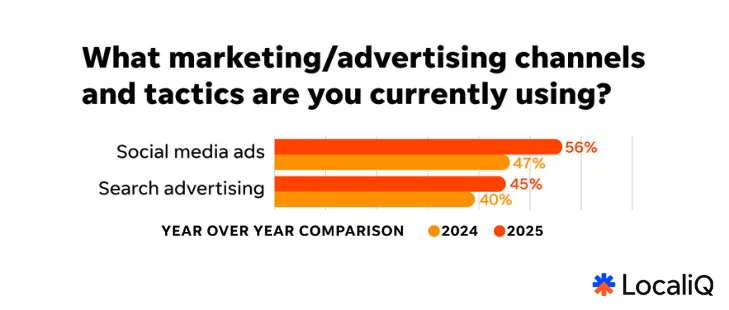
Last year, only 40% of the small businesses we surveyed were investing in search advertising. That percentage increased to 45% this year, but it’s still surprisingly low given how effective search advertising is at driving leads.
That percentage was even lower (30%) for small businesses with a monthly marketing budget under $1,000. This could be a missed opportunity for that remaining 70% of these businesses, especially because 65% of people will click on a search ad when they’re looking to make a purchase.
It was also surprising to see free tactics like reputation management and video marketing and advertising so low on the list (28% and 26%, respectively). These strategies are important for small and local businesses to increase their visibility on search engines and drive more website traffic—not to mention they had some of the highest rates of satisfaction (we’ll talk more about this later).
Social media channels SMBs are using
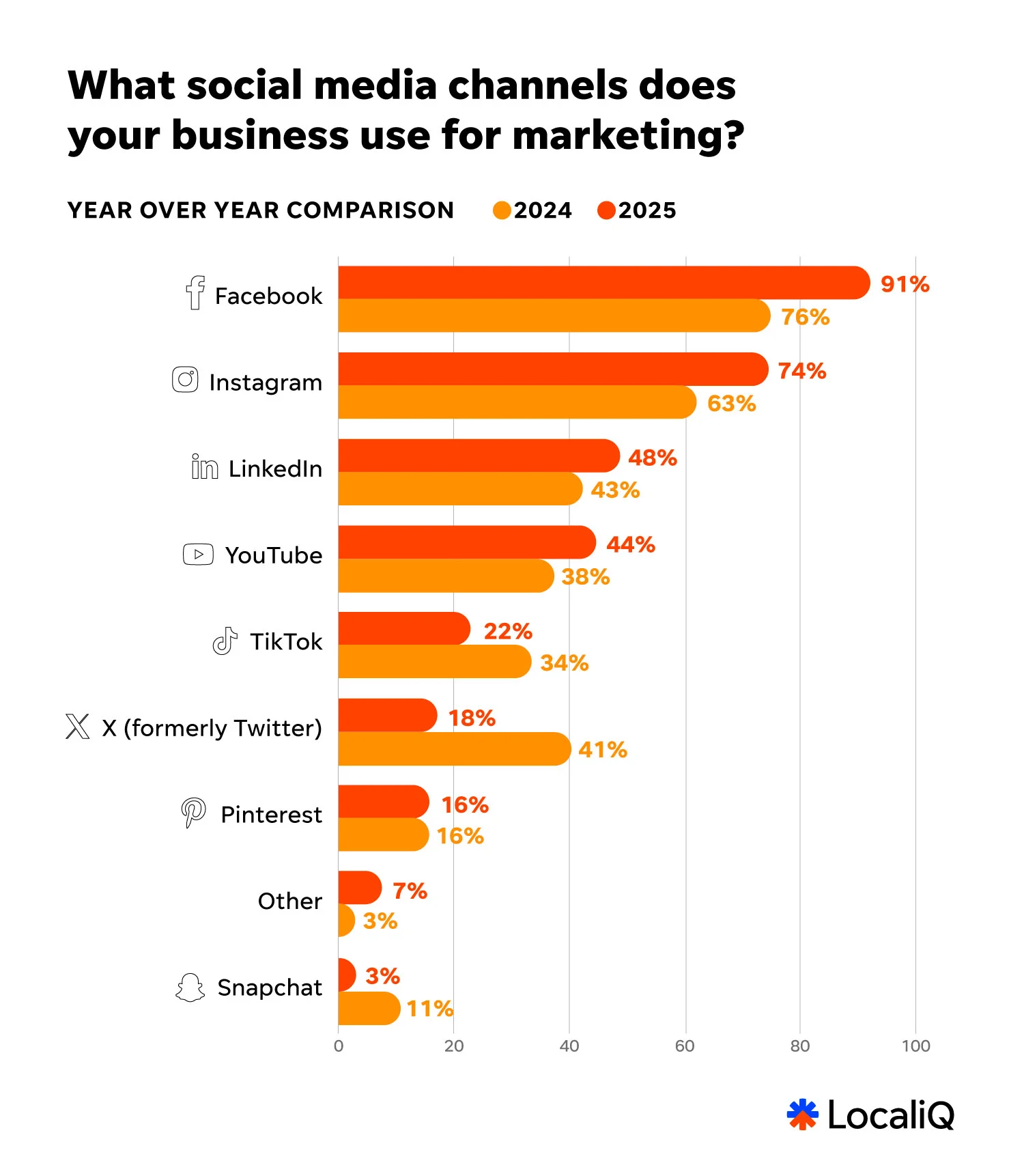
Just like in last year’s report, Facebook is still the top social channel for most small businesses. Over 90% of small businesses surveyed are using Facebook as part of their social media marketing (up from 76% last year), followed by Instagram at 74% (up from 63%), and LinkedIn at 48% (up from 43%). This means businesses know where to find their audience: Facebook is the most popular social media platform for users, and Instagram is not far behind. This growth year over year also shows that businesses are finding social media marketing to be an effective channel to reach their audience—and their goals.
Surprisingly, fewer small businesses are investing in TikTok this year (22%) compared to last year (34%). This could be due to growing competition on the platform and the need to consistently post to see measurable growth—it’s not super sustainable for many SMBs unless they have a strong online presence and ability to be ahead of the latest trends. It could also be due to the potential TikTok bans that have occurred throughout the year—the uncertainty around TikTok’s future leads it to be an unstable investment for small businesses with already limited budget.
Snapchat and Pinterest were, once again, the least-used platforms by the small businesses we surveyed at 3% and 16%, respectively.
Effectiveness of popular marketing channels
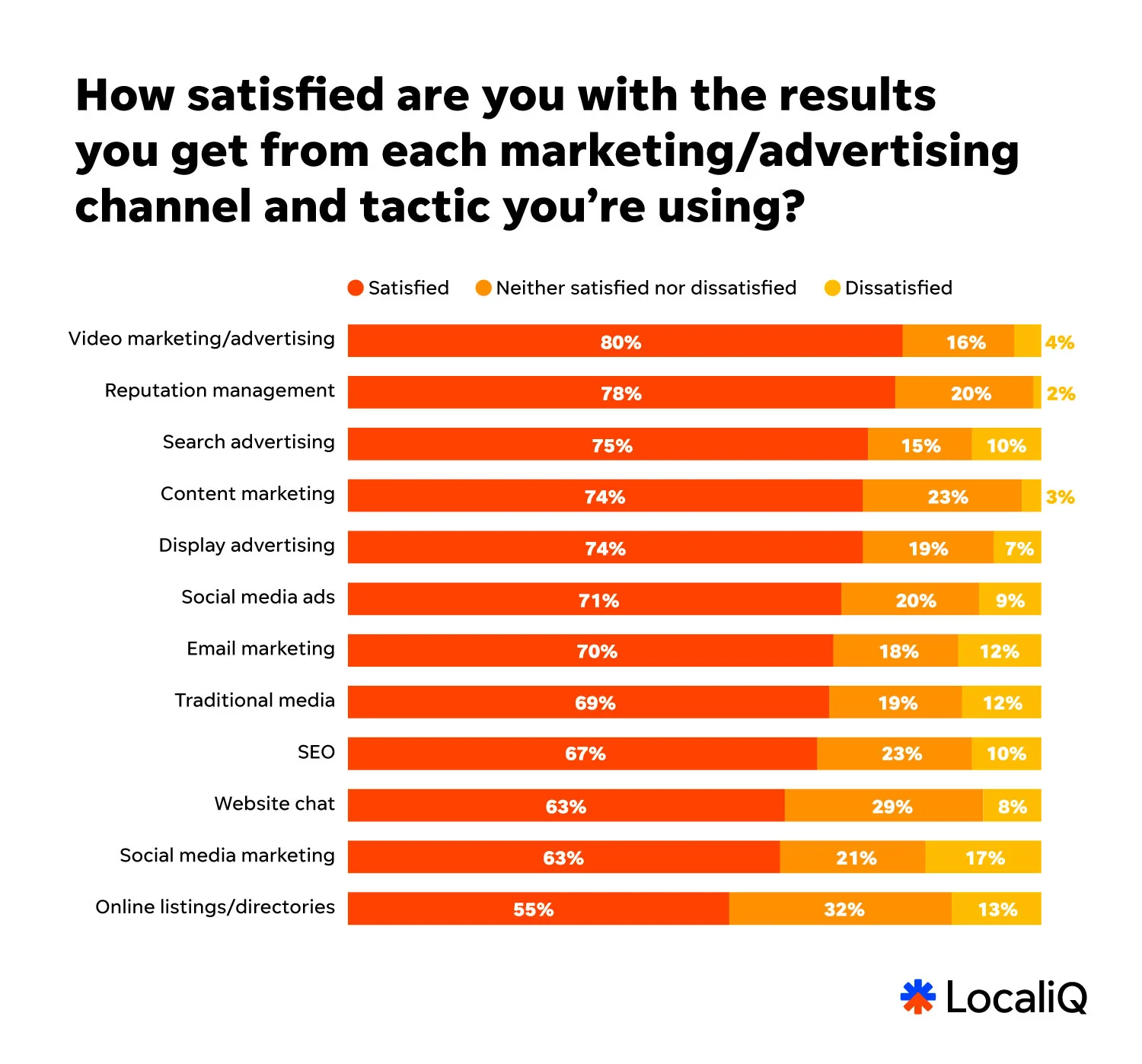
Last year, search advertising topped the list as the tactic that most small businesses are satisfied with. But this year, video marketing and advertising and reputation management led the pack. This is interesting given that these were two of the lesser-used tactics reported by SMBs. Reputation management is a largely free tactic that can net big returns in the form of new and repeat customers.
Search advertising was still high on the list this year. Search advertising is a proven effective way to drive website traffic when it counts—when people are actually looking for a product or service to buy—which leads to direct conversions.
SMBs also reported that they are satisfied with the results they’re seeing from tactics like SEO, content marketing, and email marketing. These, like reputation management, are largely free or low-investment strategies meant to educate and engage potential customers, so they’re worthwhile strategies for SMBs with limited budgets.
Website chat and online listings and directories had the highest rates of dissatisfaction at 19% and 18%, respectively. Website chat was surprising to us, given it’s a low-cost strategy that can be effective at converting website visits into customers. This could be due to the specific website chat provider or the quality of web traffic driven to the site. Online listings and directories are a little less surprising—brand-building strategies can be difficult to measure. While they’re extremely important, it may be harder to tie results directly to these investments.
Top lead sources
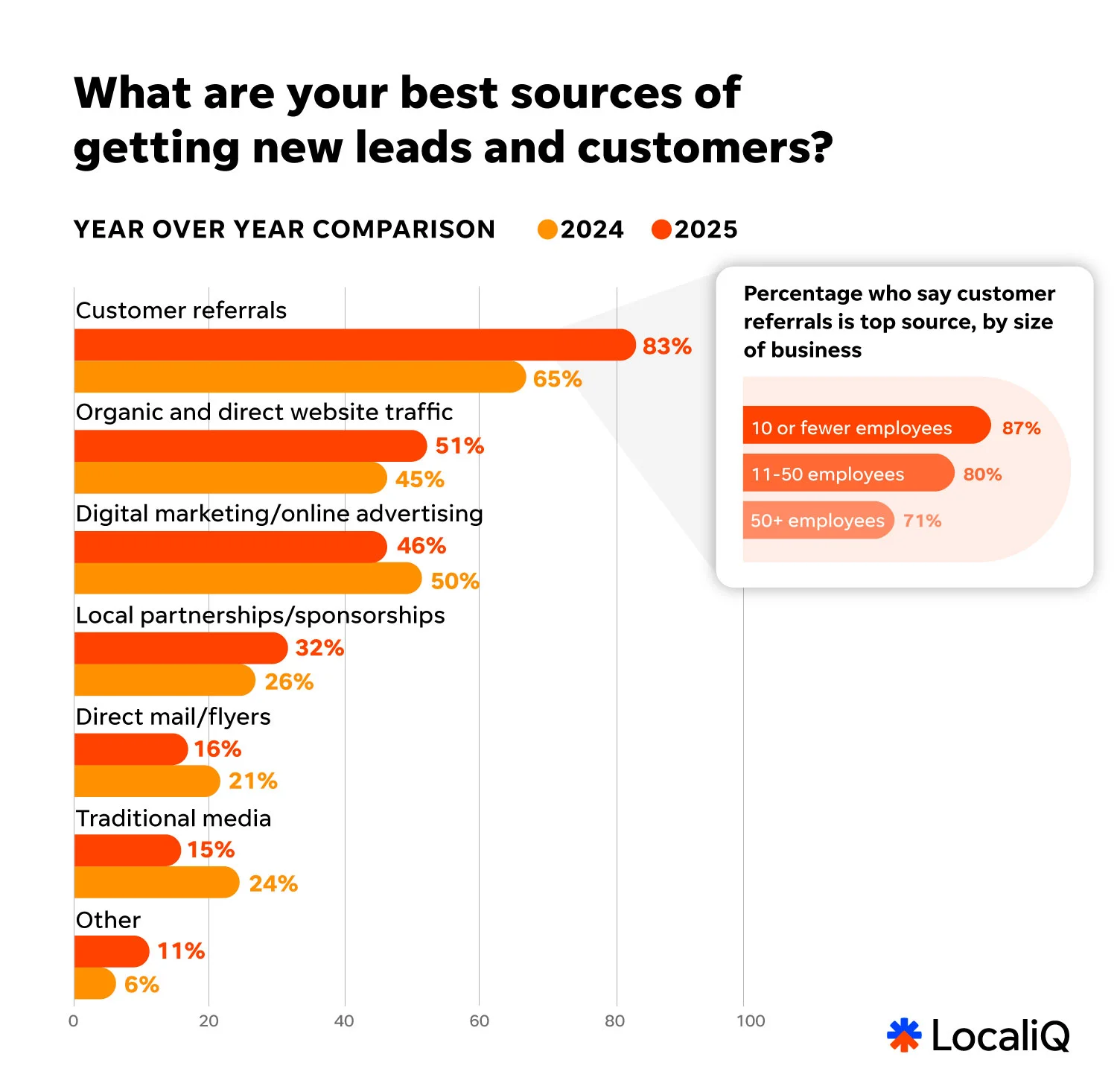
The majority (83%) of small businesses said customer referrals are their best source for customer acquisition (up from 65% last year), and the rate was even higher (87%–up from 75% last year) for businesses with 10 or fewer full-time employees.
For nearly half of all the businesses we surveyed (46%), digital marketing and online advertising was a top source for new customers and leads. However, this varied a little depending on business size and budget—only 37% of businesses with a budget of $1,000 or less said this was a top source compared to 71% of businesses with a monthly budget of $10,000 or more. This isn’t surprising given it requires a healthy budget to successfully run online advertising campaigns—the more you have to spend, theoretically, the better results you can see.
It’s interesting to see that, despite SEO challenges and dips in website traffic over the year, more than half of SMBs we surveyed noted organic and direct website traffic as a top source for new customers. This speaks to the importance of driving and converting website traffic through those online advertising channels and an optimized website.
🚀 We put together lead generation ideas for you! Free download >> The Definitive Guide to Lead Generation
Important performance metrics

When asked about which metrics are most important to them, the majority of SMBs surveyed answered that they all are. Sales and revenue was the top reported metric, with 78% indicating it is “very important,” followed closely by sales and revenue (73%). Other important metrics, including conversion rate and cost per lead, are directly tied to online advertising.
Website traffic was another important metric for SMBs—which has become even more challenging to drive over the last year. Website traffic is expected to continue declining in 2026.
Future planning: How small businesses will evolve in 2026
Now that we have a grasp on the current state of marketing, let’s look at what small businesses are planning for the next year to help inform your strategy.
Biggest challenges for 2026
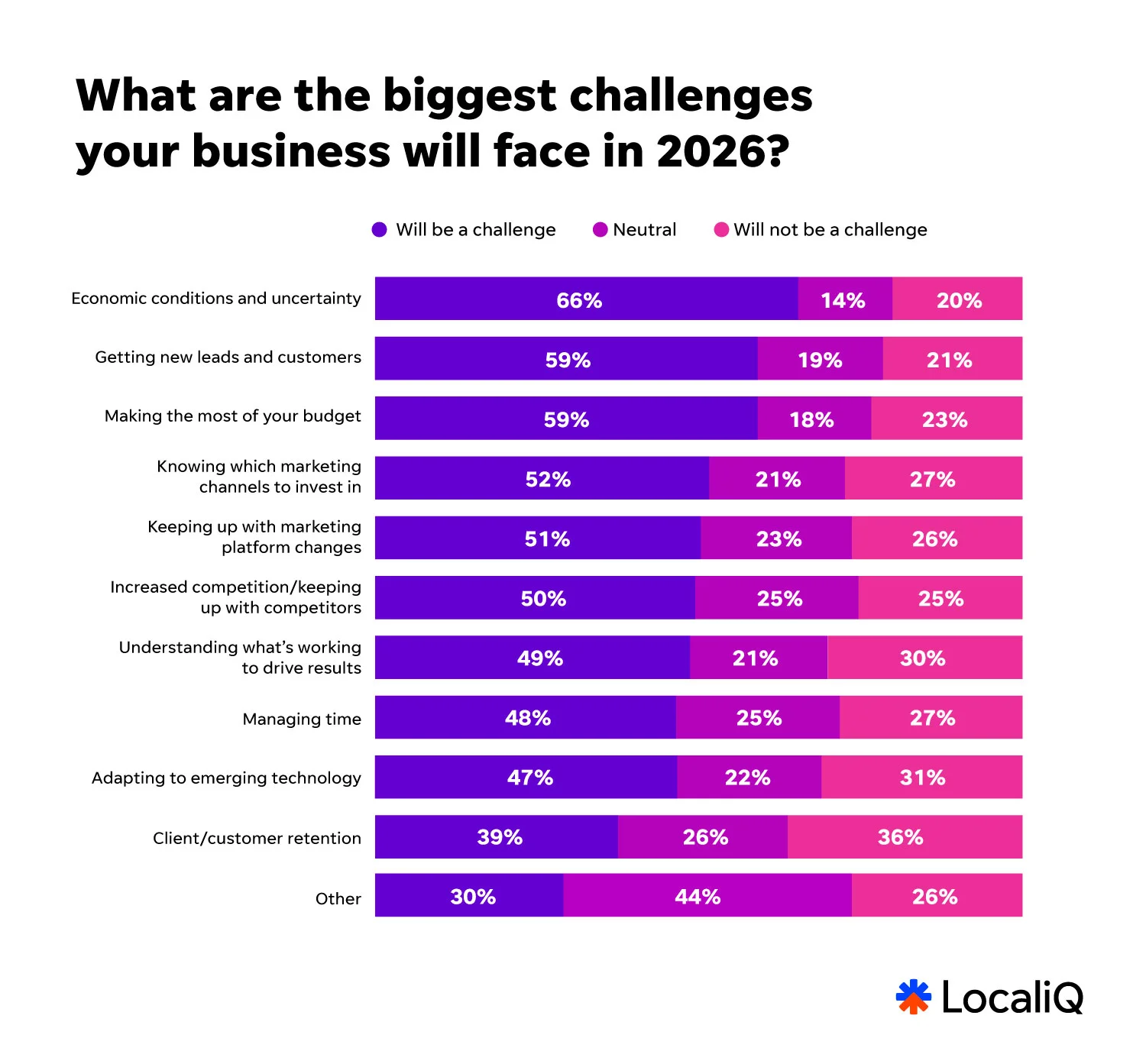
66% of small businesses think economic uncertainty will be somewhat or very challenging in the coming year—this is up significantly from just 48% last year. This isn’t surprising given continued inflation and the introduction of tariffs that have many businesses worried about the potential impact they might experience. This may include supply chain challenges, increased operational costs, and the need to increase prices—which could lead to customer complaints or fewer purchases overall. The uncertainty can make it difficult to accurately plan and budget—something many businesses are feeling as we enter a new year.
Getting new leads and customers continues to be a concern for SMBs, with 59% saying it will be challenging in 2026 (17% of those noted it will be very challenging). Small businesses are also concerned about maximizing their budget. This is the biggest concern for businesses with a smaller monthly marketing budget.
On the other hand, SMBs feel confident about their ability to both keep up with competitors and adapt to marketing platform changes. They also feel confident about customer retention—fewer than 1 in 10 said this area is “very challenging.” Way to go!
Marketing budget allocation for 2026
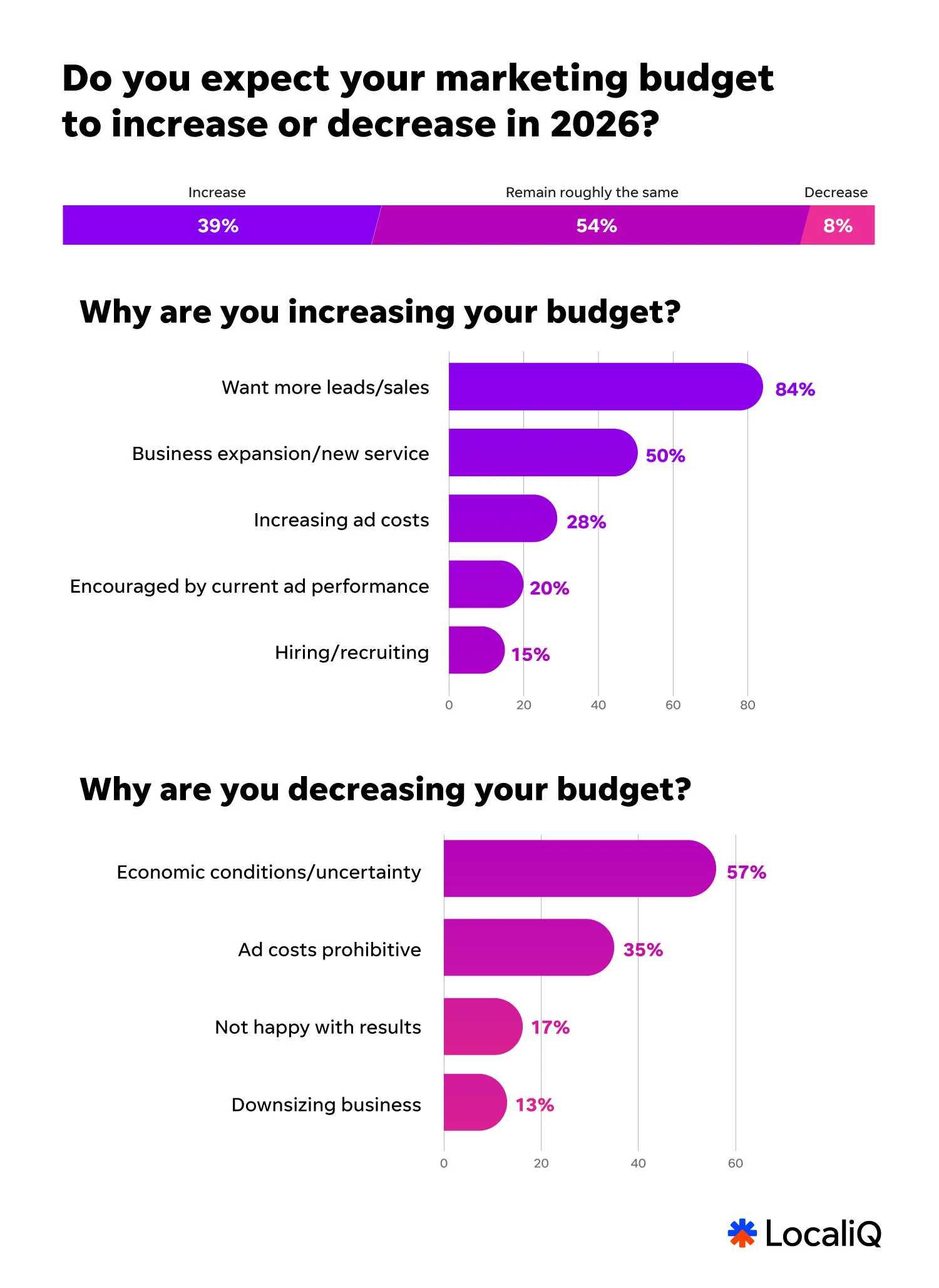
Despite economic challenges, only 8% of small businesses are planning to decrease their marketing budgets in 2026. Nearly 40% of small businesses are planning to increase their marketing budgets—this comes after almost half planned to increase their budgets in 2025. The majority (54%) of small businesses plan to keep the same budgets.
Most SMBs are increasing their budgets to drive more leads and sales. This makes sense as many marketing strategies built around lead acquisition require budget, and if you’re getting a good return on your investment, it’s easy to scale. In other words, you can typically drive more leads by spending more.
For those decreasing their budgets, the majority (57%) are doing so because of the economy. This is understandable after a couple of years of record inflation and the addition of tariffs in 2025.
Marketing budget plans for 2026

To better understand where small businesses are planning to allocate their marketing budgets in 2026, we asked how they’ll be investing in these top strategies. Over half plan to invest more in video marketing and advertising (53%), while 47% plan to invest more in both search advertising and social media advertising.
Most SMBs are planning to keep their investments roughly the same for many tactics, including SEO, email marketing, social media marketing, reputation management, website chat, and more, while 24% plan to invest less in traditional media in 2026—this is up from 16% in last year’s report.
Marketing channel investments in 2026

Over 30% of small businesses we surveyed who are not currently using social media marketing as part of their strategy are planning to invest in it over the next 12 months. 26% are planning to invest in SEO while 25% are planning to invest in both video marketing and advertising and content marketing. Surprisingly, only 23% of those not currently running search advertising campaigns are planning to invest in them in 2026.
The focus on largely unpaid strategies in 2026 isn’t shocking given the economic challenges many SMBs are bracing for in the coming year—investing in low-cost strategies can be a good bet to maximize budgets without sacrificing an online presence. However, as many platforms are becoming more pay-to-play focused, it can be detrimental to forgo online advertising altogether—online ads can help you expand your existing audience and reach a targeted segment of most likely customers.
Website chat once again tops the list of tactics small businesses are planning not to invest in through 2026. Only 13% said they will be adding this to their marketing arsenal. This is a little surprising given this marketing tactic is easy to implement and can help capture and convert more website visitors, especially from channels like search ads, social ads, and SEO, which many SMBs surveyed will be newly investing in.
Time and tech: How small businesses are managing their marketing
Small businesses are busy. We wanted to understand how much time they were spending on their marketing each week and what tools and technology (like AI) were helping them keep it all running smoothly.
Time spent managing marketing

The majority (60%) of SMBs surveyed spend between 1-10 hours per week on marketing. This rate was higher for small businesses with 10 or fewer employees (72%) and lower for those with 50 or more employees (50%). Because SMBs with fewer employees and smaller marketing budgets tend to have fewer (or no) employees dedicated solely to marketing, their day-to-day schedules are spread across a range of activities that may include marketing.
We’re also able to see that those with a higher marketing budget are spending more time overall on marketing each week—64% of businesses with a monthly budget of $10,000+ were spending over 10 hours per week on marketing—which could point to them performing all marketing duties in-house.
Tools and software

SMBs are using a variety of available tools to help market their businesses. Over 70% are using website analytics like Google Analytics—an almost 50% increase year over year, and 63% are using design tools like Canva or InDesign—a 47% increase year over year.
Although the rate of use increased a bit, it was surprising to see that so few SMBs (32%) are using lead management software to help them keep up with leads driven from their marketing strategies.
Many of these tools are available in free versions, which are great for small businesses with low budgets.
🛠️ Speaking of free tools…try some of ours:
AI and SMBs

AI has evolved from a nice-to-have to a must, and once again, nearly 60% of SMBs are already using it for some part of their marketing. The vast majority (81%) are using it for content creation—up from 52% last year, with other popular applications including design (54%) and social media management (35%).
84% of small businesses said they’re using AI to save time—up from 61% last year, and 78% said they use it to help them generate ideas—up from 50%. This is likely due to SMBs adopting AI and finding practical and effective use cases for their businesses.
As AI continues to grow, it will be crucial for small businesses to continue adopting AI tools, tricks, and trends to stay ahead of the curve, maximize productivity, and expedite tedious processes.
Marketing partners and SMBs

When it comes to marketing partners, only 34% of the SMBs we surveyed are currently working with at least one. This is a complete reversal from our results last year when 60% of the SMBs we surveyed were working with a marketing partner. Of those SMBs working with a marketing partner, 59% are working with one or more, while nearly 20% are working with four or more—up from 9% last year.

When it comes to finding the right marketing partner, the price is right—small businesses noted that price is most important, followed by proven results (although 80% deemed this “very important”), and reporting transparency. Basically, they want to make sure they’re paying for real results from a proven partner.
Surprisingly, a one-stop shop was less important to small businesses (although still important at 74%), but only 38% categorized it as “very important.”
Key takeaways
We’ve covered a lot of ground and shared a lot of data, but what does it actually mean for your business and how can it help inform your planning for 2026? We’re breaking down the key takeaways.
Businesses are worried about the economy, but they’re staying the course
Economic conditions and uncertainty are the number one challenge small businesses are facing in 2026, yet despite this, only a minority (8%) are planning to decrease their budgets—a smaller percentage than last year’s 16%.
But more SMBs are planning to maintain their budgets in 2026 (54%) as opposed to 2025, when 49% planned to increase budgets and 35% planned to keep the same budgets.
This shows that while SMBs are worried about what the economic changes and uncertainty will bring, they’re largely confident in their existing strategies and investments—opting to maintain the status quo rather than make any large shake-ups.
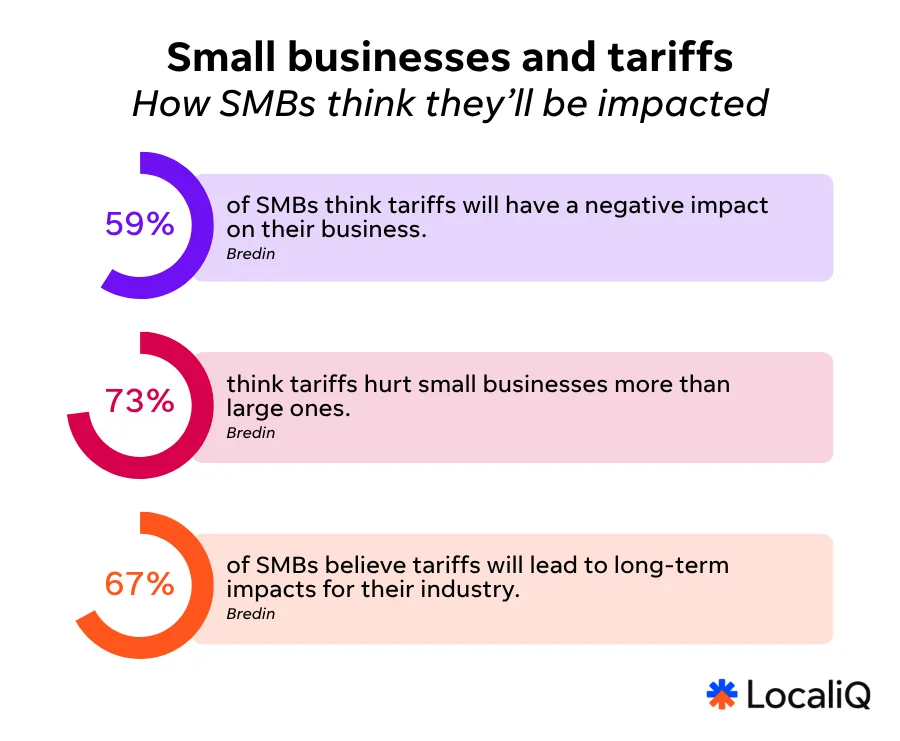
Some stats that illustrate how SMBs are thinking about tariffs.
Most small businesses continue to do a lot with little budget
Most of the SMBs we surveyed are running their strategies across multiple marketing channels—but 52% have monthly marketing budgets under $1,000 and 50% have no employees dedicated to marketing.
This means SMBs are truly doing a lot with little (to no) budget—and without employees whose position is dedicated to this function.
This can make getting new leads and growing or expanding their businesses (two top marketing goals) a big challenge. Many lead generating strategies, such as search advertising and social ads, require a budget—meaning many of these businesses are relying on unpaid tactics to fulfill their marketing goals.
Unpaid strategies are dominating SMB marketing plans
Speaking of…the most popular marketing channels for small businesses were mostly unpaid, including social media marketing, email marketing, SEO, and online listings and directories.
This makes sense due to budget constraints but may not be maximizing time or contributing to lead generation. Many of these strategies take a lot of time—which can be especially challenging without employees fully dedicated to mastering their implementation.
It’s also interesting to note that some of these strategies, including online listings and social media marketing, had some of the lowest rates of satisfaction. This could be due to SMBs relying on them to drive leads and new customers when their main purpose is for brand building. They can also be difficult to measure direct impacts such as sales and revenue, return on investment, or conversion rate and cost per lead—the metrics SMBs noted are most important.
Social ads are outpacing search ads in popularity
56% of small businesses are currently running social ads while only 45% are running search ads. This could speak to the recent search engine results page shake-ups (like the introduction of AI Overviews pushing results down the page) or the cost difference between the two platforms—our recent benchmarks showed that Facebook Lead Ads have an average cost per lead of $27.66 while Google Ads have an average cost per lead of $70.11.
It could also speak to the effectiveness of a paid plus organic approach on social media sites. Building a solid social media presence that includes both of these strategies can help you grow your audience and keep them engaged.
Or it could simply be that running ads on social media platforms is often easier than running ads on platforms like Google and Microsoft. Many people are already familiar with social media sites, and ads here are fairly intuitive to run, while search advertising is much more complex and requires hands-on testing and optimization for success.
AI proves its worth
While the number of SMBs using AI as part of their marketing strategy remained the same year over year, more respondents indicated they were using it to save time and come up with ideas.

AI has introduced even more advanced features over the last 12 months and become a normal part of most people’s lives. SMBs are likely becoming more proficient in using it to speed up once tedious and time-consuming processes.
SMBs are planning to invest more in video in 2026
51% of businesses not currently investing in video marketing are planning to do so next year, followed by content marketing and reputation management. This shows that businesses are focused on building their brand and exploring new channels to connect with prospects.
As video continues to grow in popularity—from the ubiquitousness of YouTube to the rise of TikTok—it only makes sense that more and more SMBs will get into the game and find ways to engage with their audiences on these platforms.
Get a leg up on the small business competition
It’s great to get a peek behind the curtain into how small businesses are marketing their businesses and planning for the future, especially when it comes time to build your own strategy. If you want help finding the right marketing mix for your business, we’re here to help. Let’s talk!

Recommended for you





Unlock your business potential
We offer innovative technology and unparalleled expertise to move your business forward.