


As a business owner, you want to capture searchers and turn them into customers—especially when 88% of searches for a local business result in a call or visit.
It makes search advertising a no-brainer. But I’ve spent enough time staring at account reports to know how difficult it can be to predict the average campaign performance. For instance, what’s the average click-through rate, cost per click, or conversion rate for search ads? Are your results in line with industry averages? What can be done to improve your search advertising results if not?
In partnership with WordStream by LocaliQ, we’ve dug into the data from thousands of our customers’ advertising campaigns across Google Ads and Microsoft Ads to create search advertising benchmarks for the top 20+ industries.
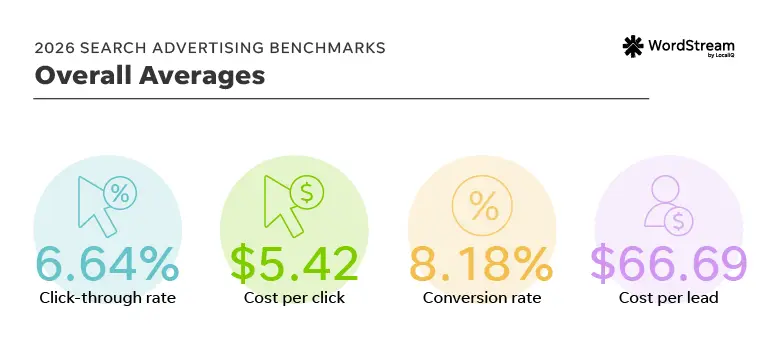
I’m sharing some of the data along with expert insights and tips here. But if you want to check out the full charts and comparisons (which I highly recommend!), download the full report >> 2026 Search Advertising Benchmarks for Your Industry.
Contents
- Average cost per click
- Average click-through rate
- Average cost per lead
- Average conversion rate
- Expert tips to improve your search campaigns
Average cost per click for search advertising
Search advertising is a cost-effective advertising strategy—and the average cost per click (CPC) really shows that across all industries we looked at, despite a bit of an increase over the last year.
The average CPC for search advertising across all industries in 2026 is $5.42.

| Business Category | Average CPC |
| Animals & Pets | $4.06 |
| Apparel / Fashion & Jewelry | $4.44 |
| Arts & Entertainment | $1.63 |
| Attorneys & Legal Services | $9.87 |
| Automotive — For Sale | $2.27 |
| Automotive — Repair, Service & Parts | $4.35 |
| Beauty & Personal Care | $4.62 |
| Business Services | $5.87 |
| Career & Employment | $5.81 |
| Dentists & Dental Services | $8.00 |
| Education & Instruction | $4.81 |
| Finance & Insurance | $3.39 |
| Furniture | $3.97 |
| Health & Fitness | $6.17 |
| Home & Home Improvement | $8.33 |
| Industrial & Commercial | $5.87 |
| Personal Services | $7.17 |
| Physicians & Surgeons | $4.76 |
| Real Estate | $3.22 |
| Restaurants & Food | $2.05 |
| Shopping, Collectibles & Gifts | $4.14 |
| Sports & Recreation | $2.77 |
| Travel | $2.14 |
The lowest average cost per click came from Arts and Entertainment at $1.63, while Restaurants and Food was close behind at only $2.05 per click.
A few other industries, including Travel and Sports & Recreation, had relatively low CPCs under $3.
Cliff Sizemore, Senior Marketing Manager at LocaliQ, said CPC is a metric he generally keeps a close eye on, but not without factoring in other metrics as well.
“Focusing too much on cost per click can lead you to cheaper clicks that don’t convert. I pay close attention to conversion rate and cost per lead in relation to CPC,” he said.
Average click-through rate for search advertising
In search advertising, your click-through rate (CTR) can tell you a lot. A low CTR might be a sign of a poor offer, insufficient targeting, or ad copy in need of optimization.
High CTR would tell you that your search ads are connecting with your audience—and driving them to take action.
The average CTR for search advertising in 2026 across industries is 6.64%.
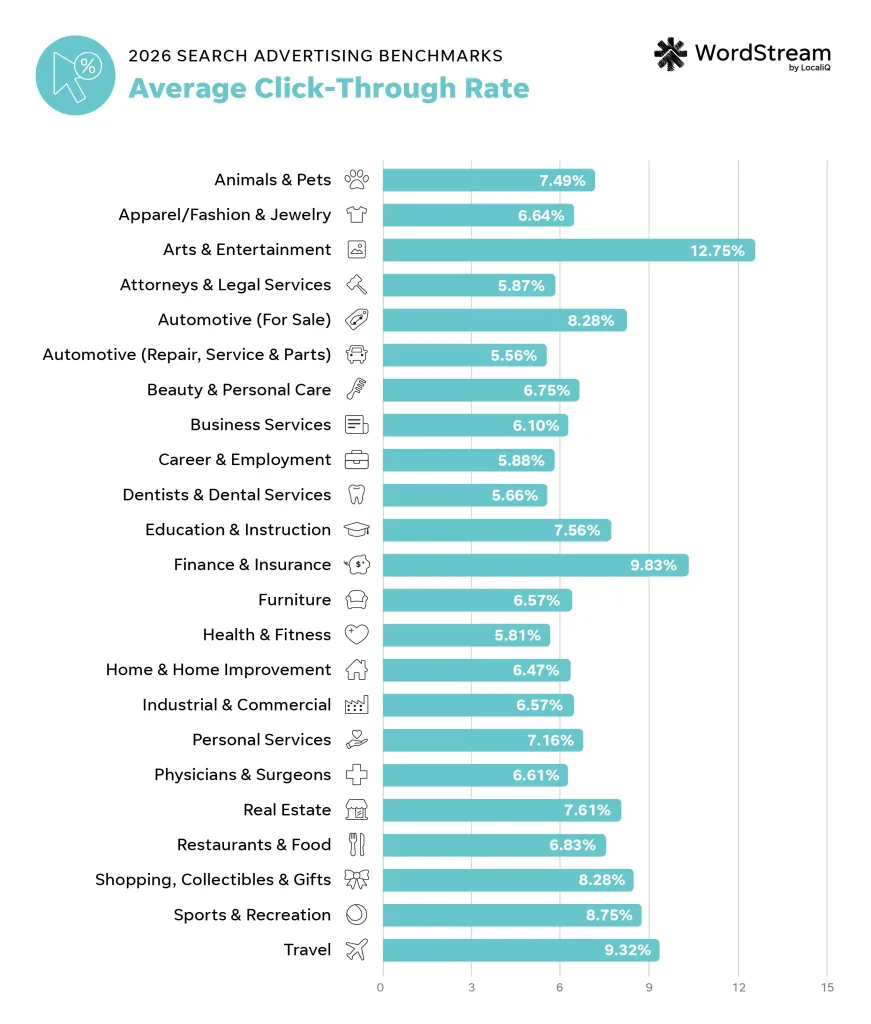
| Business category | Average CTR |
| Animals & Pets | 7.49% |
| Apparel / Fashion & Jewelry | 6.64% |
| Arts & Entertainment | 12.75% |
| Attorneys & Legal Services | 5.87% |
| Automotive — For Sale | 8.28% |
| Automotive — Repair, Service & Parts | 5.56% |
| Beauty & Personal Care | 6.75% |
| Business Services | 6.10% |
| Career & Employment | 5.88% |
| Dentists & Dental Services | 5.66% |
| Education & Instruction | 7.56% |
| Finance & Insurance | 9.83% |
| Furniture | 6.57% |
| Health & Fitness | 5.81% |
| Home & Home Improvement | 6.47% |
| Industrial & Commercial | 6.57% |
| Personal Services | 7.16% |
| Physicians & Surgeons | 6.61% |
| Real Estate | 7.61% |
| Restaurants & Food | 6.83% |
| Shopping, Collectibles & Gifts | 8.28% |
| Sports & Recreation | 8.75% |
| Travel | 9.32% |
Many of the industries we analyzed saw a fairly high average CTR—over 12% for Arts and Entertainment, and over 9% for Finance and Insurance and Travel.
Every expert we talked to agreed that CTR is a great indicator of how your search advertising campaigns are performing.
“CTR tells you how your ads are performing and can provide valuable information you can use to optimize your search ads to pull in more clicks—and more conversions,” said Susie Marino, PPC expert and LocaliQ senior content marketing specialist.
Amy Bishop, Senior Vice President of Performance Marketing at Waystar, said that while CTR is a good metric to measure, it shouldn’t be the main indicator of PPC success.
“I generally advise that CPC and CTR are health metrics. They’re important to keep a pulse on and to use as levers to achieve your goals. However, they aren’t KPIs. Focusing too much on CPCs or CTR as a KPI can be detrimental, so it’s important that bettering these metrics is never at the expense of more important metrics like return on advertising spend,” she said.
💡 Want a deeper look at your Google Ads performance? Try our Google Ads Grader for actionable insights and next steps >> Get your free audit now!
Average cost per lead for search advertising
Cost per lead (CPL) is an essential PPC metric for your search advertising campaigns. It measures more than just an action taken on your ad—it shows how much you spend for a user to click on your ad and contact you in some way, whether by phone, chat, form fill, or email.
The average CPL for search advertising in 2026 is $66.69.
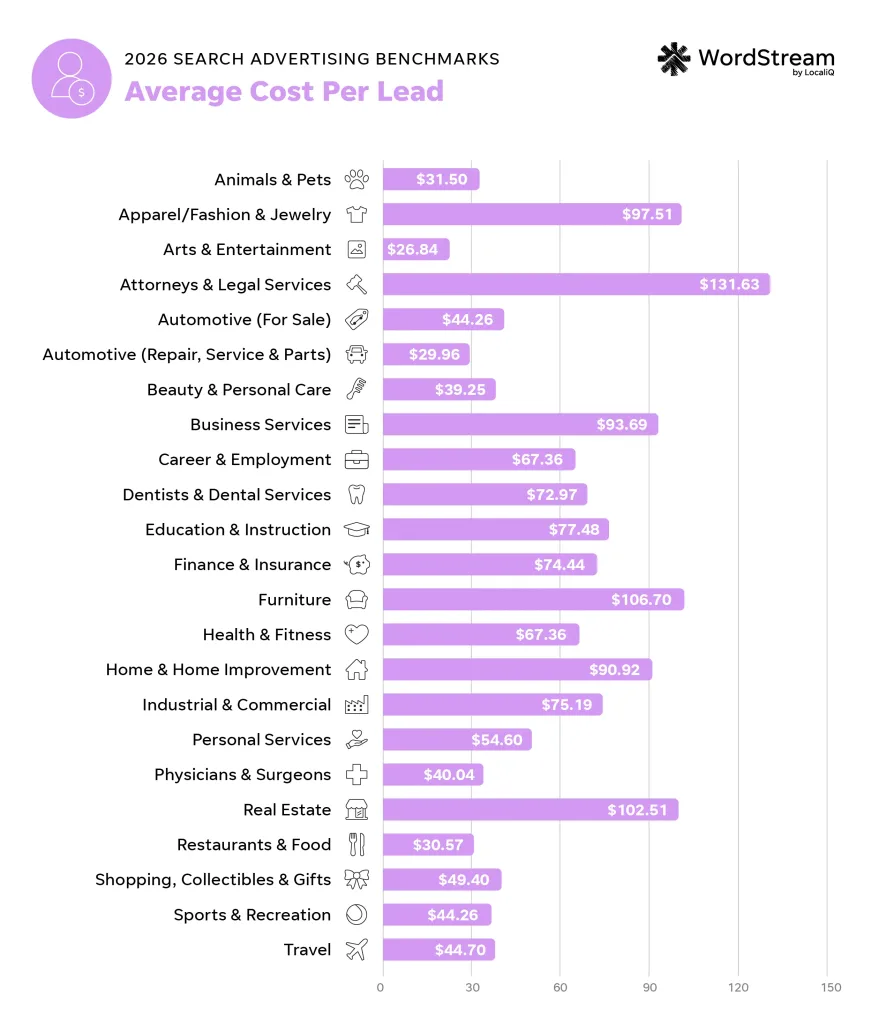
| Business category | Average CPL |
| Animals & Pets | $31.50 |
| Apparel / Fashion & Jewelry | $97.51 |
| Arts & Entertainment | $26.84 |
| Attorneys & Legal Services | $131.63 |
| Automotive — For Sale | $44.26 |
| Automotive — Repair, Service & Parts | $29.96 |
| Beauty & Personal Care | $39.25 |
| Business Services | $93.69 |
| Career & Employment | $67.36 |
| Dentists & Dental Services | $72.97 |
| Education & Instruction | $77.48 |
| Finance & Insurance | $74.44 |
| Furniture | $106.70 |
| Health & Fitness | $67.36 |
| Home & Home Improvement | $90.92 |
| Industrial & Commercial | $75.19 |
| Personal Services | $54.60 |
| Physicians & Surgeons | $40.04 |
| Real Estate | $102.51 |
| Restaurants & Food | $30.57 |
| Shopping, Collectibles & Gifts | $49.40 |
| Sports & Recreation | $44.26 |
| Travel | $44.70 |
A few industries, including Automotive Repair, Service, and Parts, Restaurants and Food, and Arts and Entertainment, had CPLs of $30 or lower. Across all industries, cost per lead decreased overall for the first time in five years.
For industries with a little higher CPL, such as Attorneys and Legal Services, it’s important to think about the average lifetime value of a customer. When you consider that number, these costs are fairly low, which further speaks to the effectiveness of search advertising.
Brett McHale, founder of Empiric Marketing, said that while CPL is important, it ultimately comes down to how the business is converting leads.
“You can manage higher CPLs if the bottom line is growing,” he said.
Average conversion rate for search advertising
The conversion rate for search advertising is determined by the number of leads you get divided by clicks.
The average conversion rate for Google Ads in 2026 across industries is 8.18%.

| Business category | Average CVR |
| Animals & Pets | 16.22% |
| Apparel / Fashion & Jewelry | 4.50% |
| Arts & Entertainment | 5.91% |
| Attorneys & Legal Services | 5.55% |
| Automotive — For Sale | 6.01% |
| Automotive — Repair, Service & Parts | 15.51% |
| Beauty & Personal Care | 10.35% |
| Business Services | 4.85% |
| Career & Employment | 3.05% |
| Dentists & Dental Services | 10.67% |
| Education & Instruction | 13.14% |
| Finance & Insurance | 2.64% |
| Furniture | 2.99% |
| Health & Fitness | 6.94% |
| Home & Home Improvement | 8.05% |
| Industrial & Commercial | 8.20% |
| Personal Services | 12.34% |
| Physicians & Surgeons | 12.43% |
| Real Estate | 3.70% |
| Restaurants & Food | 8.05% |
| Shopping, Collectibles & Gifts | 4.01% |
| Sports & Recreation | 7.69% |
| Travel | 5.83% |
Our benchmarks show many industries, including Automotive—Repair, Services, and Parts, Animals and Pets, and Education and Instruction, have high average conversion rates—over 13%.
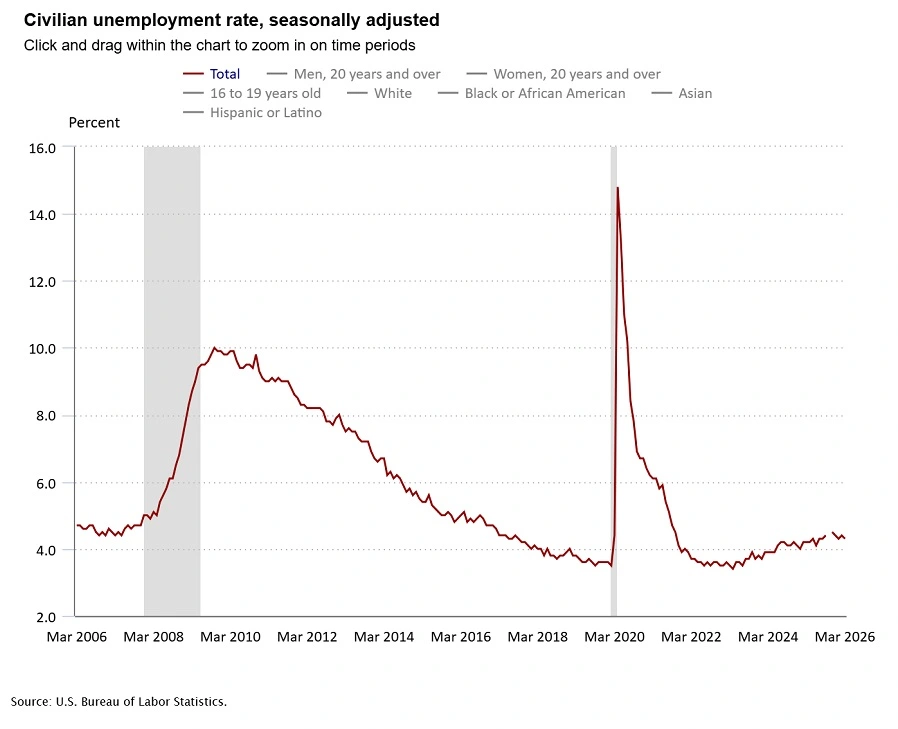
Other industries, such as Career and Employment, may see lower CVRs overall due to things like shifts in the job market. Unemployment rates have slightly increased over the years, but an unstable job market doesn’t mean businesses in this industry should give up on advertising.
Career and Employment brands tend to face many advertising restrictions, so it can be easy for those taking advantage of the campaign and targeting types they can use to be positioned ahead of competitors that are quick to throw in the towel.
🛑 Download the complete 2026 Google Ads Benchmarks Report for even more charts, analysis, and insights!
6 expert tips for better search advertising results
While benchmarks are a useful tool in identifying what you might expect for your business when running search advertising, it’s important to note that there are multiple factors that influence results. These include budget, location, keywords, and more.
So I asked the PPC experts for their top tips for improving search advertising performance. Here’s what they had to say.
1. Set the right goals for your search ads
This was the top tip shared by almost every PPC expert I talked to.
“Start with your ultimate goal: How will you decide if this campaign is successful? Then build everything around that,” Amy said.
It’s also important to set realistic and attainable goals based on your unique business. Every business has a different strategy for what a customer is, how they approach getting that customer, and how much they’re willing to pay for that customer.
Think about what this means for your business as you’re setting your search advertising goals, and adjust your reporting and measurement accordingly.
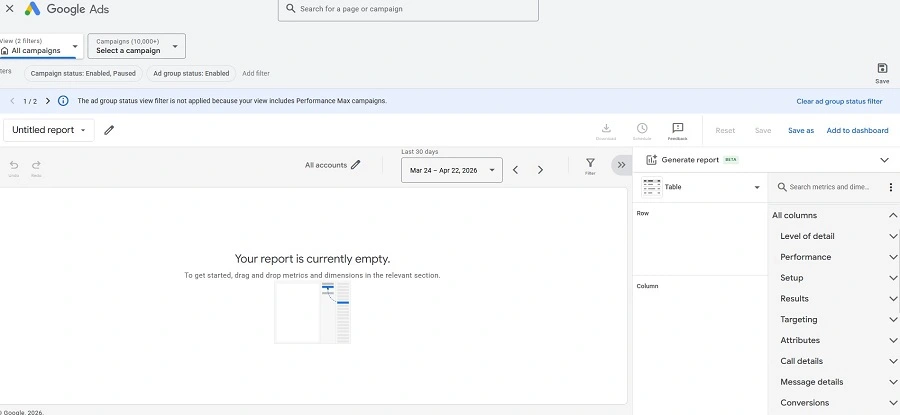
Google Ads reporting has improved exponentially over the years, so tailor your view to the metrics that give you the best insight into your business’s bottom line!
2. Run search ads on more than just Google
When it comes to search advertising, many businesses rely on Google Ads alone. While Google Ads is an integral part of a successful search advertising strategy, you can actually get better results by running your search ads across platforms, including Microsoft.
Microsoft Ads have been shown to have higher conversion rates—and the average Bing user has a higher average income than the average Google user.
Running ads across both search engines also gives you access to more inventory, meaning more opportunities for clicks and conversions.
So when it comes to your search advertising strategy, make sure to run your ads on both Google and Microsoft and optimize your budget for the placements and keywords that work best on each platform.
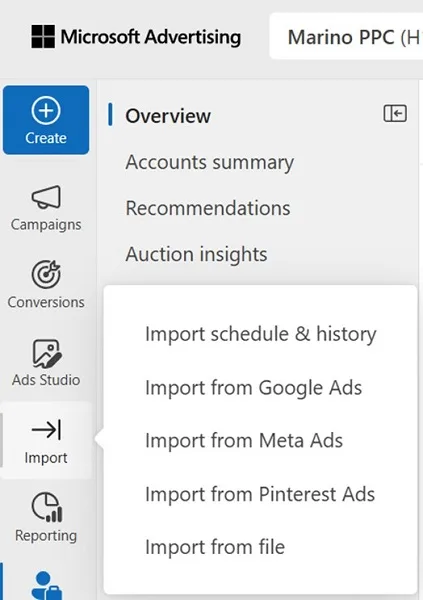
You can easily copy your Google Ads campaigns to Microsoft Ads using the import feature within the platform.
3. Choose the right search advertising budget
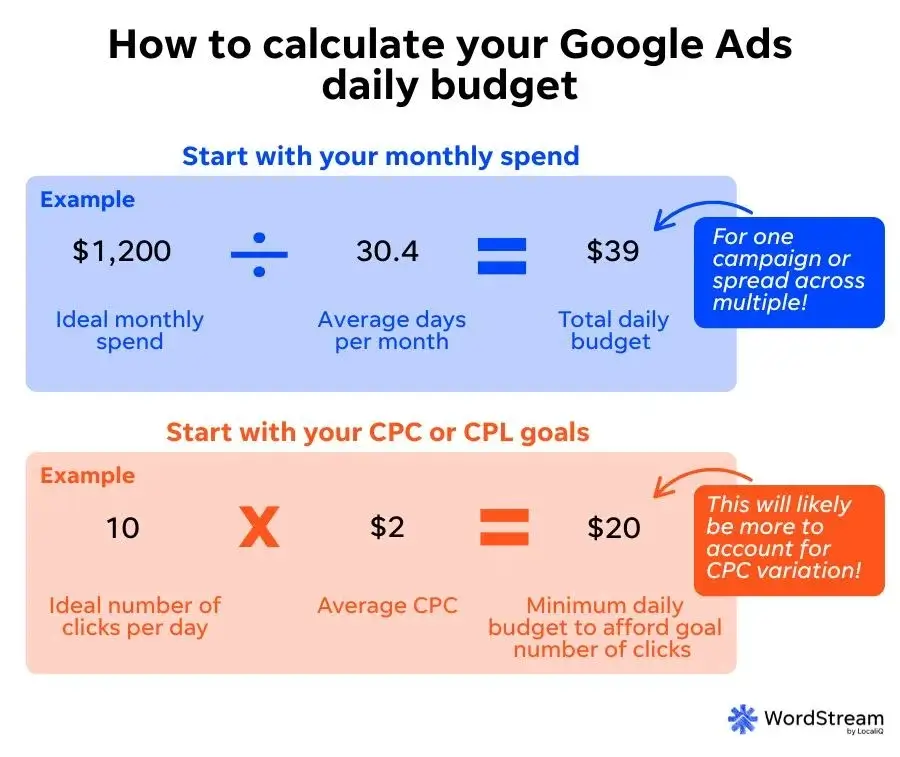
It’s no secret that search advertising is all about pay-to-play—it’s known as pay-per-click for a reason! To get the best results, you have to set and optimize the right budget for your search ad campaigns. This means understanding what you’ll have to invest to get the results you want.
Small businesses must understand they may not see these results or the same type of results immediately after starting search advertising.
When you have a new account, face low-volume keywords, or have a small budget, these results aren’t realistic. PPC is an investment, and it takes time.
4. Look for the best keyword opportunities
Certain keywords may be more expensive and may not be driving the best results for your business. By identifying the right keyword strategy, including a varied mix of keywords and keyword phrases, you can zero in on what’s working to drive the most clicks and calls for your business.
For example, you might be bidding on a broad keyword like “lawyer Kansas City,” which is a high-competition and high-cost keyword, when you could narrow your focus to “personal injury attorney Kansas City” or try a newer keyword strategy that might help you capture better searches.
This is where small businesses have an advantage over the big brands. Bigger businesses are going to be competing with each other over the biggest and most competitive keywords, so smaller businesses have an opportunity to try for more specific keywords that bigger businesses wouldn’t consider.
Additionally, Amy suggested choosing PPC keywords that align with where your customers are in the sales funnel, as well as their search intent, to increase clicks and conversions.

5. Supplement your search ads with automated campaign features
Automation is the name of the game in Google Ads in 2026. For instance, Performance Max and Demand Gen campaigns both allow your ads to appear within the Google Ads search environment in addition to other placements. In other words, these campaigns give you more visibility for the same amount of effort. Try incorporating these fully automated campaign types into your account to balance your manually controlled search campaigns.
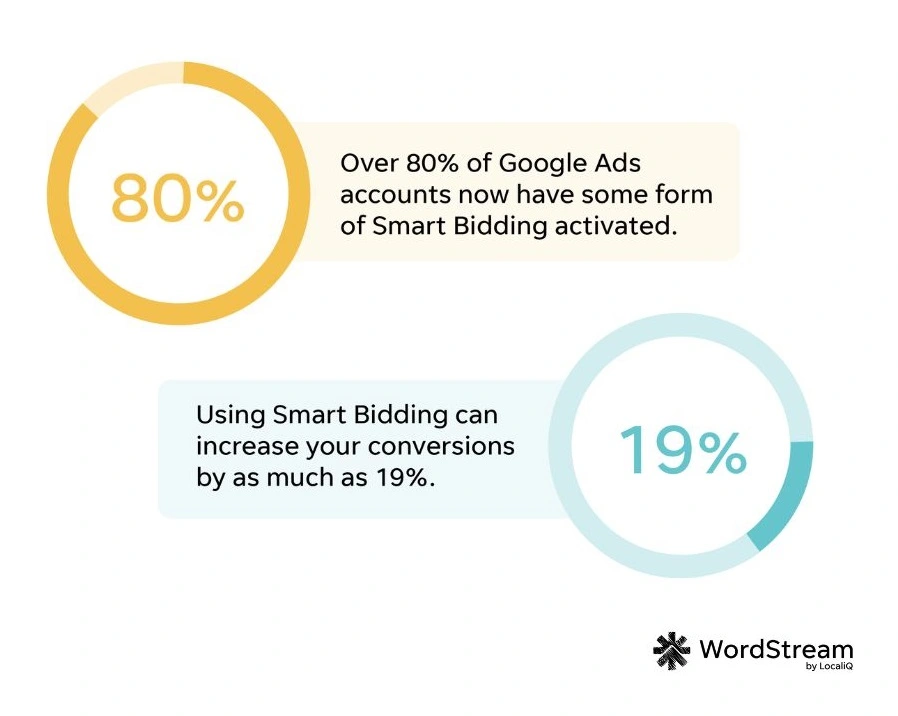
Also, you may want to expand your standard search campaign capabilities with automated features such as AI Max and Smart Bidding. AI Max can help your ads reach valuable, meaningful SERPs beyond what you’ve set up to target. Additionally, Smart Bidding is a go-to strategy for most advertisers looking to maximize their bids and budgets.
“Many accounts now lean on features like PMax and AI Max, which make it easier for the advertiser to take advantage of AI,” said Navah Hopkins, Ad Product Liaison at Microsoft.
“AI-powered ad campaigns tend to have higher conversion and relevancy rates. With automation, while there might be fewer clicks to the site directly from a standard search campaign, business is still happening at a profit,” Navah said.
6. Use data to inform your campaigns
While you don’t want to constantly make changes within your Google Ads account, you do want to make regular optimizations to improve your campaigns. Try deploying different ad creatives, targeting, or bidding tests on a consistent basis to see what makes the biggest impact for your business.
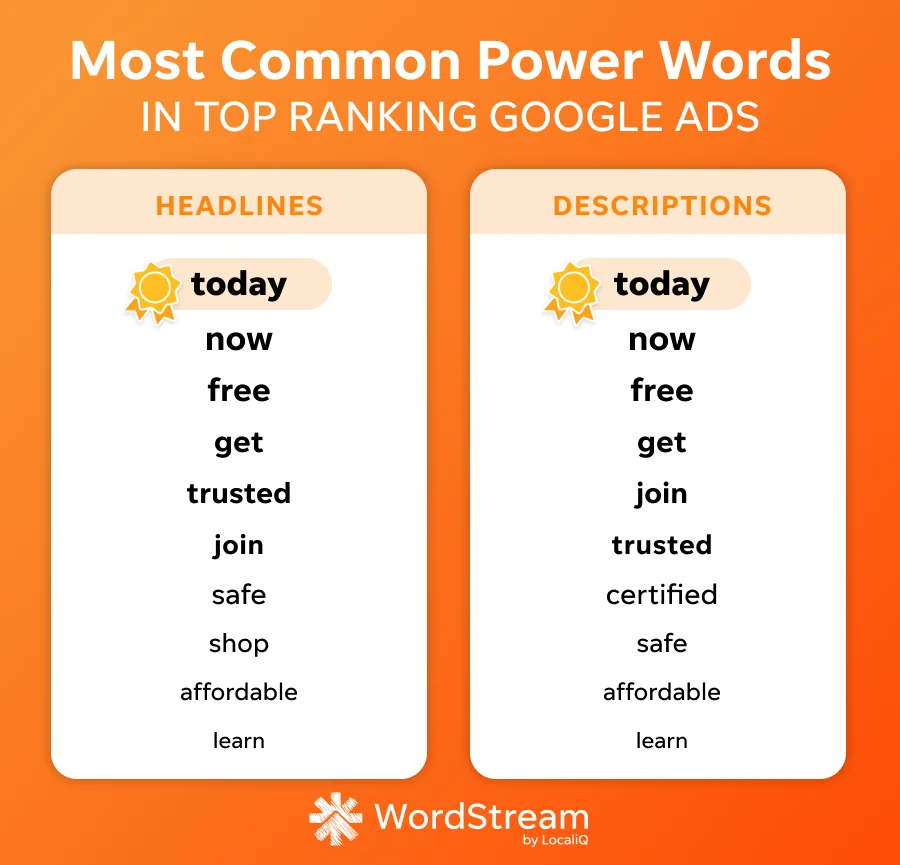
Try adding some power words from this WordStream by LocaliQ study of top-performing Google Ads.
It’s also important to pull the right data so you can understand how your optimizations are contributing to campaign improvements.
“If you’re only tracking how many leads your campaign drove, you’re missing the point. You need to know which of those leads actually turned into customers, and that needs to feed into how you’re bidding—not just how you’re reporting,” said Katia Hausman, Vice President of Paid Media Products, LocaliQ
For example, with conversion value tracking, you can collect data on the worth of each action a potential customer takes after seeing your ad.
“The biggest standout here is the CPC and CVR increases coupled with a cost per lead decrease. This is especially important as platforms are shifting and brand and performance marketing converge. If there ever was a proof point to pivot to conversion value tracking, this is the proof point,” Navah said.
What do these search advertising benchmarks mean?
These search advertising averages give you a helpful benchmark to compare your search advertising results. But, as our experts cautioned, the true measure of success is more about how your business is converting the leads you get from search advertising. Use benchmarks as a handy guide and use these tips to fine-tune your search advertising strategy to get the best results for your business.
Need help with your search advertising? Get a demo to find out how we can help!

Recommended for you




Unlock your business potential
We offer innovative technology and unparalleled expertise to move your business forward.