


Imagine someone asks an AI assistant a simple question: “Why is my AC blowing warm air?” Within seconds, the system generates a clear explanation. It lists a few possible causes. It suggests a couple of troubleshooting steps. Sometimes it even cites a source.
And that source is not always a national brand.
In many cases, the information comes from a small local business. A regional HVAC company. A plumbing blog. A landscaping website explaining seasonal lawn care. At first glance, that seems counterintuitive.
For years, digital marketing operated under a very predictable rule: the bigger the brand, the easier it was to dominate search results. Large companies had more resources, more content, and stronger domain authority. Competing with them in organic search often felt like an uphill battle.
But generative search works a little differently.
Instead of simply ranking websites, AI systems assemble answers by pulling information from multiple sources and combining them into a single response. That process doesn’t always reward the biggest site. Sometimes it rewards the clearest explanation.
And surprisingly often, those explanations come from smaller businesses.
This doesn’t mean small companies suddenly outrank enterprise brands everywhere. But it does suggest something interesting is happening inside AI search systems. In this article, I’ll explain why AI often favors small businesses over big brands and how you can use this to your benefit.
Contents
- Why many marketers assume AI favors big brands
- How AI search works (and how it benefits small businesses)
- Why small businesses are already well-positioned for AI search
- Real examples where small businesses may surface over big brands
- How SMBs can use this to their advantage to show up in AI search
Why many marketers assume AI favors big brands
For a long time, large brands had real structural advantages in search:
- Stronger backlink profiles
- Higher domain authority
- Broader keyword coverage
- Stronger brand signals
A national brand publishing dozens of articles per month on a decade-old domain could reliably outrank a local business that published content occasionally.
Those signals still matter in traditional search rankings. But generative AI doesn’t work like a classic ranking system.
Instead of listing websites by authority, AI tools synthesize answers by pulling information from multiple sources. The system isn’t deciding which page is best. It’s deciding which pieces of information are useful enough to include in a response.
That subtle shift changes the question the system is trying to solve:
- Traditional search is trying to solve: Which website is the most authoritative?
- While Generative AI is looking closer to learning: Which sources explain this clearly enough to reuse?
That difference matters more than most marketers realize.

This doesn’t mean big brands are at a disadvantage. But it does mean that writing clearly, answering questions directly, and covering a topic well can matter more than the size of your domain.
🔎 Get updated tips for your SEO strategy with our free guide >> How to Do SEO Right–Right Now!
How AI search works (and why it benefits small businesses)
To understand why content quality can outweigh domain authority in AI search, it helps to know how most generative search systems actually work. The process breaks down into two stages: retrieval and synthesis.
1. Retrieval
Retrieval is where the system goes looking for relevant sources. It scans search indexes, training data, and knowledge bases to find content that closely matches what the user asked.
What gets picked up tends to share a few traits:
- Clear explanations
- Structured formatting
- Direct answers to specific questions
Content that is vague, heavily branded, or built around positioning rather than information tends to get filtered out at this stage, not because it’s low quality, but because it doesn’t map cleanly onto the prompt.

We go into detail here on what to include in your content intros to help with AI retrieval.
2. Synthesis
Synthesis is where the actual answer gets built. The system takes the most useful pieces from several retrieved sources and combines them into a single response.
The content that makes it into the final answer usually has:
- Direct explanations
- Concise statements of fact
- Structured formatting, such as lists or FAQs
- Clearly defined services or concepts
This is where the structural difference between large and small publishers starts to matter.
Enterprise websites are often built around brand messaging. Small business websites are often built around answering the questions their customers actually ask.
Simple service descriptions, practical how-tos, and clearly defined concepts. That kind of content fits the way generative systems work.
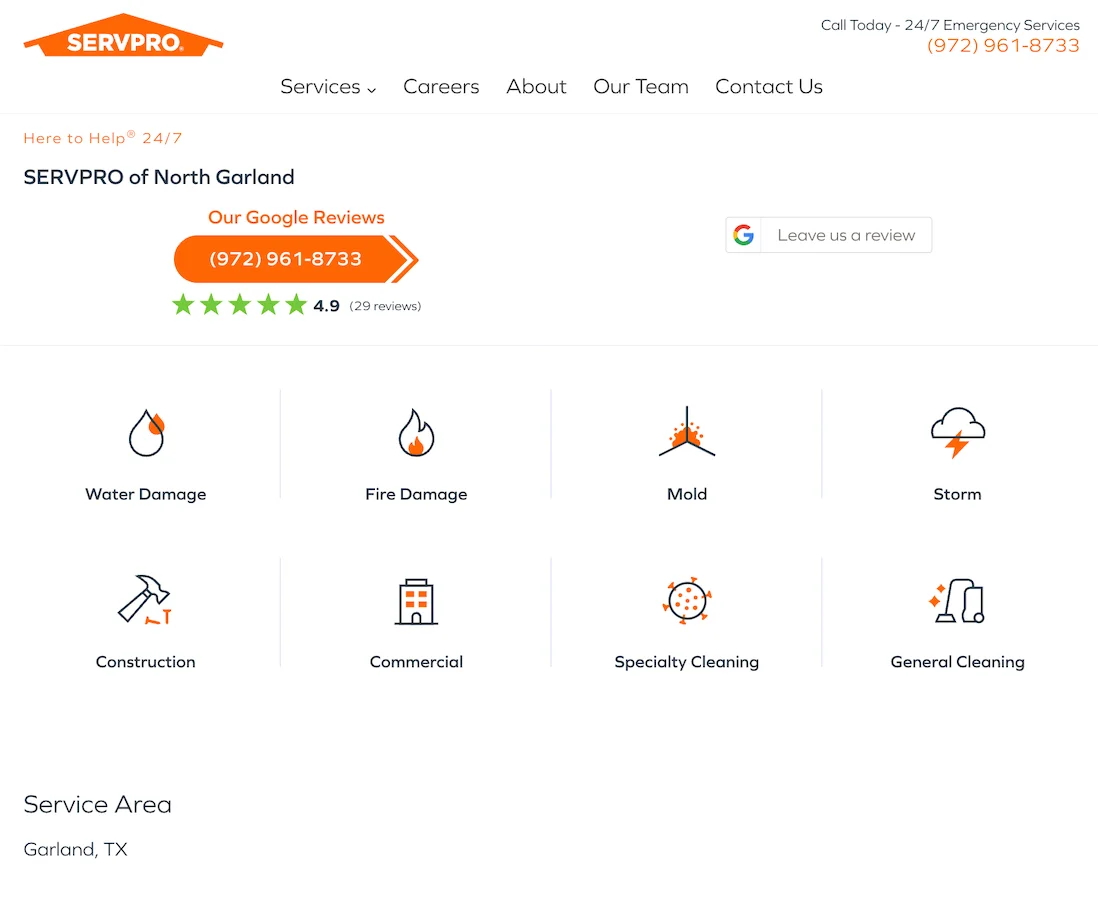
It’s why smaller, specialized sources sometimes surface prominently in AI-generated answers, occasionally sitting alongside national brands that have spent years building domain authority.
The playing field isn’t equal. But it’s more open than many marketers expect.
Why small businesses are already well-positioned to show in AI search
The advantages smaller businesses have in generative search aren’t accidental. They come from structural characteristics that happen to align well with the way AI systems work.
1. Precise explanations are easier for AI to reuse
Corporate messaging often emphasizes positioning instead of clarity. Large home services platforms frequently use language like:
- “Integrated home comfort solutions”
- “End-to-end residential systems platform”
Those phrases may work well in a brand presentation, but they are difficult for an AI system to translate into a practical answer.
Small business content tends to be much more literal. A local HVAC company simply says: “Residential AC repair in Phoenix.”

The meaning is obvious. The service is clear. That clarity makes the information far easier for AI systems to extract and incorporate into a response.
This isn’t a flaw in generative search. It reflects exactly what the systems are designed to do: identify the clearest explanation available.
✍️ Make your business description AI-friendly with this free guide: How to Write a Business Description that Gets Customers >>
2. Narrow expertise signals stronger authority
Generative systems often interpret specialization as expertise. A page dedicated entirely to emergency water heater repair creates a strong topical signal. The subject matter is obvious, and the context is clean.
By contrast, a page describing comprehensive residential service solutions is much harder to interpret.
Small businesses naturally tend to focus on specific services and niches. Their websites often contain focused pages addressing one service or problem at a time. That structure produces clearer signals about what the business actually does.

For AI systems trying to match a user prompt with relevant expertise, that specificity can make a significant difference.
3. Simpler websites produce clearer signals
Enterprise websites are built to support complex organizations. They often include:
- Multiple product categories
- Layered service descriptions
- Investor or corporate messaging
- Broad positioning language
All of this creates complexity. Small business websites tend to be simpler.
Service pages, FAQ sections, troubleshooting guides, and pricing explanations often dominate the structure. Each page focuses on a single topic.
This simplicity aligns well with how AI systems identify useful information.

When a page clearly explains one concept, it becomes much easier for the system to reuse.
4. Practical answers outperform abstract thought leadership
Large brands frequently invest in content designed to build authority:
- Industry trend reports
- Opinion pieces
- Thought leadership
That content can be valuable for branding and backlinks. But generative AI systems often prioritize practical explanations over abstract commentary.
Consider the kinds of questions people ask AI tools:
- “How much does AC repair cost?”
- “How long does teeth whitening last?”
- “When should you aerate a lawn?”

These questions mirror real customer problems.
Small businesses answer these questions every day. Their content often reflects the same conversations they have with customers on the phone or during consultations.
Because the questions match real user prompts so closely, the answers become highly usable inside AI-generated responses.
🚨 Get ready-to-use AI prompts for email marketing, social media, content creation, and more >> 200+ Best AI Prompts Any Business Can Use
Real examples where small businesses may surface over big brands
The structural dynamics we’ve been talking about aren’t theoretical. They show up clearly in real search scenarios.
Example 1: HVAC repair vs. national home services platforms
User prompt: “Why is my AC blowing warm air?”
Large platforms like HomeAdvisor or Angi typically publish generalized content designed to serve multiple markets at once. A response from them might say something like: “HVAC systems require regular maintenance to maintain optimal performance.”
Technically true. Practically useless.
A local HVAC provider like Parker & Sons might publish a troubleshooting guide that walks through the specific causes: low refrigerant, a frozen evaporator coil, a clogged air filter, or compressor failure.

The explanation is structured and specific. AI systems can summarize it quickly and clearly. The local provider gets the citation.
Example 2: Lawn care vs. national landscaping brands
User prompt: “When should you aerate a lawn in Ohio?”
A national brand might offer: “Aeration improves soil health and allows lawns to absorb nutrients.”
Not wrong. Just not useful.
A local provider like Buckeye Lawn & Landscaping might provide location-specific guidance: early fall between September and October, ideal soil temperature between 60 and 75 degrees, recommended specifically for cool-season grasses like Kentucky bluegrass.

AI systems prefer the more precise answer because it actually responds to the question.
Example 3: Local law firms vs. legal directories
User prompt: “How long does a divorce take in Texas?”
Platforms like LegalZoom or Avvo often publish broad explanations: “Divorce timelines vary depending on case complexity.”
That tells the user nothing actionable.
A Texas firm like The Law Office of Bryan Fagan might provide concrete guidance: Texas requires a 60-day waiting period, uncontested divorces typically take two to three months, and contested cases can run six to 12 months.

Clear facts are exactly what AI systems need to build a useful answer. The pattern is consistent across industries. Specificity wins.
How SMBs can use this to their advantage to show up in AI search
The good news is that the content strategy best suited for AI search is also the most practical one for small businesses. You do not need a large team or a big budget. You need clarity, structure, and a commitment to answering real questions.
If you want to understand the broader impact AI is already having on local search, LocaliQ’s breakdown of AI search’s impact on businesses is a useful read to put these strategies in context.
Here is how to apply this directly:
Define services in simple language
Your website isn’t the place for creative brand positioning. It’s where you tell customers and AI systems exactly what you do.
❌ Don’t say
- Comprehensive home comfort solutions
- End-to-end lawn care programs
✅ Do say
- Residential AC repair and installation
- Lawn aeration, fertilization, and seasonal cleanup services.
The more literal your language, the easier it is for AI to extract and reuse.
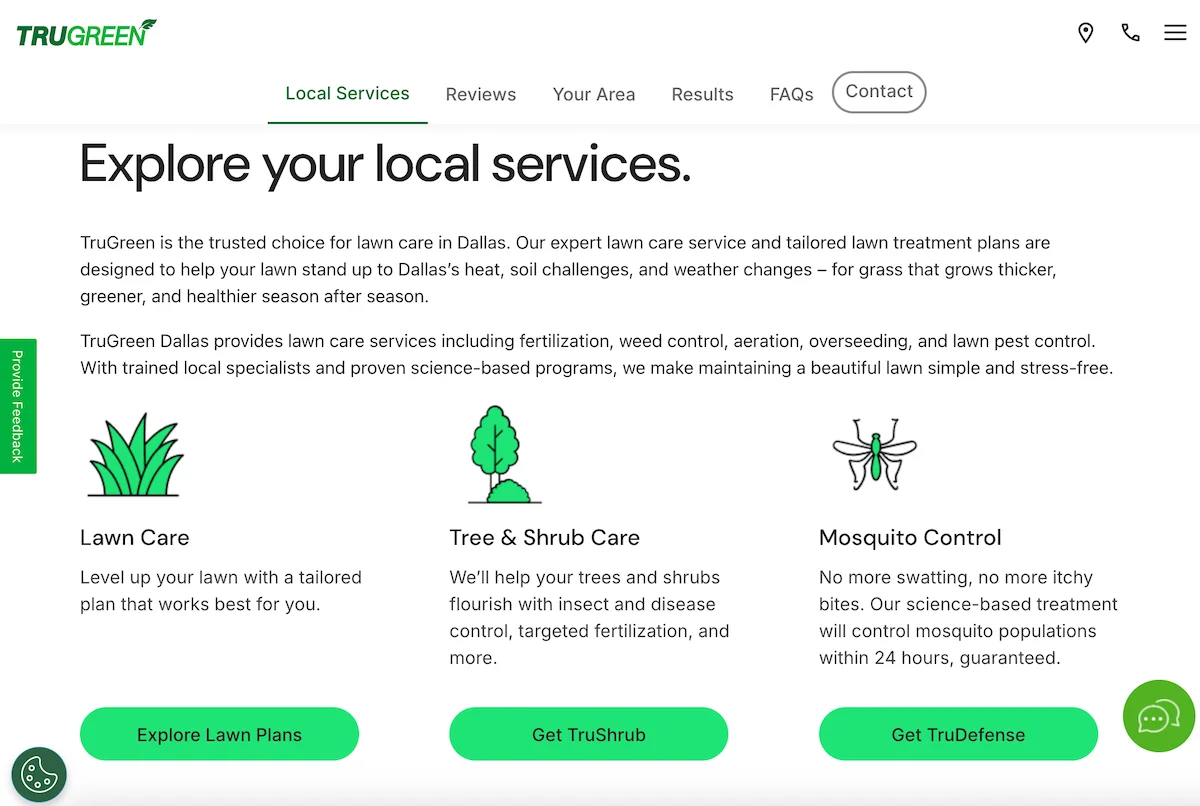
Create highly specific service pages
Each service should have its own dedicated page. Don’t bundle everything onto a single “services” page and expect AI to untangle it.
A water heater installation cost guide, an emergency plumbing page broken down by type of problem, a lawn aeration page that explains the process, the timing, and the cost. Specificity at the page level is what makes the difference.
Answer real customer questions
Use the questions people actually ask when they call your business.
- What comes up repeatedly in consultations?
- What do you find yourself explaining over and over?
- How long does AC replacement take?
- What size HVAC system do I need?
- How often should you fertilize a lawn in the Southeast?
These questions reflect real user intent, and when you answer them clearly, AI systems have a much easier time surfacing your content.
Focus on niche expertise
Specialization produces cleaner signals. The narrower your focus, the easier it is for AI to interpret what you do and match you to the right queries.
“We specialize in low-maintenance landscaping for suburban homes in the Denver metro area” is far more useful to an AI system than “we offer landscaping services.”
It also serves your actual target customer better.
Use structured formats
AI systems extract structured content efficiently. Long, unorganized paragraphs make it harder for the system to find the specific facts it needs.
- FAQs built around real customer questions.
- Numbered step-by-step explanations.
- Comparison tables for pricing or service tiers.
- Short how-to guides covering common problems.

These formats are easier for AI to work with and easier for human readers to scan. Better AI visibility and better engagement tend to come together.
Make AI search love your small business
AI search does not simply reward the largest websites. Generative systems prioritize sources that provide clear explanations, structured information, narrow expertise, and practical answers. Small businesses often produce exactly this type of content, sometimes without even realizing it.
That means the companies best positioned to appear in AI answers may not be the biggest brands in their industry. They may simply be the ones who explain their expertise most clearly and have a unique way to position it.
If your business already has detailed service pages, location-specific guides, and content built around real customer questions, you are in a strong position. The next step is making sure that content is structured in a way that makes it as easy as possible for AI to find, extract, and reuse.
Clarity is the new authority.

Recommended for you






Unlock your business potential
We offer innovative technology and unparalleled expertise to move your business forward.