


If you want to grow a business fast, one of the best things you can invest in is getting and using social proof.
Why? Because the positive opinions of your current customers are a powerful influence on your next customer’s decision to trust and buy from you.
Plus, you don’t need a big budget to build up a catalog of social proof. If you have happy customers and a way to share their opinions, you’re ready to reap the rewards.
In this guide, you’ll learn how to get a lot more social proof quickly and see examples of how successful brands use it for maximum effect.
Contents
- What is social proof?
- How can social proof help your business?
- 5 ways to generate social proof (and one way not to)
- 6 social proof examples
What is social proof?
Social proof is the marketing principle that people are more likely to trust and choose a business when they see others validating it through reviews, testimonials, case studies, or endorsements. It works by tapping into the psychology of group behavior, showing potential customers that others have already had positive experiences, which nudges them to follow suit.
In marketing, social proof is incredibly effective at breaking down the trust barrier for new customers. When they see someone—especially someone like them—get a positive outcome from working with you, they’re much more likely to do the same.

Reviews are a common form of social proof.
There are many types of social proof, including:
- Customer testimonials: Videos, case studies, or other versions of a glowing report about a brand that’s often actively collected by the business.
- Online reviews: Short testimonials are usually provided by customers on online platforms like Yelp and Google.
- Influencer and celebrity endorsements: Positive product or brand reviews created and distributed by socially recognizable and trusted figures.
- User-generated content (UGC): Photos, videos, and stories customers share about using a product.
- Wisdom of the crowd: Metrics that prove the popularity of a brand or product by showing how many people buy, use, or subscribe to it (think: “over 2 billion served”).
How can social proof help your business?
Social proof absolutely plays a part in how and why consumers choose businesses to spend their money with. It boils down to: what are people saying about your business, your products or services, and their experience with you?
I personally don’t go to a new restaurant before looking at two or three different review sources and checking out the newest reviews, or before hearing from a friend or coworker that it’s good. I’ll also look at their social media pages to see what people are saying about them.
And, I’m not the only one. 90% of people look at reviews before visiting a business, and 84% of people trust online reviews as much as a recommendation from someone they know. Plus, the vast majority of people are highly influenced by online reviews.
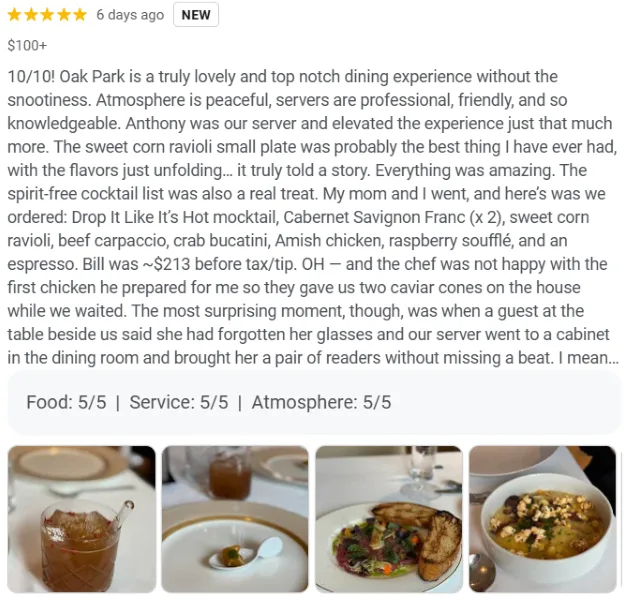
This kind of public feedback gets people excited about trying out a new restaurant.
👀 Looking for more ways to promote your business? Download now >> 30+ Ways to Promote Your Business (On Any Budget!)
5 ways to generate social proof (and one way not to)
Some social proof will just happen—a customer will tell their friend about a great experience, or someone will leave you a Google review unprompted.
But passively waiting for social proof is a slow process. You can speed up the process and gather a substantial amount of usable social proof using these tactics.
1. Ask for reviews
This should be your first and most frequent social proof strategy. Create several opportunities to ask for reviews from your best customers using both online and, when possible, in real-life situations.
Here are several ways to do that:
- Send tests or emails: After a good customer interaction, follow up with a text or email asking for a review. This goes for thank you and order update emails, too.

- Hand out review cards: Create a business card with a scannable link customers can use to quickly sing your praises online.
- Add a review link to your website: Make it super easy for people to leave a review by adding and highlighting a link on your website to your Google reviews.

- Ask in person: Whether you run a retail store or a home services business, train your team to always ask for reviews in person (and have them hand out the nifty cards you made).
- Start a referral program: There’s no better version of social proof than a direct customer referral, so set up a program that incentivizes customers to give them.
2. Manage your business reputation
Your business has a reputation. It’s based on all the reviews, mentions, and conversations people have both online and offline. Managing that reputation will help you gather more social proof and distribute it to places where it can influence more people.
This guide to reputation management will show you how to do it. But for starters, make sure you’ve established your presence in business listings and set up some form of social listening.
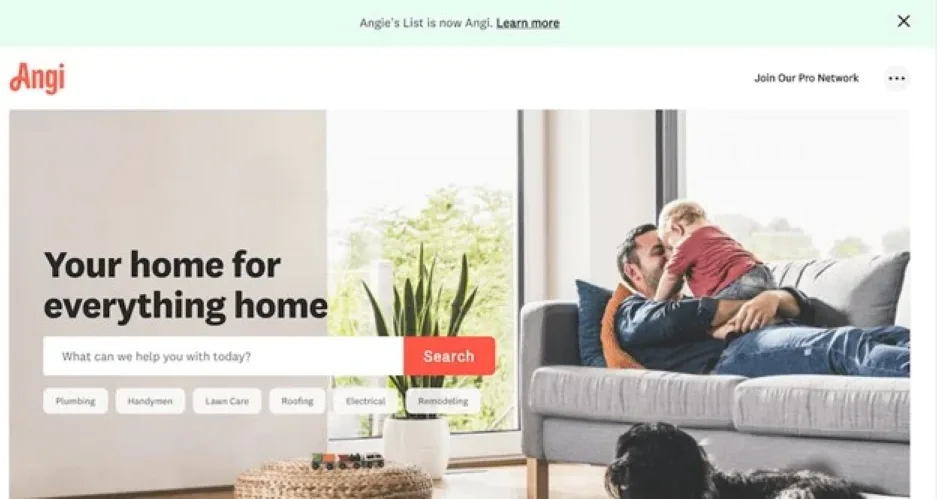
Claim and optimize your directory listings on websites like Angi to gather and show off social proof.
3. Reply to reviews
It’s not enough to get more reviews; you’ll need to monitor and react to them regularly. That’ll make the reviews you get more effective (people spend up to 49% more with businesses that reply to reviews) and encourage more people to leave them.
Don’t skip the bad reviews. It’s more difficult to respond to a negative review, but it’ll have a lot of impact on how people view your business.

4. Leverage user-generated content
Running a UGC campaign is surprisingly easy. Just ask people to tag an image with your product on social media using a unique hashtag. Then share their images and videos on your social feeds.
Don’t forget to tag the original creator in your posts. Not only is that courteous, it’s a great way to extend the reach of your new social proof.
5. Collaborate with influencers
Influencers are fantastic for social proof because they bring an engaged audience with them. So you don’t have to wait for people to stumble on a positive review, the influencer will push it out to buyers who trust the presenter.

Remember that you don’t need a big celebrity. In fact, it’s better to find an influencer who has a smaller, engaged, niche audience than someone with a huge following that isn’t passionate about what you sell.
🚨Free resource! 6 Simple Steps to a Complete Small Business Marketing Plan (+Template!)
6 social proof examples
Now that we have all that social proof rolling in, let’s look at how a handful of successful brands use it.
1. Customer reviews
Customer reviews are the bread and butter of your business and social proof. They can range in length from simple star ratings with no text to in-depth reviews with pictures or videos. Unlike many other forms of social proof, customer reviews are also found on a number of platforms, from Google Business Profile to Yelp, social media platforms, and more.
For example, if you look up Tire Pirates, you’ll see reviews for their business on Google, Facebook, Yelp, and others.

2. User testimonials
User testimonials are written or recorded words of praise from one of your customers. Unlike a customer review, user testimonials are typically more in-depth than a customer review, telling a story.
Here’s a great example of a video testimonial for a handyman business.

This testimonial from Handy Bros Home Comfort helps sway skeptical prospects.
Here’s a little pro tip for creating super effective testimonials. Gather up some of the biggest objections your people have about buying (price, timing, quality concerns) and use them as questions you ask the source in your testimonial. Your happy customer will then directly address and assuage those concerns.
3. Case studies
A case study is a story about how one of your customers overcame a challenge using your product or service. Much like other forms of social proof, a case study can come in either text or video formats. Often, a case study will focus on a customer who experienced significant success or had an interesting challenge (or both).
Case studies are usually created by the business using quotes and details from a customer. That means you have a lot of control and can get deeper into the buyer’s journey.
This type of social proof is great for providing context and telling a story. This example from the law firm of Allan Rouben does it well.

When writing your case study, think about what the main customer pain point is, how your solution overcame it, and what specific outcomes prove it.
4. Industry and expert recognition
This type of social proof includes badges of approval that come from individuals or organizations regarded as experts in your field. For example, if your product is food-related and recommended by the FDA or a restaurant association, this could qualify as expert approval.
This example illustrates how a brand showcases its numerous awards and recognitions on its homepage. One quick glance from anyone in the know will confirm that the business is legit.
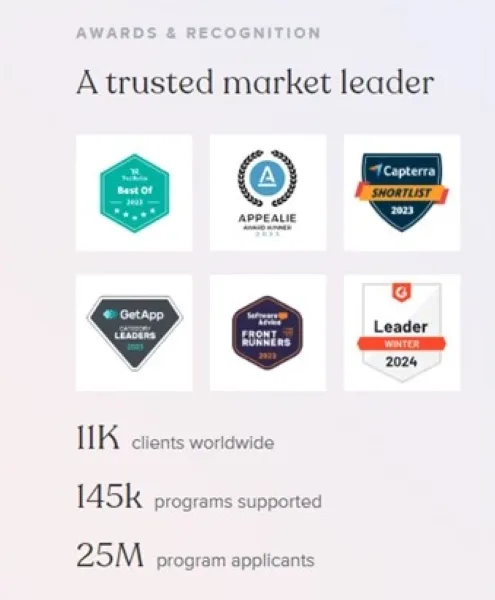
Expert approval is a trust builder with audiences, as it indicates your product or service is of the utmost quality. Unlike any mandatory certifications or compliance in your industry, expert approval also shows you’re willing to go above and beyond—you don’t just settle for meeting standards.
5. User-generated content
I mentioned that user-generated content is an authentic form of social proof. That’s because it’s based on real people, out in the world, benefiting from what you sell.
Beauty brand Bondi Boost has curated a collection of social proof on its YouTube channel.

An example of a brand using UGC in its promotional YouTube videos.
A valuable takeaway from this brand is that you can show how your product is used in several different situations. That way, any potential customer will find some social proof relevant to their needs.
6. Wisdom of the crowd
This is one of the easiest forms of social proof to gather because all you need is the number of people (or businesses if you sell B2B) who have bought, joined, or subscribed.
It’s even easier to use this social proof. Just add the stat to a social media post or website page like this AI community has.

An example of using the wisdom of the crowd as social proof.
It’s okay to say you’re the biggest or sell the most of something. But whenever possible, include specific details. Those details are more trustworthy and compelling.
Make social proof your new growth hack
Social proof is an extremely influential marketing tactic rooted in human psychology. It leverages our willingness to make decisions based on other people’s positive experiences.
You’ll likely garner some social proof passively as satisfied customers talk about their experience and leave reviews for your business. But you can speed up that process in many ways, like asking for reviews and running UGC campaigns.
And once that social proof starts rolling in, use it creatively and extensively on every channel a new customer is likely to encounter your brand. You’ve earned the praise, don’t be afraid to use it!

Recommended for you







Unlock your business potential
We offer innovative technology and unparalleled expertise to move your business forward.