


Limited-time offers can help you drive new business quickly by playing into a tried-and-true neuromarketing principle: Scarcity (and also FOMO).
But not all limited-time offers are created equal. What follows is a guide on why limited-time offers are so appealing to customers, as well as tips on generating the most effective deals and a variety of examples to consider, along with templates for said deals.
Contents
- Benefits of running limited-time offers
- Tips for super-effective limited-time offers
- Examples of limited-time offers (with templates)
Why run limited-time offers?
Limited-time offers are promotions, specials, or deals that are only available for a short time.
Here are some benefits of running limited-time offers.
Attract first-time or infrequent customers
If you’re aiming to target a demographic you’re not seeing much business from, a limited-time offer could be just the thing that gets them to do business with you. A limited-time offer not only creates a sense of urgency (which we’ll get into in a sec), but it also lowers the barrier of entry for buying from you.
🌱 Download our free, editable growth strategy template to walk through seven simple steps for creating the right plan to grow your business.
Create a sense of urgency
Limited-time offers create a sense of urgency—as long as the discount is meaningful and relevant to your audience.
“When people feel like they have to act now or miss out, conversion rates skyrocket,” said Aaron White, CEO of Outbound.com.
They speed up the decision-making process by creating a “now or never”-mindset, added Daria Shevchenko, CMO of Snov.io.
A finite window of opportunity to get a deal on something or the chance to have an item or service you can’t get all the time is attractive to the average person…pumpkin spice latte anyone?
And you don’t have to take our word for it—there’s actually psychological evidence to back up the effectiveness of this strategy.
It’s fueled by the phenomenon known as FOMO (AKA the fear of missing out). As a result, products suddenly feel more valuable.
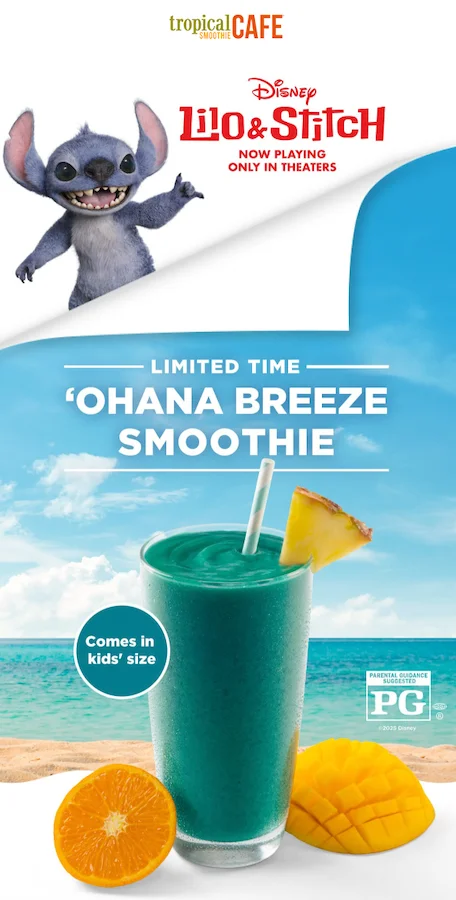
Don’t you want to try it before it goes away forever?
“Urgency reduces procrastination and decision fatigue by creating a clear deadline that encourages immediate commitment,” said Brian Lim, CEO of iHeartRaves. “The social aspect of FOMO adds to this dilemma by making the consumer feel emotionally distressed at missing an opportunity that other people may take advantage of.”
Test new services
Limited-time offers can be used as a tool to test a new product or service you’re hoping to roll out permanently. If you try the promo and it’s a dud, you won’t have wasted time and resources investing in a full-time offering. On the flip side, if it’s wildly successful, you’ve just found a new moneymaker.
Drive customers to try new products or services
They also encourage customers to take a leap of faith with a new product, said Kraig Kleeman, CEO of The New Workforce.
These offers can also help brands in highly competitive industries stand out to potential customers, said Tracie Crites, chief marketing officer of Heavy Equipment Appraisal.
For example, Evgen Kushnirchuk, CEO of Hire Developers Biz, offered a 48-hour discount on consulting services and saw a 35% increase in signups.
“It’s not so much about lowering the price—it’s about giving a valid reason to act now,” he added.
Andre Oentoro, CEO of Breadnbeyond, too, has used limited-time offers to encourage clients to start on projects they’ve been putting off.
“Many people seem hesitant to invest in professional video production because it seems like a huge deal,” he said. “But when there’s a limited-time offer, it lowers the barrier to entry and gives them the extra push to take action.”
In a similar vein, Shevchenko taps into limited-time offers to nudge potential customers who completed a free trial but did not convert.
Finally, they help Oentoro gauge demand for new services, like bundling scriptwriting or social media cutdowns with animated explainer videos.
Increase customer loyalty
If you happen to land on a popular limited-time offer, you could choose to keep it as a limited-time offer implemented annually. Big corporations like McDonald’s (the McRib), Burger King (Chicken fries), and Victoria’s Secret (Semi-Annual Sale) know that these popular promos create an influx of cash and keep customers anticipating the return of their favorite items. What’s more, is they’ll likely frequent their locations more often and spend more money during the limited-time period than they would otherwise.

Limited-time offers don’t just boost revenue–they increase loyalty and can be used to re-engage dormant customers, clear slow-moving inventory, or amplify seasonal trends.
Tips for effective limited-time offers
Here are five tips for creating effective limited-time offers.
Make them short and sweet
First, messaging should be brief—and clear.
“It should stress exclusiveness, like the timeframe in which the offer stands and have a strong [call to action],” Shevchenko said.

This email subject line is short and to the point.
A straightforward offer helps consumers take notice of the deal, no matter where they see it advertised, Crites added.
Make timing clear
Next, make the timing of your deal crystal clear.
“State the precise timeframe—such as ‘Ends Friday at midnight’—and ensure you communicate the benefit,” Kushnirchuk said.
Lim recommends experimenting with offer durations, but noted shorter windows, like 24 to 48 hours, typically outperform longer promotions as they keep interest high.
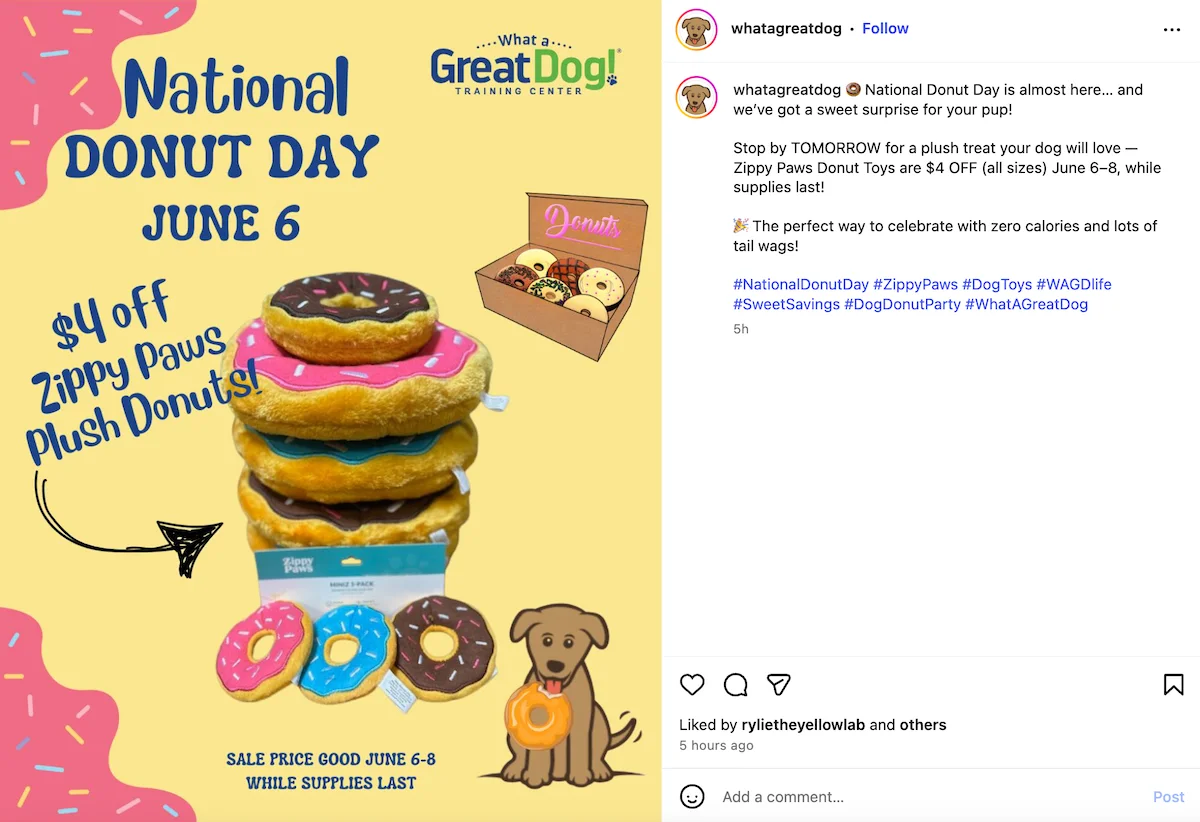
This dog training center includes the timeframe for their offer: The next day.
You can even include a countdown timer to further emphasize the limited nature of the deal. That’s what iHeartRaves did in an email marketing campaign, which offered a temporary discount on bestselling products.
The timing of the offer itself is another factor to consider.
“Our discount offers attract higher numbers of applications when they align with industry financial periods, especially at the end of fiscal quarters when businesses are budgeting,” said Gerti Mema, marketing manager for Equipment Finance Canada.
🧨 Free guide: 37 Ways to Promote Your Business (Whatever Your Budget!)
Make sure they offer real value
Of course, if you’re going to offer a discount, make sure it’s worth your customers’ while.
“A weak limited time offer [e.g., 5% off on a low-cost item] creates indifference instead of urgency,” Lim said.
For his part, Firdaus Sateem, founder of VoidSEO, said offering “absurdly low prices” on occasion “works wonders.”
For example, he ran an offer that cut subscription fees by 80% for the first month and “significantly boosted” signups.
“The key was how it reduced hesitation—the too-good-to-pass-up price gave people a low-risk way to try the service,” Sateem added. “From there, the higher lifetime value of those retained customers drove a meaningful increase in monthly recurring revenue.”
Make sure to segment your audience
You don’t want to spray and pray with limited-time offers either. Instead, segment your audience and offer the most relevant deal to each cohort.
“For example, early access offers should be provided to VIPs, and timely reminders should be sent to those who have abandoned their carts,” Lim said.
Make them occasional perks
Finally, be wary of offering too many limited-time deals, as this can create an expectation for discounts among your customers, said Dan Fugardi, CEO of Instyler Brands.
It can also adversely impact brand trust and reduce campaign effectiveness over time, Lim added.
Examples of limited-time offers to try
McDonald’s McRib sandwiches and Amazon’s Lightning Deals are two great examples of limited-time offers.
Sales of the former stalled when the McRib was a permanent menu item. Now that McDonald’s releases the sandwich for a select period in the fall, the QSR giant reportedly adds $30 million to its bottom line annually.
“This is a textbook example of scarcity marketing,” said Sasha Berson, chief growth executive at Grow Law Firm. “Limited-time offers like this create urgency, which pushes consumers to act fast instead of postponing a purchase.”
Similarly, Amazon’s time-sensitive Lightning Deals appear for four to 12 hours, or until the product in question sells out. They can increase sales, reviews, and brand awareness for third-party sellers but come with a non-refundable deal fee, which reportedly ranges from $150 to $500 per offer.
“The key here is FOMO. Amazon shows real-time stock updates, reinforcing scarcity,” said Ivan Vislavskiy, CEO of Comrade Digital Marketing. “Research from CXL found that urgency-based offers can increase conversion rates by over 300%. When people feel they must act now, they do.”
There are a lot more ways to tap into limited-time offers. Here are some of the best examples to try with some templates to get started.
VIP access
For starters, there’s the exclusive early access offer.
This is usually used to give your best customers access to a new product, service, or feature before the general public.
“This taps into the power of exclusivity and makes customers feel like they’re getting something special,” White said. “It’s especially effective for service businesses and SaaS companies.”
Kleeman suggests the following template:
🎉 VIPs First! 🎉
Our largest sale of the season is right here—however, handiest for YOU! Shop earlier than everybody else.
🔒 Use code: [Code]
⏳ Public access begins [Date/Time]
Lim suggests: “Exclusive to You! Enjoy [offer] as a thank-you for being a VIP—valid for 48 hours!”

BOGO
Then there’s the classic buy one, get one Free offer, which is also known as BOGO.
It encourages higher order values and repeat purchases, said Benjamin Kepner, integrated media and data supervisor at Vladimir Jones.
“BOGOs are pretty common, but good for this type of strategy because you are drawing in the value buyer more than specifically the discount buyer,” Fugardi added.
Kevin Connor, CEO of Modern SBC, suggests using something like, “One for you, one for your bestie. Or each for you. No judgment.”
Fugardi recommends a simpler template like, “Buy one, get one free on all products until tonight at 9 p.m.”
☎️ Free guide download >> The 42 Best Call to Action Phrases Ever (& Why They Work)
Limited-time discount
Another classic is a limited-time discount, but Oentoro said to offer something different—and even unexpected—each time, like a free creative consultation or priority delivery.
“It feels more personal, less salesy, and often gets better results than a mass-marketed discount,” he added.
Oentoro’s suggested templates:
“Bring Your Project to Life Now with XX% OFF!”
“We’re offering [specific offer: e.g., ‘a free storyboard consultation’ or ‘priority delivery at no extra cost’] for a limited time, designed to help you kickstart your next explainer video project.”
“No strings attached! Just a little push to get things moving. The offer ends on [Date]. Ready to get started? [Landing page or contact form.]”
Connor, on the other hand, prefers an email subject line, like, “Psst…This deal disappears at midnight. Don’t snooze!”
Limited release
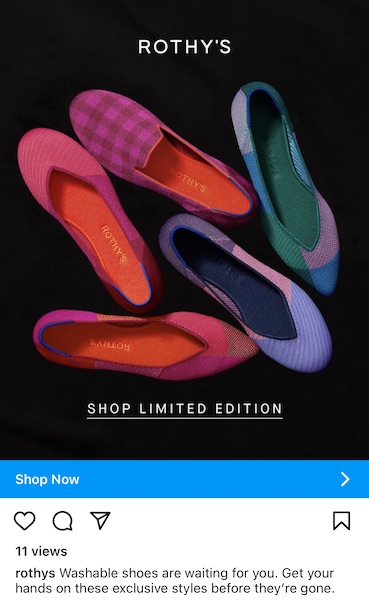
You can lean into the limited nature of these deals by highlighting the specific number of shoppers eligible for a deal or the number of products available at a discount.
“A limited-edition or limited-release [deal], in which there is a finite [number of] units, is good for prepping buyers that are coming back for the feeling of exclusivity or being able to get in on that action, rather than strictly discount buyers,” Fugardi said.
“An example template for this might be, ‘Limited sale! Only 90 units available. Buy one while you can,’” he added.
Similarly, Lim recommends a template such as “Last Chance! Get [specific product/offer] for [XX% discount]—Only [number] hours left!”
Bonus with purchase
You can also encourage conversions by offering a limited-time gift with purchase.
“Instead of cutting prices, add value—like a free consultation, an extended warranty, or a premium add-on,” White said. “This way, customers feel like they’re getting a better deal without you undercutting your pricing.”
And if you limit the bonus to orders above a certain threshold, you can incentivize shoppers to buy more, Kleeman said.
Kleeman’s suggested template:
Free Gift with Purchase
🎁 Get a FREE [Gift Name]! 🎁
Spend $[X] or extra and receive [Gift] (worth $[Y])—for FREE!
🛍 Limited supply—store now!
🔗 [Link]
Mystery discount
Add a bit of intrigue to your limited-time offer by promoting a mystery discount.
“People love surprises,” Kleeman said, “Plus, they’re much more likely to interact if there’s [potential to score] a larger discount.”
Kleeman’s mystery discount template:
🤫 Your Secret Deal is Waiting! 🤫
Click to show your discount—10%, 20% or 30% off!
🎁 Tap to show: [Link]

Flash sale
Surprise your customers with an unexpected sale—but only for a limited time.
They, too, help to encourage quick purchases, Kepner said.
Connor’s flash sale template: “Surprise! 24 hours to grab [product] at 30% off. Go, go, go!”
Meanwhile, Kepner recommends highlighting terms like “24 hours only” or “Weekend exclusive.”
Email/SMS offers
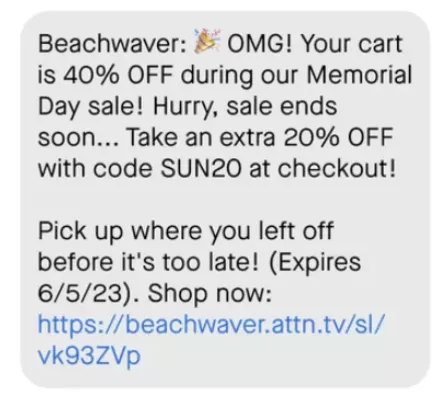
You can really hone in on exclusivity—and encourage customers to share their phone numbers and email addresses—with limited-time offers for subscribers.
“We ran a ton of these for Elitch Gardens amusement parks,” Kepner said.
He suggests a template like:
Subject Line: Hurry! Your Exclusive [XX% Off] Deal Ends Soon!
Body: ⏳ Time is running out! For the next [X hours/days], get [XX% off] your favorite [product/service]. Don’t miss out—this offer disappears on [date]!
👉 [CTA Button: Shop Now / Claim Your Discount]
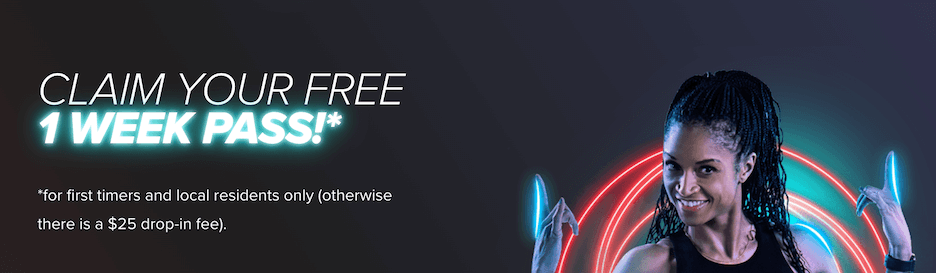
New customer/referral discounts
Further grow your customer base by offering limited-time referral discounts and/or promotions for new customers, like “Use Code [PROMO_CODE] to Receive [X]% Off Your First Order.”
“This template succinctly expresses the uniqueness of the offer, the discount value and the need of the customer acting,” said Michelle Nguyen, marketing manager at UpPromote. “The offer’s time-sensitive character generates urgency and motivates consumers to seize it before it runs out.”
She also recommends a “simple and effective” template like, “New customers only: Use code [PROMO_CODE] to receive [X]% off your first order.”
Seasonal offers
You can also consider timing your offers to align with seasonal promotions.
“We, for instance, have Christmas and Black Friday discounts,” Shevchenko said. “Many other businesses implement Halloween discounts, Saint Valentine’s discounts, etc.”
Some of the more popular holidays to run your limited-time offer during would be:
- Back to school (We have plenty of back-to-school marketing ideas you can try here!)
- Halloween
- Thanksgiving
- Christmas
- Hanukkah–great for an eight-day limited-time offer!
- Fall/Spring/Summer break
- New Year (New Year, New You!)–should limit to the month of January
- March Madness
- Christmas in July
- Shark Week
- Awareness months (April: National Financial Literacy Month; June: Pride Month)
- Observances (June 8: National BFF Day, July 15-21: Everybody Deserves a Massage Week, etc.)
“We ran a ton of these for Otterbox phone cases after they launched their new cases every year,” Kepner said.
Lim suggests a template like, “Summer Steals! Snag your favorite looks at [discount]% off—but only until Sunday!”
Connor recommends something like, “Because your mother merits that present, and you deserve a discount.”
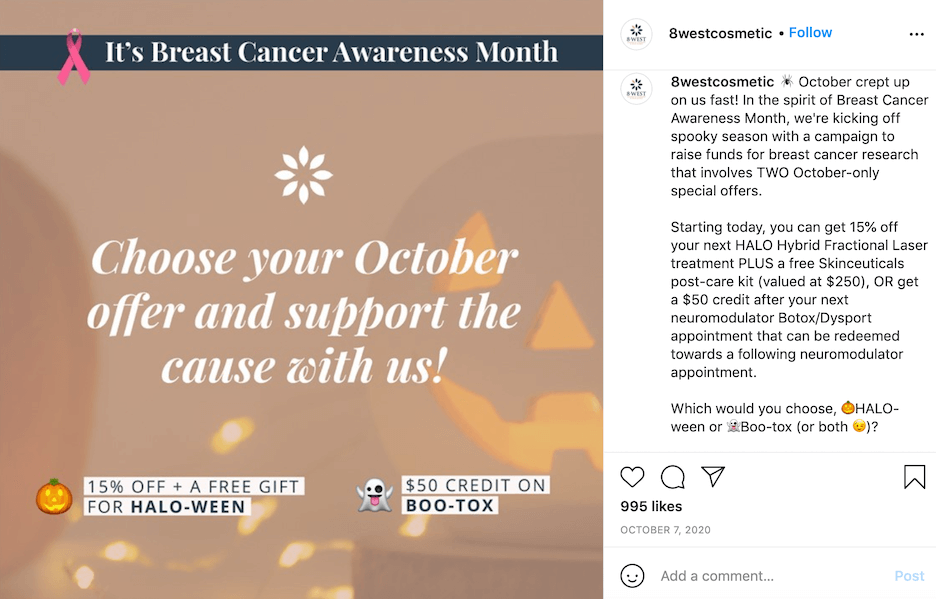
This business ran a limited-time offer in honor of Breast Cancer Awareness Month in October.
Community appreciation
Small businesses can zero in on community appreciation offers as a way to authentically engage local shoppers.
“Instead of just saying, ‘Get 20% off,’ you can frame it around something meaningful—like celebrating an anniversary, a local event, or even a sports team win,” White said. “For example, ‘Celebrating 5 Years in Business! Get a Free Upgrade This Week Only!’”
Fast-track approval
Instead of a discount or a gift, you can offer another kind of benefit.
For Mema, it’s fast-tracked approvals for participating customers.
“Clients who applied within a 48-hour window received expedited financing decisions, cutting their waiting time in half,” he said. “It was not a discount, but the promise of speed made it attractive.”
It’s particularly effective in operational sectors such as construction and trucking, where delays can result in significant financial losses, Mema added.
Introductory pricing
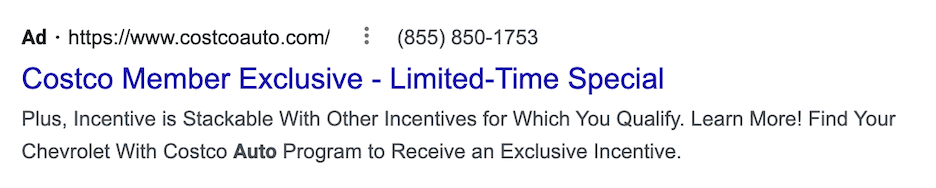
Finally, entice new customers with an introductory pricing deal.
“Encouragement of first interaction with the good or service and incentive for trial is the aim,” Nguyen said. “Customers know the discounted starting price is only good for a limited period, thus they become urgent. Attracting fresh clients and developing a clientele can benefit from this approach rather effectively.”
Create limited-time offers that drive lasting results
The examples above are 13 ways to get started with limited-time offers, but there are undoubtedly more, depending on the sector you’re in and your target audience. No matter what deal you offer, be sure it is clear, valuable, and properly targeted. That way, you can truly take advantage of their ability to inspire action, generate revenue, cement loyalty, and encourage shoppers to try something new.
Here are the top examples of limited-time offers:
- VIP access
- BOGO
- Limited-time discount
- Limited release
- Bonus with purchase
- Mystery discount
- Flash sale
- Email/SMS offers
- New customer/referral discounts
- Seasonal offers
- Community appreciation
- Fast-track approval
- Introductory pricing

Recommended for you



Unlock your business potential
We offer innovative technology and unparalleled expertise to move your business forward.