


Staying ahead of the marketing curve feels almost impossible right now. As soon as you have something figured out, a new study, algorithm update, or AI use pops up and changes the whole scenario.
This is especially true for local and growing businesses without an in-house marketing team to keep track of it all.
So we asked seven marketing pros to help sift through the noise and tell us what strategies will help businesses build trust, increase reach, and find more customers faster in 2027.
Want a little spoiler? They’re a lot more about creating real connections with buyers than using technology for more marketing, which is where local businesses have a huge advantage.
Contents
- Rewrite service pages for AI discovery
- Invest in creativity to stand out
- Go big on off-site mentions
- Return to high quality over high volume
- Refocus on audience understanding
- Connect with buyers before they search
- Create unique experiences AI can’t copy
7 marketing strategies for 2027 (according to the pros)
Here’s what seven marketing pros say they’d focus on to stand out, keep up, and grow fast next year.
1. Rewrite your service pages for AI discovery
Google is still one of the best sources for new leads and customers, especially for local businesses. But the way people find you on Google has changed. They’re more likely to see you in an AI Overview result now than click on the list of standard blue links.
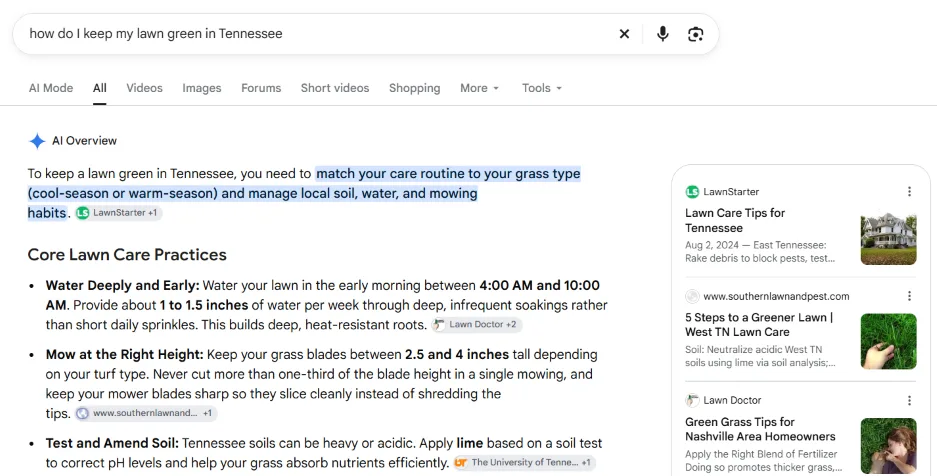
Users have to scroll past AI Overviews, Video results, and page features like “People also ask” to get to the list of blue links now.
The local businesses that adapt to that shift will do better in search next year.
“Most small businesses are still spending time (or money) on blog posts written to rank on Google,” said Goran Mirkovic, Senior Organic Growth Specialist at BX Studio. “But in 2027, more of their customers will simply ask ChatGPT or Google’s AI Mode who to hire and never see those posts. I’d move that budget into rewriting your service pages with the details people actually ask about, like prices, timelines, and the areas you serve.”
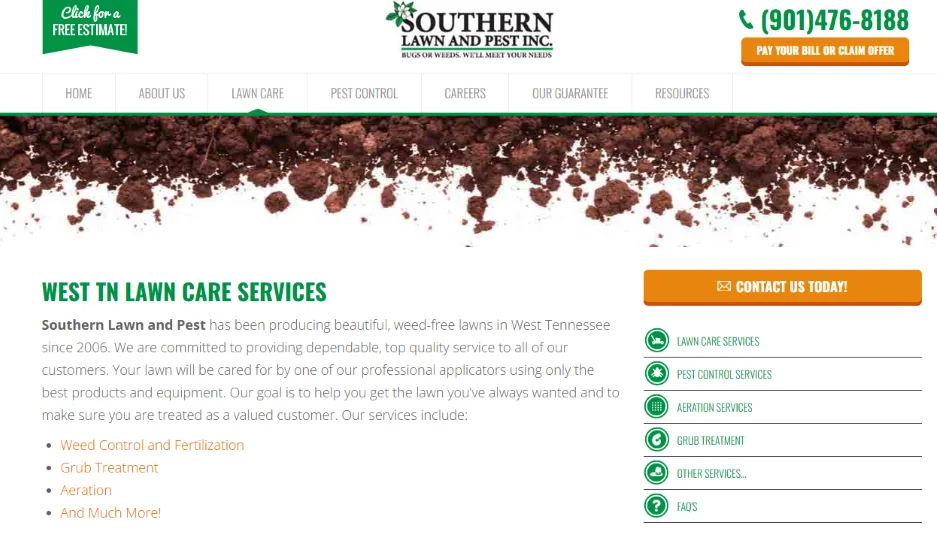
Website pages optimized for service, location, and social proof will be critical for success.
“AI assistants recommend the businesses they have clear facts about, and right now most small business websites give them very little to work with,” Goran added.
The change in search behavior also affects how you’ll track results there. Focusing too much on website visits could falsely suggest your SEO and GEO aren’t working. Tracking impressions, presence in search engine results page (SERP) features, and branded search volume is a better bellwether of success when fewer buyers click through to a website.
💡Want more ways to get mentioned by AI? Download The Complete AI Search Toolkit: Practical Strategies to Get Found by AI
2. Invest in creativity to stand out
AI makes marketing faster. But it alone can’t make it better. It takes real human creativity to produce brain-pausing verbal and visual messaging that sticks.
That’s why Oskar Duberg, a freelance writer and fractional content marketer, said that in 2027, sharpening creativity will give you a better return than another AI tool.
“We’re living in this time where marketing campaigns start with a prompt rather than a human,” he said. “And that’s turning marketing into a beige, unrelatable soup. If I had an extra $1,000 to spend on marketing, I’d put it into creative seminars.”
Oskar’s idea is backed by science. Recent studies show that leaning too hard on AI dulls creativity and throttles new thinking.
“Upskilling your team in creative spaces like storytelling, writing, and design through courses and seminars will have a whole lot higher ROI than the same money spent on more AI credits,” He added.
It’s hard to be intentional about actions that don’t immediately generate a new lead. But as more marketing lands at an AI average, creative thinking will pay off enormously in the long term. Even if you don’t have the resources for official courses, try simply writing something by hand every week. A journal entry, a letter to a friend, or a fun marketing project. Keep the creative muscle memory strong, and you’ll be better able to review what AI produces.
3. Go big on off-site mentions
AI isn’t just good at understanding the complexity of your audience. It can also draw information from everything, everywhere, all at once to know your business.
Shannon Tien, Senior Brand Content Marketer at Absorb Software, advised that in 2027, expanding your online presence beyond your website should be a top priority.
“I’d invest in reviews and in being accurately, positively mentioned in authoritative roundups and on third-party forums like Reddit, Facebook, and Quora,” she said. “Maybe even connecting with a PR expert to get your name in the news.”

Shannon Tien said businesses should invest in expanding positive, descriptive reviews and mentions on forums and roundup articles in 2027.
Reviews and good press have always helped build trust with buyers. Now, they also influence the systems that make sure buyers find you. “What others say about you increasingly determines whether AI recommends your business,” Shannon said.
Getting reviews is the lowest lift here, but it isn’t a passive activity. Make asking for reviews a part of your sales workflow, just like providing a quote or invoice. Place links on your website and in follow-up emails. And create a review template that makes it super easy for people to add the details—like location and the service or product provided. Those are the details AI will present when the next buyer asks for recommendations.
4. Return to high quality over high volume
Alex Lindley, Managing Editor at Semrush, often posts about the difference between quality and quantity in marketing.
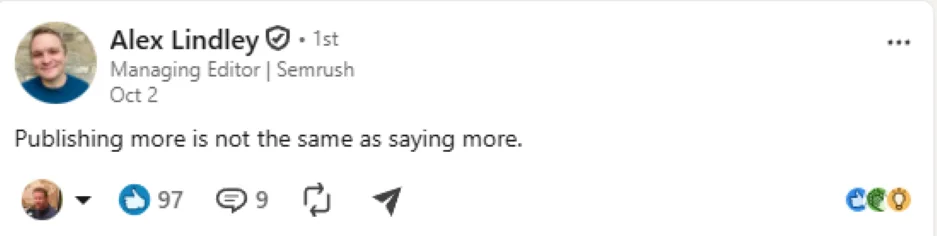
The strategy he believes marketers should focus on going into 2027 aligns with that idea.
“I’m betting big on a return to quality as the content north star,” he said. “That means content that adds unique value and isn’t made round, repetitive, and pointless by AI sloppification.”
Alex pointed to recent studies as mounting evidence that many consumers don’t like or trust AI-generated content from brands (even if brand executives think they do).
He also noted that it’s not just audience preference motivating the pushback. “You have recent changes by Google to documentation surrounding content quality related to AI specifically,” he said. “Meanwhile, AI companies are adding watermarks to their outputs. At a certain point, AI content will end up like all the other shortcuts people have identified and exploited over the years: valueless and, sometimes, a liability.”
Alex said that the first place to adjust is at the center of your brand: your website.
“I would first audit the business website to see if its previous marketing involved low-quality AI content,” he explained. “If it did, I’d spend a significant portion of the budget on undoing that mistake. That would look like rewriting key pages so they add real value and showcase unique expertise.”
And then, just as Shannon suggested, move outward to other places your business is represented.
“From there, I’d put money and effort into the off-site channels the business has neglected or underinvested in,” Alex said. “That could be YouTube, Reddit, their Google Business Profile reviews, or LinkedIn, for example. This has the effect of potentially boosting their presence for actual customers and, importantly, their presence in AI search surfaces.”
5. Refocus on audience understanding
In an interesting twist, AI is actually making it more important for marketers to know their human audience instead of creating for machines.
“Businesses have been conditioned by marketers to look at every channel in isolation and try to optimize for that channel’s algorithm,” said Nigel Stevens, the CEO and co-founder of OGM. “While it can still be the case, the underlying trend is that all channels are getting much better at providing personalized content to their audience using AI. This means that all marketing in 2027 is really just about having a precise understanding of who the audience is.”
AI is less reliant on exact keywords. It’s much better at understanding the complexity of individual user preferences and matching results to them. Catering to the people you want to connect with is how you get found in feeds and results.
“Get to know the needs, wants, desires, and characteristics that can make it into their context window and determine what content they see,” Nigel said. “It sounds obvious and cliché, but it is in fact quite different than businesses have been told to act for a long time.”
Simple customer surveys or one or two questions asked at the end of a customer call will generate a lot of this knowledge. Another option is using an AI tool like Claude or ChatGPT to quickly summarize your online reviews or presence on Reddit. Get to know what people say about you in the wild and use it to calibrate your marketing messages.
🔎 Before you can connect with an audience, you need to identify them. Get How to Find Your Target Audience in 6 Steps (With Examples!) >>
6. Connect with buyers before they search
AI-driven search engines have had another effect businesses need to be aware of. Now, AI answers, not your website, get the first crack at influencing buyers at the beginning of their search.
“AI recommendations are the first thing many shoppers see when they start searching for a solution on Google,” said Stephanie Heitman, Associate Director of Content at LocaliQ. “So before anyone ever gets to your website, an AI Overview has given them top options to consider and reasons to choose them.”
Goran mentioned how to get your business mentioned in those recommendations with better service pages on your website. But there’s another way to help make sure your product or service is at the top of the consideration list.
“Influence isn’t lost to AI,” Stephanie said. “It just means businesses need to engage buyers a little earlier in their decision-making process. Contextually targeted social media and display ads, for example, can reach a buyer before they’ve considered opening a search session to find a solution and plant the seed that your product or service is the best one.”
Here’s how that could play out for your business. Say you provide pest control services in New England. It’s early spring, and you know people will soon start looking for ways to keep mosquitoes away. Your website and business listings are already optimized for “mosquito control.”
Your next step could be to publish branded content in local, trusted publications that educates homeowners on tips and tricks for keeping mosquitoes at bay, while introducing your solution. When they go to search, your business is already at the top of the list.
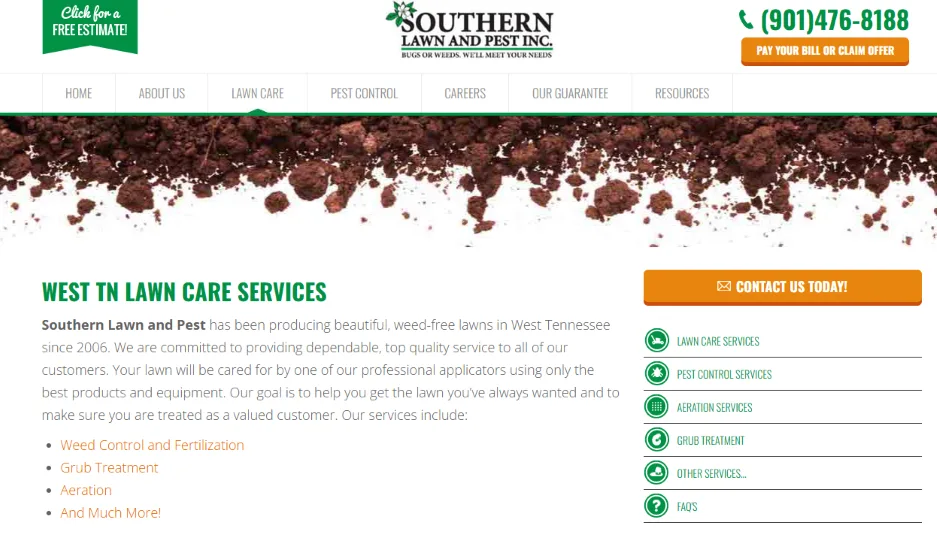
Contextually targeted branded content places your business and solution in a trusted space before buyers start a search.
7. Create unique experiences AI can’t copy
AI doesn’t create. Its superpower is ingesting LOTS of information quickly and reconfiguring it for a new purpose.
That’s why AI search engines are so good at addressing topics that have been written about repeatedly. Anthony Testaverde, VP of Marketing Growth and Analytics at LocaliQ, said that winning businesses will be the ones that offer what AI can’t duplicate.
“By 2027, marketers won’t just be competing with other advertisers,” He said. “They’ll be competing in a world where AI is increasingly the first stop for customer questions. If your marketing simply provides information an LLM can deliver instantly, it becomes harder to justify the click, let alone the PPC spend.”
Anthony recommended businesses invest in “proprietary tools, data, utility, and experiences that create recurring value and give customers a reason to come back directly.”
Here’s where AI does come in handy. A local business, like a roofer, can now spin up an online appointment scheduler or project pricing tool and create a landing page for it on their website without any coding knowledge (here’s how vibe coding works and some ways you can use it).
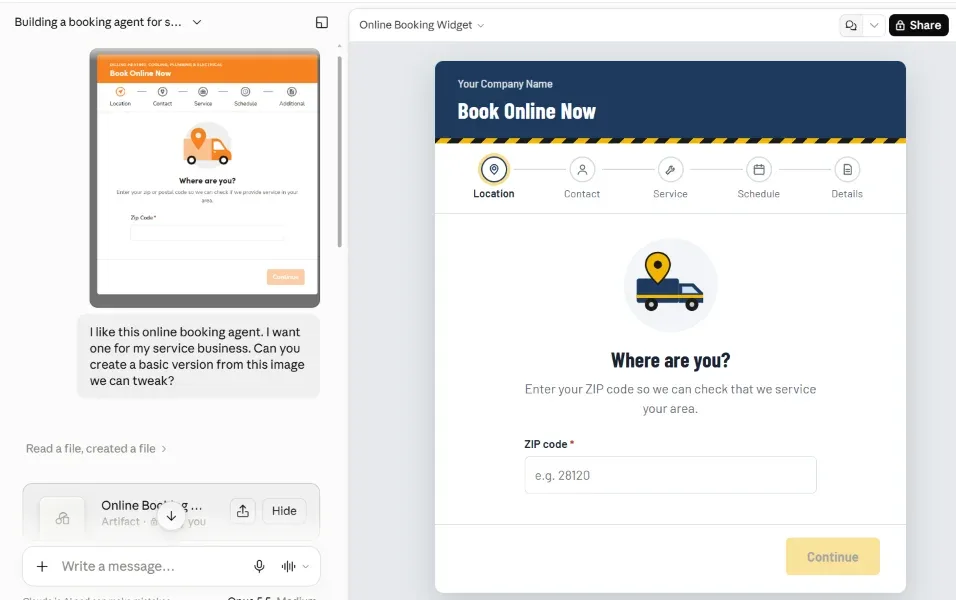
“The opportunity is to become a source AI can’t replace and a brand customers don’t need AI to find,” Anthony said.
Marketing strategies built for 2027 and beyond
Creating a yearly marketing plan feels harder than ever. These marketing pros’ strategies will help you build a resilient, flexible plan that works with all the changes. They combine new technologies with proven marketing principles to reach buyers earlier and more effectively.
If you’d like help making your marketing more successful next year, reach out. We’ll show you how our marketing solutions keep you ahead of the curve and on top of your goals.

Recommended for you





Unlock your business potential
We offer innovative technology and unparalleled expertise to move your business forward.