


A great small business website does a lot of work. It can attract new leads, convert customers, and generate trust with anyone who happens to pay you a visit.
But while new technology makes it super easy to build the structure of your site, there’s a lot to consider when turning it into a real growth engine for your business.
In this guide, we’re doing a deep dive into 10 fantastic small business websites to see what they do right. Then we’ll set some context on why a great website is important, list the critical components it should have, and answer some of the most important questions about building your own small business website.
Contents
- 10 small business website examples + why they work
- Why do you need a small business website?
- What to include in your small business website
- Small business website metrics
- Small business website FAQs
10 small business website examples + why they work
The best way to learn what makes a small business website great is to see it in action. Let’s look at the best parts of 10 great websites.
1. Dentist website example: Toluca Lake Dentists
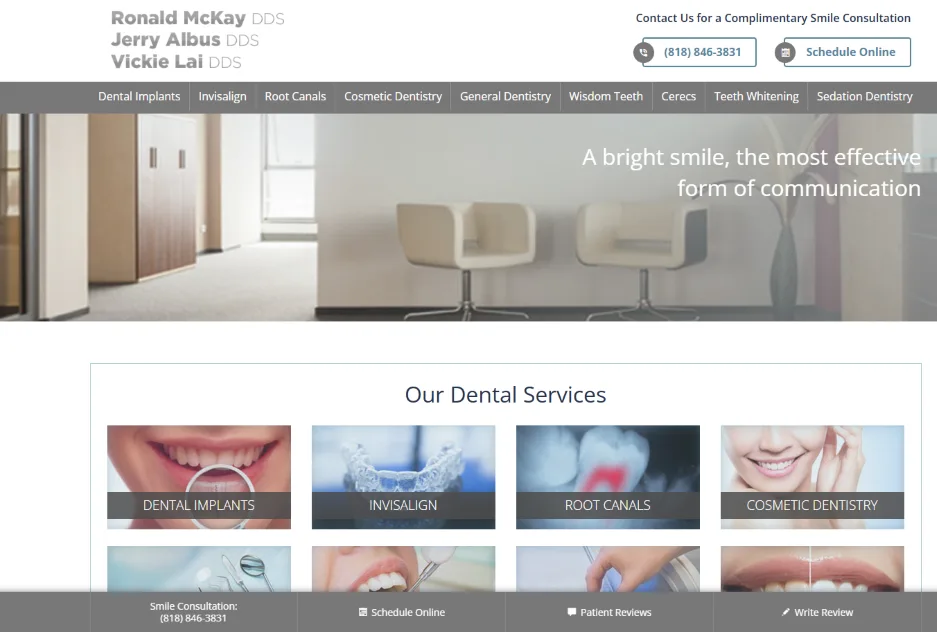
The Toluca Lake Dentists website gets so many things right (just look at its service categories on the main page…so easy to navigate). But there’s a subtle yet important feature here. Check out the persistent footer that follows visitors on every page with click-to-call, online scheduling, and review links.
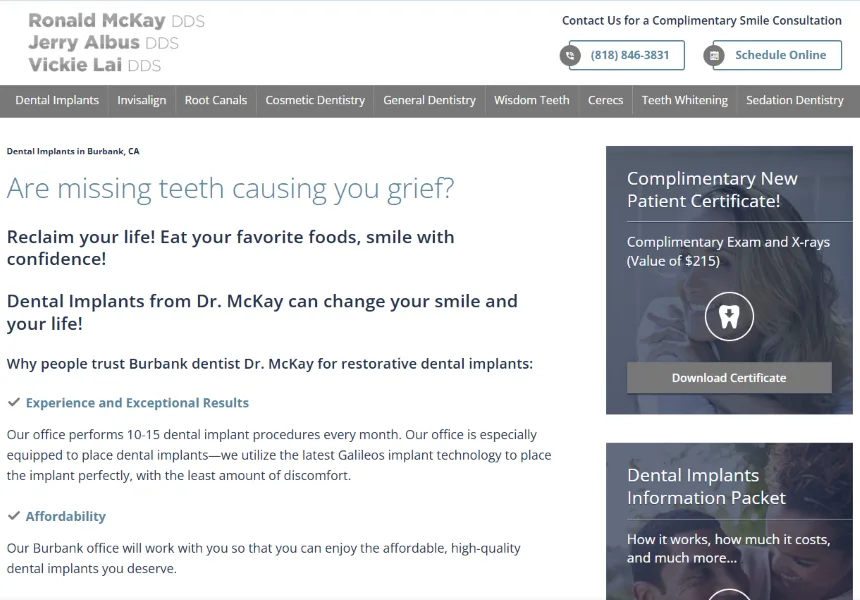
A gives you a home base to build dedicated landing pages. This site does a great job of that. Here’s an ad the practice placed on Google

When you click the link from their Google Ad for teeth replacement, you’re directed to a landing page with plenty of information and quick links for that service. (Check out these Facebook Ads for dentists to get even more marketing tips).
🛑 Avoid common small business website errors. Download The 10 Most Common Website Mistakes (& How to Fix Them!)
2. Home services website example: Parley’s PPM Plumbing
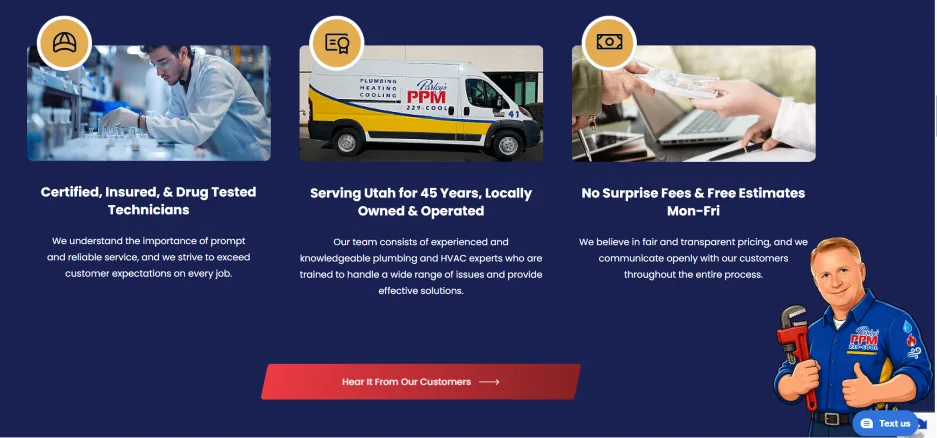
Parley’s PPM Plumbing, Heating & Cooling has a lot of features on its website that help customers get help with their plumbing or learn more about what may be causing their problems.
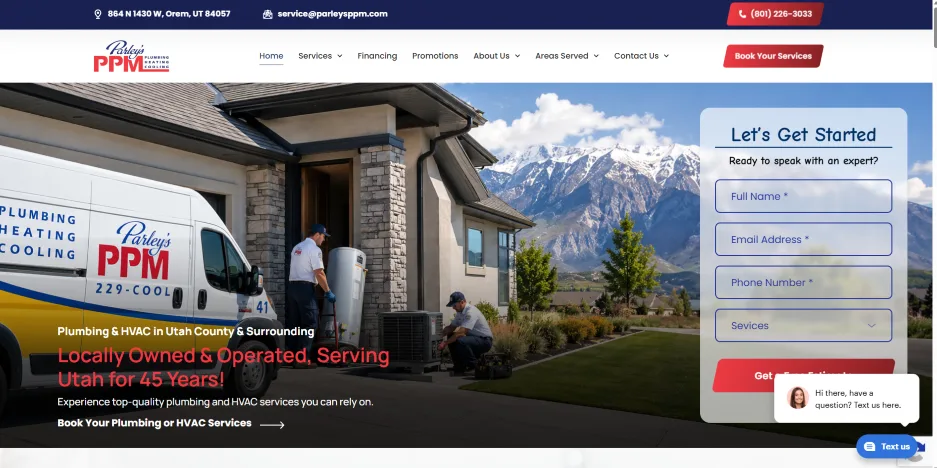
For one, they have a contact form right on the homepage of the website to help expedite getting in touch with the business to address a specific plumbing problem.
Parly’s team has also created locally optimized pages for each service. So when someone searches for “heating and furnace in Utah County,” the site will show in the results pages.
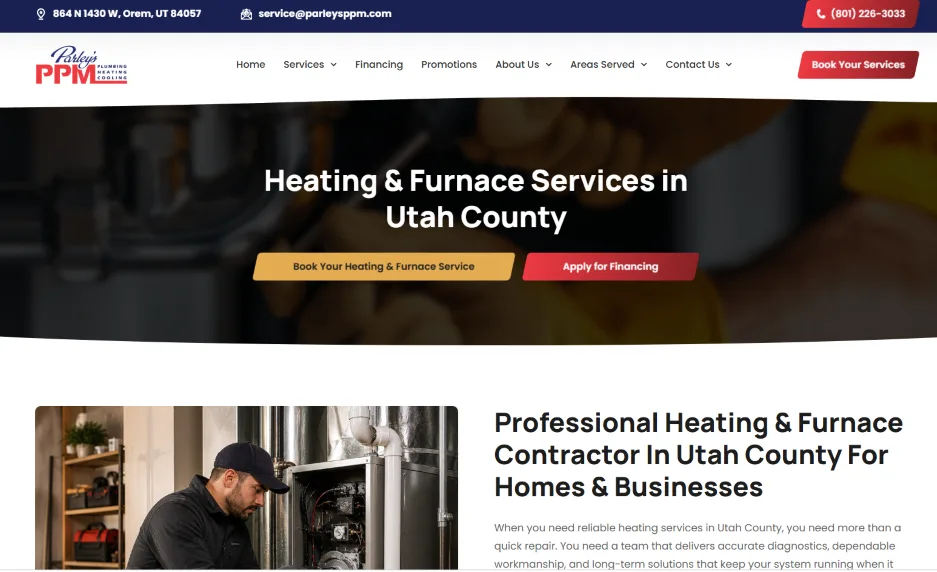
And they’ve added trust signals to the front page, directly addressing any questions about quality and experience visitors may have.
3. Education website example: Mount Hope Christina School
What’s not to love about this education website? Mount Hope Christian School uses attention-grabbing videos that fill the page with a look at what attending is like.

There are also clear buttons on the page that direct visitors to apply or find more resources.

This site is very easy to navigate. It gives parents the option to learn more about the school, its programs, what it teaches, and more.
Another element we love about Mount Hope’s website is the About Us page, which provides a lot of helpful information that can help the school connect with parents of prospective students.

4. Multi-location business website example: Fresh Monkey
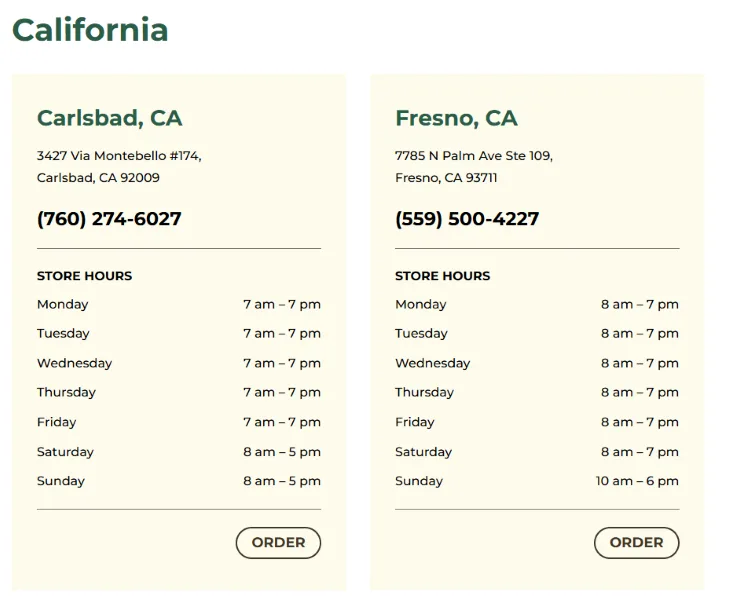
Fresh Monkey is a growing smoothie shop with several locations in multiple states. The first thing that stands out is that each location gets its own listing with hours, address, phone number, and a direct “Order Online” button. You can even click through to its spot on Google Maps.
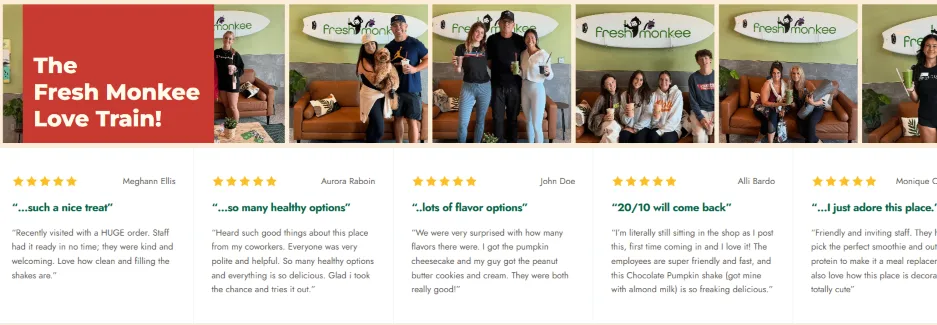
It’s also really cool how the site presents customer reviews. They call it the “Love train,” and it scrolls reviews, ratings, and pictures of customers enjoying their beverage.
Now, check out this popup. It triggers after you’ve been on the site for about 30 seconds. It has valuable offers to entice you, plus a QR code for easy scanning. What a great way to get more people on your app!

5. Retail website example: Furniture Fair
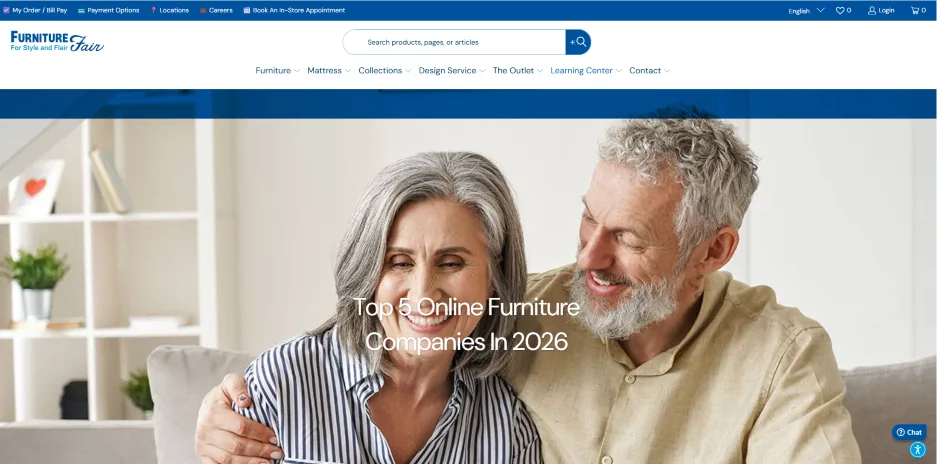
Furniture Fair gets right down to business by telling you it’s one of the “Top 5 Online Furniture Companies in 2026.” This type of bold social proof is a great way to start a new visitor’s experience.
The live chat feature is super helpful, too. Once you click on it, there are options to chat, check an order, and peruse FAQs. That’ll save visitors a ton of time and create a great impression of the business.

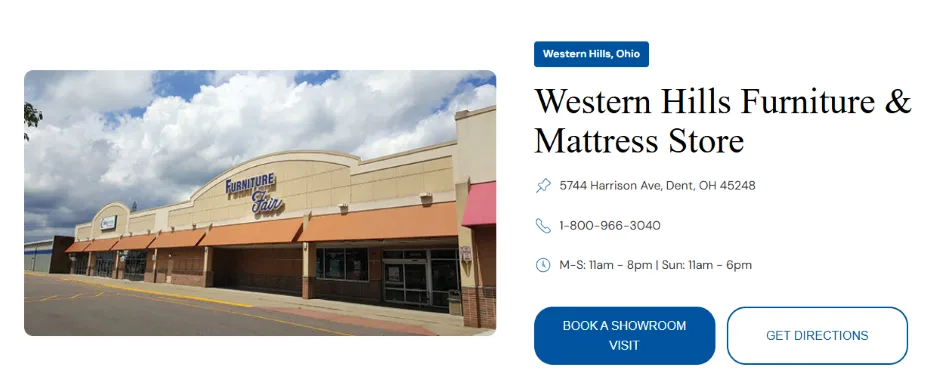
Here’s an example of how a retail store offers appointment booking. Once you click into a location page on the Furniture Fare website, you can tap the “Book a showroom visit” button and set your time for personalized in-store shopping.
6. Travel and tourism website example: Explore Asheville
Travel and tourism websites need to have a positive, energetic vibe, and Explore Asheville nails it. A stand-out feature on the site is the seasonal content hubs. If you’re enticing visitors, it makes a lot of sense to tell them what they’ll experience at the time of year they visit.
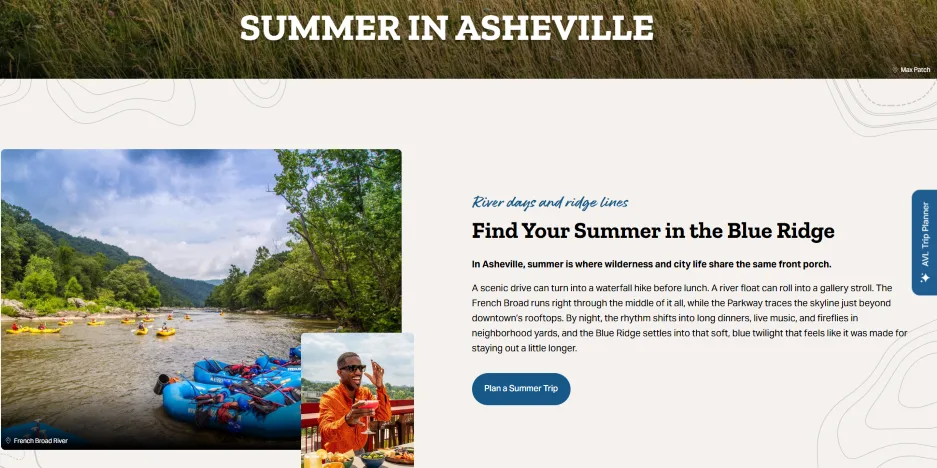
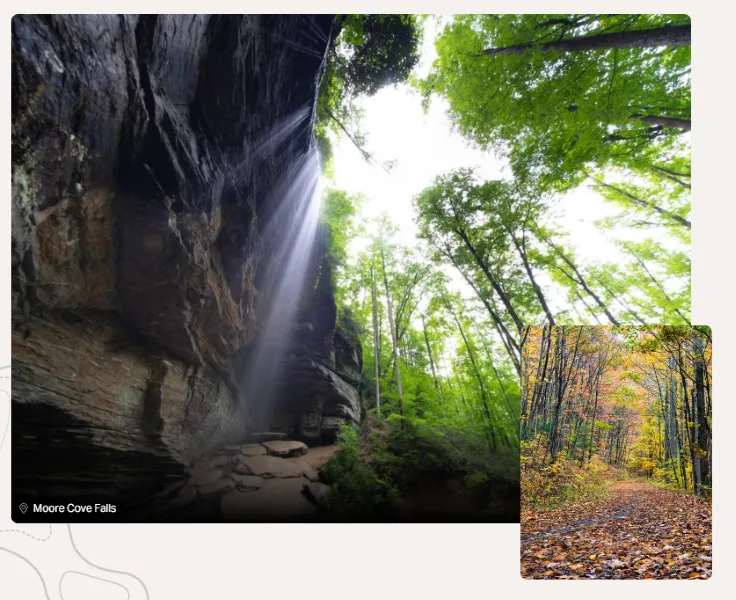
You also need a lot of excellent photography if you want to compete in this market. You can see excellent examples of this throughout the site. Of course, this is true of any small business website, so even if you don’t sell travel experiences, you can get some inspiration here.
7. Healthcare website example: ProHealth Care
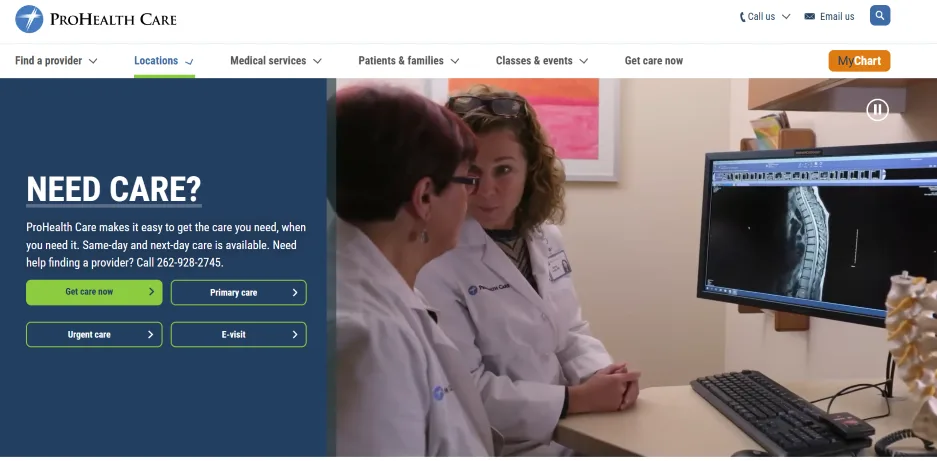
When you need to schedule a healthcare visit, you want to do it in as few steps as possible. ProHealth Care meets that need by placing multiple CTA buttons for common scheduling needs on the front page.
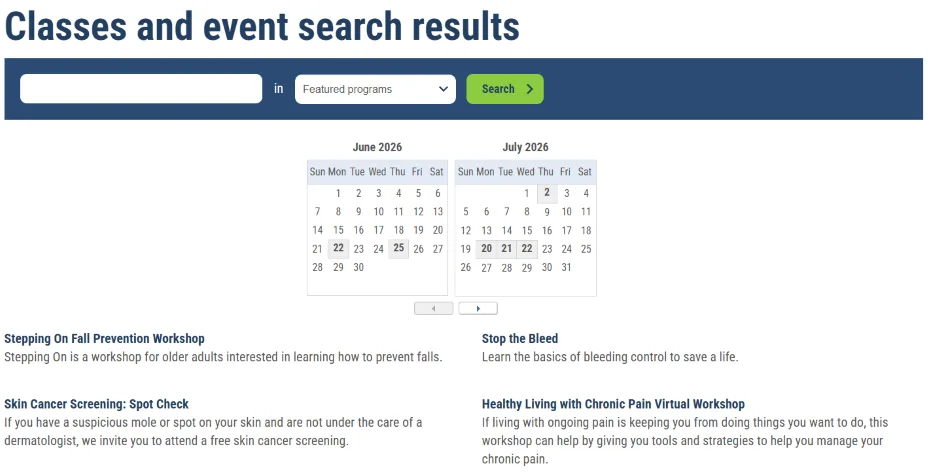
There’s also a searchable, categorized events calendar with a link to it in the top navigation bar. That makes it easy for people to find an event of interest to them. It also helps with SEO, so if someone searches for “How to deal with chronic pain,” Google may use the class as an option for people in the area.
8. Professional services website example: Bick Law LLP
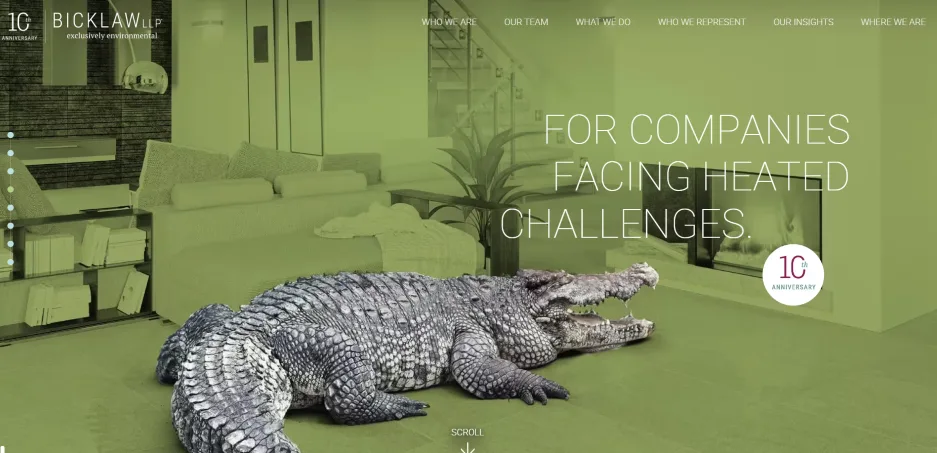
Bick Law LLP is a law firm that focuses on environmental law. The very first thing you’ll notice when landing on the site is the rotating series of animal-themed images and accompanying copy. The animals fit the brand of an environmental law firm, and the copy smoothly confirms the types of clients the firm works for.
Trust is critical for professional services businesses like law and accounting firms. Bick Law helps visitors feel more confident in choosing the firm by showing off individual bio pages for each of its attorneys. The pages are easily accessible from the front page of the site. And if you hover over any one of the team’s images, you get a quick snapshot of the bio.

9. Automotive industry website example: Good Vibes Garage
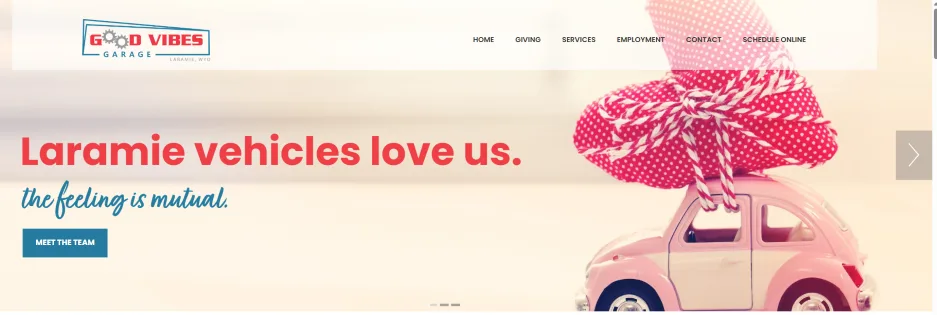
Okay, for an auto repair shop, Good Vibes Garage has some adorable images on its site. But it’s not all form and no function. The business wisely and organically uses the city name in its copy. Plus, the navigation is straightforward and complete, with links to each important section of the site visible at the top.
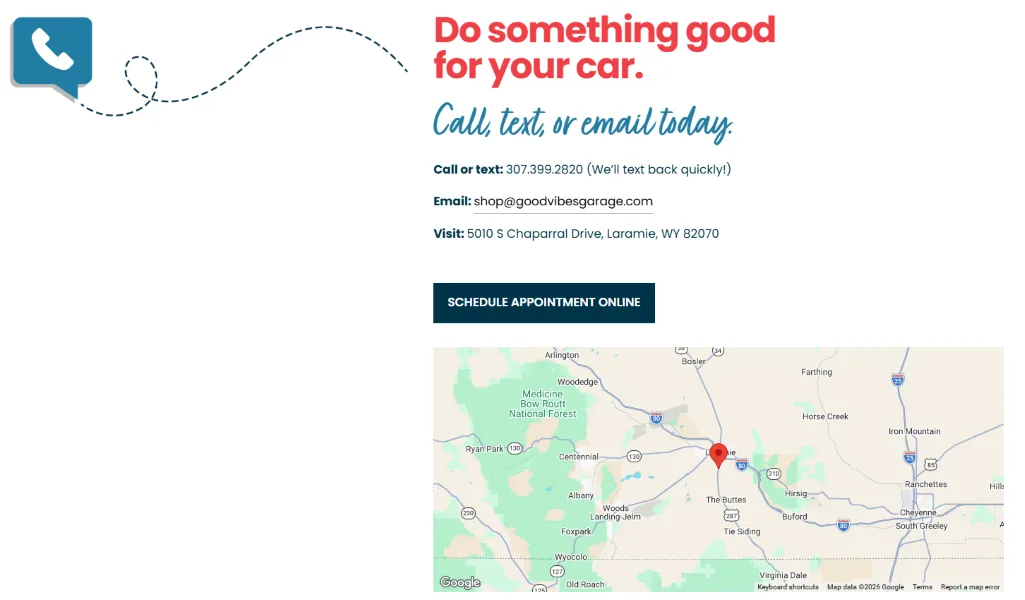
And have a look at this contact section! It puts all the details in one spot, along with a couple of calls to action, a map, and a quick link to schedule an appointment. That’s how you reduce friction for visitors who are ready to take action.
10. Beauty and wellness website example: Yoga Off East
Blogs are an amazing way to show off your expertise while boosting SEO. Yogo Off East has been publishing educational articles for years, which will help them rank on search engine results pages.
One component of their posts is worthy of extra attention. Each one includes the expert who wrote it in the title. Google loves these types of authority and expertise signals.

We’ve talked about the importance of showing off your reviews. But it’s also really important to keep getting fresh, new reviews. Yoga Off East does this by including a well-labeled button that takes visitors right to its Google review form. Make it easy, and you’ll get more positive reviews.

One thing this website could do more is include location keywords throughout. Each class and event description, even the teacher bios, would benefit from a mention of the city and neighborhood they serve.
Why do you need a small business website?
We recently surveyed over 300 small and medium-sized businesses, and 94% of those with a website said it was important to achieve their sales objectives (39% said it was extremely important).
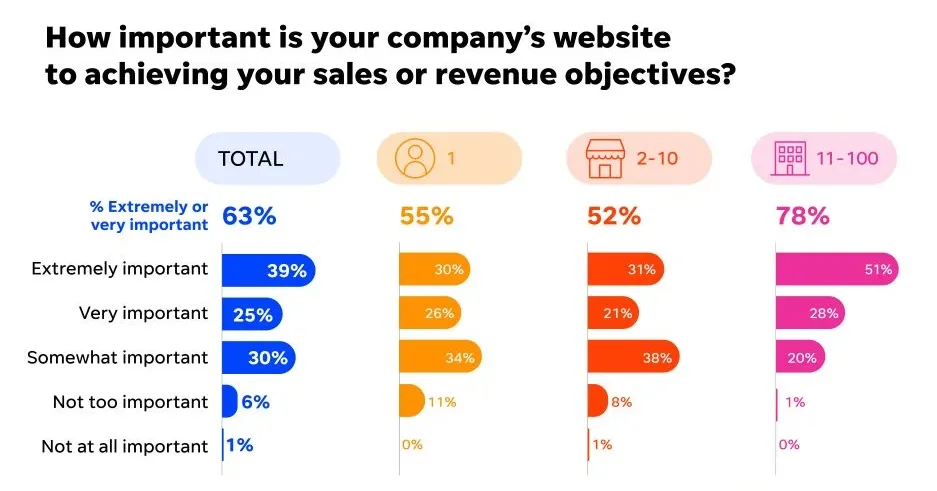
Why are websites so critical to business success? Here are a few of the biggest reasons.
It’s a property you own
Your small business website is the one place on the internet that you have near total control over. Sure, you can (and should!) create profiles on social media or manage your business on local listings sites, but none of these sites paint a complete picture of your business, and all have rules, algorithms, and restrictions that keep you from telling the whole story.
Even a site like Facebook, where you can build out a pretty complete profile, is not a substitute for your own website.
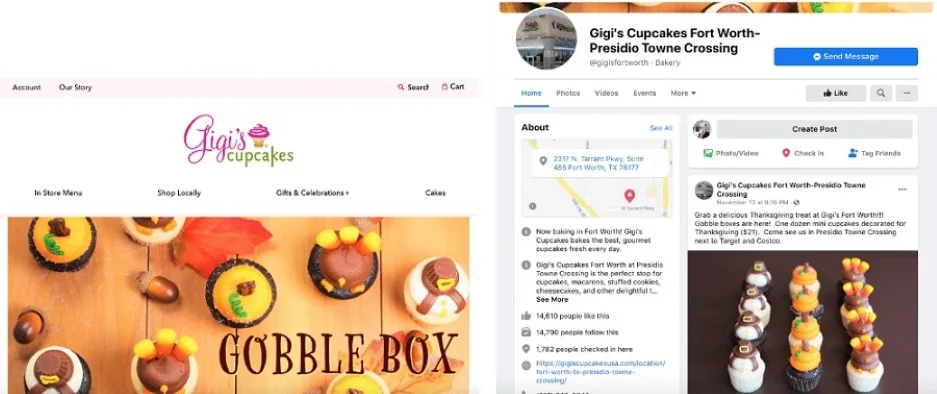
Facebook presence is important, but websites offer a lot more space and flexibility to show off your brand.
You can fully brand your website, though. All of the colors, images, and content on your site are about you and chosen by you. Plus, you can organize and arrange information, images, and video to tell your story in the most impactful way possible.
It’s the hub for all your marketing
A website creates a hub where you can send potential customers from all other marketing channels. The ads you create, the social media profiles you establish, and the local listings you manage should all drive users back to your website. And what you have on your website will shape the way you share information through each of these other marketing channels.
For example, let’s say you want to start a local PPC campaign to draw attention to your new product launch. Without a website, there’s nowhere for you to send people who click on your ad!
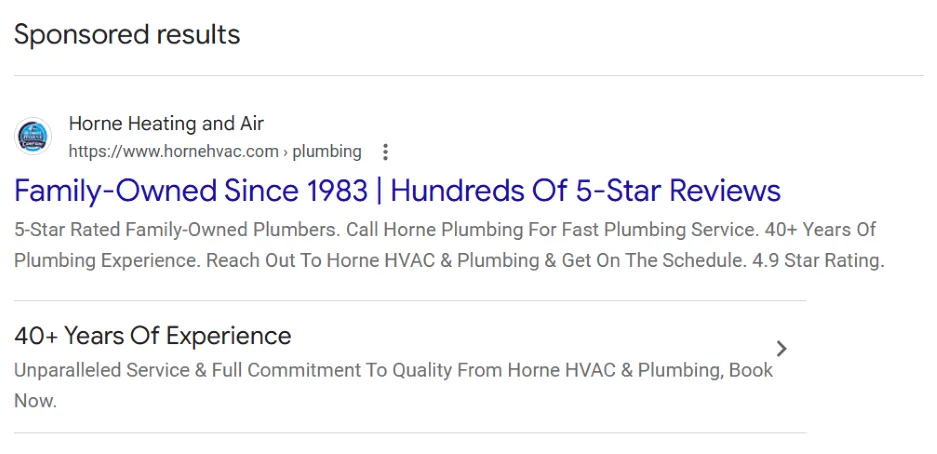
Your website is a destination customers click to from your online ads.
With a comprehensive site, however, you can build a customized and high-converting landing page specifically for searchers who click on that ad. The page can highlight all the features of the new product and allow your audience to get on the waitlist.
It’s an “always on” salesperson for your business
Websites don’t lock the door at night or close on holidays. They can attract curious visitors, educate potential buyers, and even convert new customers while you sleep. That makes them the perfect foundation for an always-on marketing strategy.
Even better, when your website is optimized for traditional and AI search engines, it can help you attract new customers very cost-effectively. With a little setup and copywriting work, your site will show up in search results when buyers need what you sell.

Your website boosts your visibility in AI search engines.
It’s no wonder that in our survey, 69% of SMBs said their website was a major source of leads and prospects.
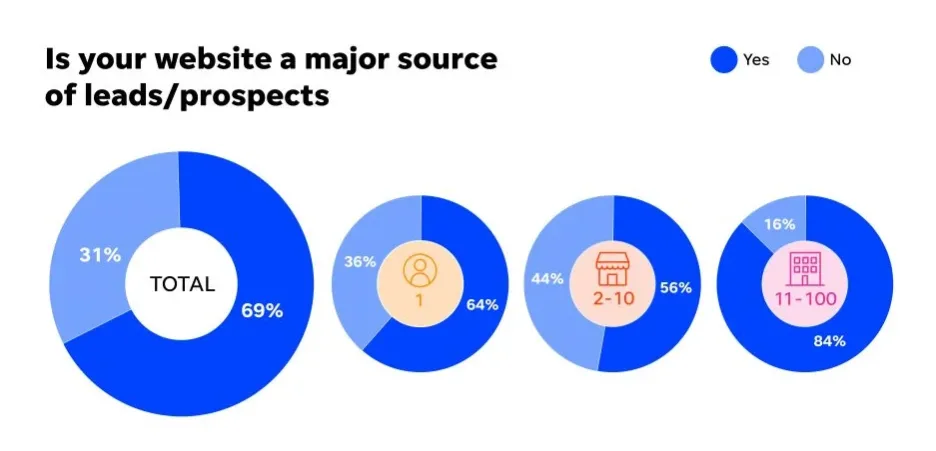
These graphs show the percentage of SMBs that say their website is a major source of leads and prospects in total and by number of employees (shown in the center circles).
It builds trust and legitimacy
Just having a website can help prove to potential buyers that your business is established and legitimate. 76% of consumers say they look at a local business website at least half the time when choosing a vendor.
And once you’ve established your site, there are many things you can add to strengthen their trust. Social proof, pictures of your team, customer reviews and stories, a compelling about us page…all of these confirm to visitors that they can trust you.

Your website is a place to humanize your business with potential buyers.
Think about your own habits. You probably look up a business before trusting it with your money, especially if you haven’t used it before. Your customers do the same thing. A clean, current website tells them you’re real, you’re active, and you take your business seriously.
Let’s look at the critical components that make a small business website great.
What to include in your small business website
Your business website should be the most reliable source of information for consumers. Use this handy checklist to ensure your website has everything customers expect, and hope, to find.

Robust search optimization features
We mentioned that a site optimized for traditional and AI search can bring in a lot of leads at a relatively low cost. That’s because taking a few actions can bring in new customers for a long time.
The very first step you can take is to make sure you are using a variety of local keywords on your site. That means including location indicators (state, city, neighborhood). So if you sell real estate in Denver, you’ll add phrases like “Real estate in Denver, “Denver new homes,” “Northern Denver’s most experienced home buying expert.”
There’s a lot that goes into optimizing for search. This guide and local SEO checklist lay it all out for you.
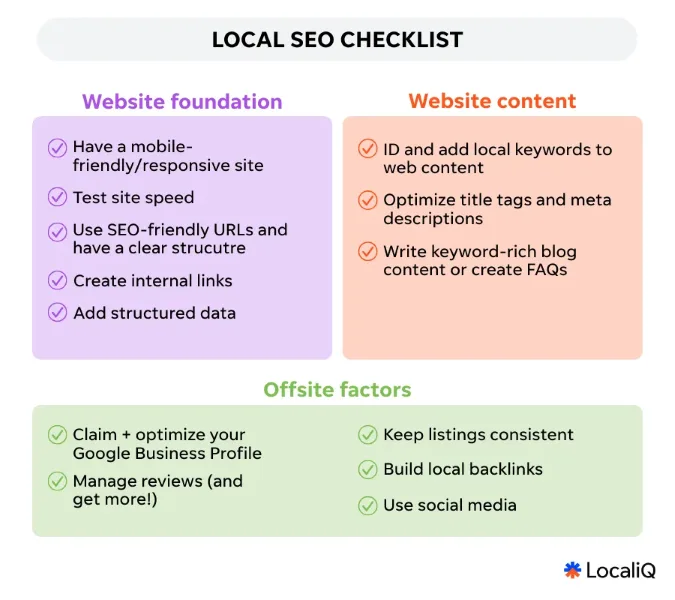
👋 Want to rank on search fast? How to Do SEO Right—Right now
Clear calls to action
When someone lands on your site, you probably want them to do something (make a purchase, download a guide, set an appointment). Calls to action (CTAs) guide site visitors to do it.
The best CTAs have an action verb and say what someone gets if they click. “Buy now” is good, but “Click for less back pain” is better.
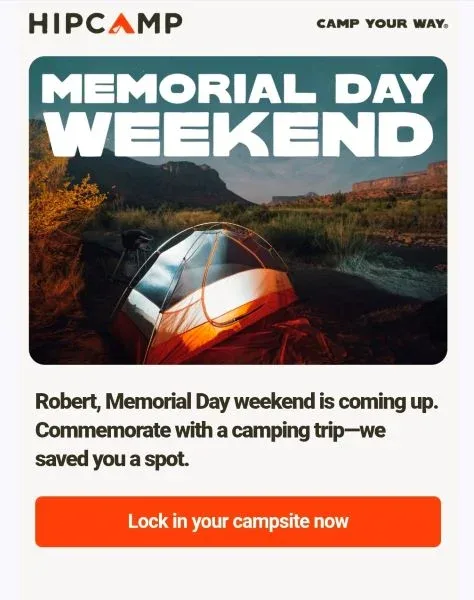
Make your CTA relevant to your offer.
Mobile-friendly or responsive design
Somewhere between 57% and 64% of all local business searches happen on a mobile device (88% of “Near me” searches are on smartphones). When your website pops up for those local customers, you want to make sure it’s designed to work on those smaller screens.

Most website builders—both the DIY solutions and people who build sites—will make your site responsive to smaller screens. But it’s absolutely worth verifying that they do.
Complete business information
There are few things more annoying than landing on a website when you need something and not being able to find contact or business details. When setting up your site, confirm each of these is front and center:
- Your physical address (if you have a brick-and-mortar location): Include a link to Google Maps if possible and your service area if applicable.
- Hours of operation: Update them for holidays, vacations, etc.
- Contact information: Include your phone number and email address.
- Product or service information: Briefly explain what your business does and why it’s unique on the front page.
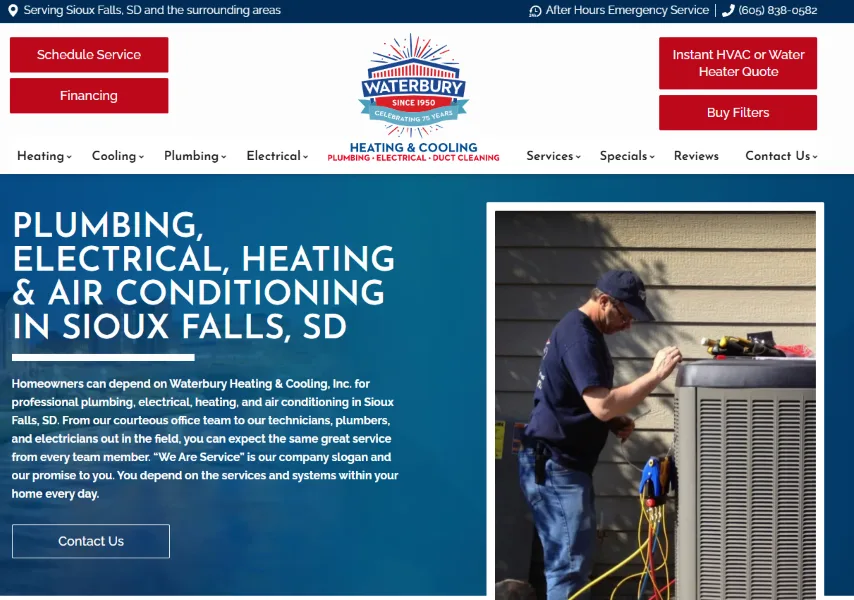
This small business has multiple content points available at the top of its front page.
Good navigation
A clearly labeled website menu will help visitors find what they need and make it easier for search engines to understand and index your site.

A good header menu and clickable category images make it easy for visitors to find the perfect solution on your website.
When you think about the site hierarchy, try to make every page no more than two or three clicks away.
Compelling images
Since pictures speak louder than words, photos of your business are crucial to winning customers. Photos convey the atmosphere of your business and give browsing consumers an idea of what to expect. In fact, 58% of consumers say they have left a business’s website if they can’t find photos or a video on the website.
Add 4-5 key images showing your place of business, products and services, happy and satisfied customers, and staff working with customers.
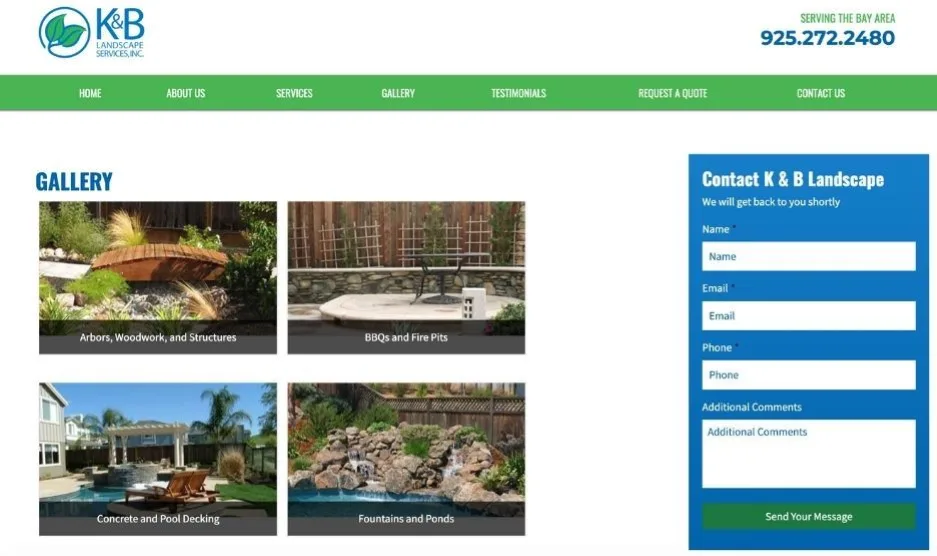
Compelling images can showcase your best work, your team, and how you can improve people’s lives.
Human-focused about us page
Your small business website is the best place to tell your story. An “About us” page is your chance to let consumers know why you went into business and why you love what you do. Your story and personal connection to your business set you apart from big-box stores and chains.

Here are a bunch of About Us page examples to inspire your work.
Links to social media pages
Much of the most recent activity for your business may live on your social accounts. Adding links to your social media pages lets your website visitors dig even deeper and get the level of comfort necessary to become new customers.
Plus, it’ll entice them to follow you on social so they can stay up to date on what’s happening, and maybe be reminded to make another purchase.
Abundant social proof
Social proof includes all the awards and accolades your business has earned that might help convince the next person to buy from you.
There are many types of social proof you can use on your site, including:
- Qualifications and awards
- Customer testimonials
- Google reviews
- Positive local news stories
- User-generated content
- Expert endorsements
- Popularity signals (Over 1,200 decks built)
Don’t be shy. Place all those feel-good trust signals on your site where they can’t be missed.

Use a variety of social proof types in high-traffic areas of your website.
There’s a whole science and art behind writing CTAs (which we share here). Most importantly, though, make sure they quickly and clearly tell someone what to do, and if possible, what they’ll get when they do it (“Click here for less back pain”).
Small business website metrics
Once you have your website set up and running, the fun doesn’t stop there! It’s important to keep track of your website marketing metrics to understand how it’s performing and to help you reach your marketing goals.
Before you track your small business website metrics…
Before we get into the website metrics you need to know, it’s important that you have a way to track them. One of the best ways to track your website performance is to connect your website to Google Analytics 4.

If you’re working with a partner to build and manage your website, they can do this for you as well as provide their own tracking to help you understand performance. If you need to set up Google Analytics yourself, you’ll navigate to the website and follow the directions, which will include creating an account, setting up your website (which will include adding some code to the backend of your site), and providing information about your business.
Enabling Google Analytics 4 (GA4) allows you to view your website performance directly through the Google Analytics dashboard and drill down to better understand how your website and specific pages are performing.
Okay, now that we understand how to track performance, let’s talk about what to track.
Views and Active users
Obviously, you want people to find and visit your website, which means you’ll need to measure website traffic. In GA4, that means tracking Views and Active users.
Views count the total traffic to a webpage. Active users count the number of unique visitors to a page. If one person visits your site three times in the set time period, Google will count that as three Views and one Active user.

You can find Views and Active users in the “Engagement > Pages and screens” report.
Engagement rate
You don’t just want visitors to your site, you want them to like what they see and stick around. Engagement rate helps you see that.
Officially, engagement rate is the percentage of total visitor sessions to your website where one of these is true:
- The visitor sticks around for at least 10 seconds
- The user views two or more pages
- The user triggers a key event (like a conversion)

You can find your engagement rate in the Acquisition > Traffic acquisition report.
Conversions
Conversions can be just about any important action a visitor takes on your website. Making a purchase, adding something to a cart, filling out a form, or subscribing to your newsletter are all good examples of conversions.
In GA4, you track conversions by marking actions as “Key events.” It’s a simple toggle switch you flip. This guide to GA4 explains more about that process.

Once you’ve told Google Analytics which actions you want to count as conversions, you’ll see them show up as “Key events” in your “Engagement > Pages and screens report.”
Small business website FAQs
Here are some of the most common questions asked about building, managing, and maintaining small business websites.
How do you build a small business website?
You generally have three options when building a website:
- Use a do-it-yourself website builder: Website builder tools have come a long way. They’re relatively inexpensive, easy to use, and often incorporate AI. You don’t get as much support, though, and you may be limited in design by pre-made templates.
- Hire a developer: Developers bring a lot of technical skill and knowledge to help create a next-level website. They can be expensive, though. And you may not have as much direct access once they’re done.
- Work with a marketing partner: A marketing expert will build a website with things like SEO and conversions in mind. Plus, they’ll provide direct support. Prices vary for these services, and again, you may not have as much direct control after the site is live.
How do you get leads from your small business website?
There are many ways to turn more visitors into interested leads and paying customers using your website. You can:
- Add contact forms
- Enable click-to-call for your mobile site
- Use chatbots
- Include popups and lead magnets
Can you use a Facebook or Instagram page instead of a website?
Facebook and Instagram are both excellent channels to find and engage new customers. However, they don’t allow you the space and control you need to share everything about your brand, products, and services. Combining social media and a well-designed website is a powerful growth combo.
Build your ideal small business website
A website is the digital storefront of your business. It attracts, educates, and converts customers at all hours. That makes it worth a little extra time to get it right and update it regularly.
There are endless design and copy options you can use for your small business website. Just remember to keep them consistent throughout and try to think like your customer, so it’s never difficult to find information and take action.
Of course, we’re ready to help turn all of your digital marketing channels into growth opportunities. Reach out, and we’ll show you how our solutions can do it.

Recommended for you







Unlock your business potential
We offer innovative technology and unparalleled expertise to move your business forward.