


Social media marketing is how a small business earns attention without having to buy it. There are now 5.79 billion social media user identities worldwide, per DataReportal’s April 2026 count. Those users self-segment by interest, are open to two-way conversation, and are reachable from a phone.
The catch is competition. Millions of businesses are chasing the same screen space. The feed rewards only those who post with a plan.
So we’ve curated 40 of our best social media marketing tips for small businesses to help you plan, produce, and promote content that earns more views, engagement, and customers.
The tips are organized by stage, from strategy through success tracking, so you can jump straight to the area that needs a boost
INTERACTIVE TOOL
Social Media Marketing Tips Scorecard
Check off the social media marketing tips you already practice. Your score updates as you go.
Your score: 0 of 40
Tick the tips you already do to see where your strategy stands.
Contents
- Social media tips for planning and strategy
- Social media tips for generating ideas
- Social media tips for content creation
- Social media tips to get found
- Social media tips for building your brand
- Social media tips for tracking results
- FAQs about social media marketing
Social media tips for planning and strategy
The best social media marketing tips all start in the same place, with a plan. Social media ads are already the top driver of brand awareness among internet users aged 16 to 34, so the planning you do here pays off in both organic and paid reach. These five tips set the foundation.
1. Set SMART goals
Goals help you quantify what you’re trying to get out of social media. They also tell you when a tactic isn’t working, which protects your budget. But here’s the important part: Your objectives need to be SMART.
A SMART goal is:
- Specific: Clear and detailed, to eliminate ambiguity and provide direction.
- Measurable: You need a way to track progress and determine success.
- Achievable: Realistic, considering your available bandwidth and resources.
- Relevant: Aligned with your broader objectives and long-term business goals.
- Time-bound: Set a deadline or time frame to encourage accountability.
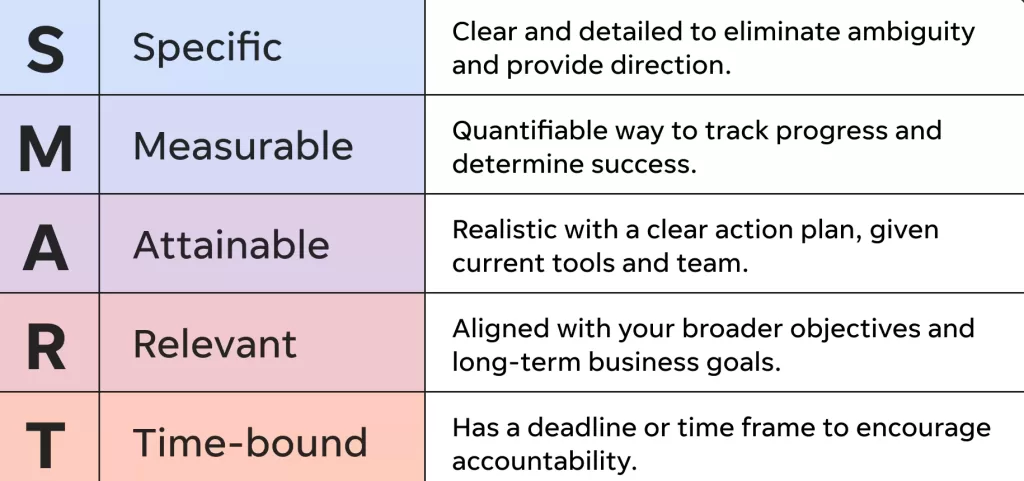
With that in mind, consider these top social media goals:
- Increase your reach
- Gain new followers
- Increase audience engagement
- Drive website traffic
- Generate quality leads
Here’s an example of a SMART social media goal:
“Gain 5,000 new followers on Instagram from our target audience by the end of Q3.”
Follow the same pattern for each goal and record them for future reference.
2. Pick the right platforms (you don’t need all of them)
The best social media platform for a small business is the one where your customers already spend time, not the one with the most total users. There’s a wide spread. For example, 84% of US adults use YouTube and 71% use Facebook, while Instagram reaches half of adults and TikTok 37%.
The age splits matter more than the totals. Eight in 10 adults under 30 use Instagram. Roughly half of them open TikTok daily. If you sell to retirees, those two numbers probably shouldn’t set your strategy.
PLATFORM DATA
Who You Can Actually Reach, by Platform
Share of US adults who use each platform. Pick the one or two where your customers already are, then commit your posting schedule there.
YouTube
84% of US adults
Broadest reach of any platform, and how-to content keeps working for years.
71% of US adults
Strongest for local audiences, groups and events.
50% of US adults
8 in 10 adults under 30 use it Visual products and the under-40 crowd.
TikTok
37% of US adults
About half of under-30 users open it daily Younger audiences and personality-forward video.
Match the platform to your target market before you commit a posting schedule to it:
- Facebook: Broadest adult reach, strong for local audiences, groups, and events.
- Instagram: Visual products and services, plus the under-40 crowd.
- TikTok: Younger audiences and personality-forward video.
- YouTube: How-to and demo content with the longest shelf life of the group
- LinkedIn: B2B (business-to-business) services and hiring.
Two platforms done well tend to beat five done sporadically. Start narrow and expand when your cadence is comfortable.
INTERACTIVE TOOL
Social Platform Picker
Answer four questions to see which platforms fit your business best.
3. Create a social media editorial calendar
Random acts of social media are fine for your personal account. But there are goals to achieve for your business. That’ll take a more deliberate approach.
A social media editorial calendar is a visual representation of all the content you plan to post on various platforms over a set period of time.

An editorial calendar example in Trello.
What you put into your calendar is up to you. But consider adding details like your target audience, content type, connection to larger campaigns, and goals.
🗓️ Fill your calendar fast! Download Your Copy & Paste Social Media Calendar
4. Plan to post at the right times
Posting content at the right time can help bolster your success for two reasons. First, most social media algorithms give some weight to recency: newer posts have a better chance of being shown to more people.
Second, if you post when most of your followers are online, you could get an early engagement boost. That’s another signal to algorithms that your content should be distributed more widely.
You’ll find general standards for the best time to post here, as well as tips to find the best time for your specific brand and audience. Your own analytics beat any published average, so treat those benchmarks as a starting point.
5. Align social with other marketing channels
You can provide one cohesive experience for your followers by being consistent across your online (and offline) presence.
That means making sure your profile pictures are the same across all your social sites by including your favicon or logo. It also means checking that your business descriptions are consistent across all your social media profiles.
People will encounter your brand beyond social media, so your social profiles should match what you’re sharing across your other marketing channels.
Your targeted display ads across the web should follow your brand guidelines too (more on creating brand guidelines in a bit).
Here’s an example of one business’s display ad versus its Instagram account:

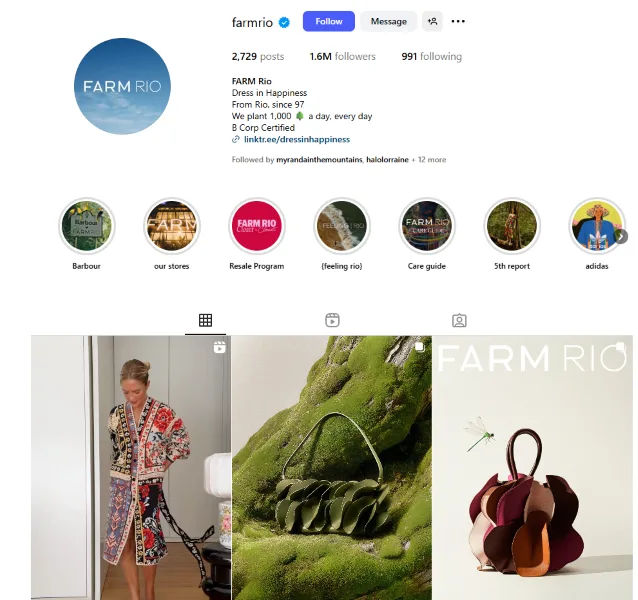
The logo on the bottom left of the display ad doesn’t fully match the one on this business’s Instagram page. The display ad also doesn’t touch on the main points in the brand’s bio. A consumer could be confused seeing this business on and off social media.
Social media tips for generating ideas
Idea generation is where most small business social media plans stall, usually a few weeks in. This group of social media marketing tips gives you repeatable sources for post ideas, from platform trend tools and competitor feeds to Reddit threads and AI drafting assistants, so the calendar you just built never sits empty.
6. Find trends…
Social media virality is all about trends. When there’s a groundswell of people taking the same challenge, doing the same dance or talking about the same topic, you can jump in and ride the wave of visibility.
Luckily, many social platforms help you find what’s trending. TikTok, for example, offers several ways to see what’s gaining traction.

TikTok Trends tells you what’s getting popular on the platform.
You can also search hashtags in your social media app of choice to learn what type of content is the most popular for a particular topic.
7. …and know what they mean
While it can be tempting to jump on viral social media marketing trends in hopes of increasing your reach, you don’t want to sacrifice your tightly aligned branding in the process. Some trends may not be the best fit for your business’s social media accounts. That’s okay. It’s better to be strategic about the trends you adopt.
Here’s an example of a brand hopping on a trending hashtag without understanding the intent. The trending hashtag was meant for domestic violence awareness, not as a fun conversation starter. This brand had to apologize for its tweet and eventually deleted it.

Take a beat when you spot a trend and make sure you understand the context around it.
8. Get ideas from your competitors
There are bound to be brands in your niche already having some success on social media. They’re a great source of ideas for your own accounts.
Now, we’re not suggesting you copy what your competitors do. Just take inspiration from their most popular content and riff off the ideas.
Hashtags are your friends again. If you run a dental practice, search #dentist to see what types of content other providers are posting.

9. Use all of the platforms’ features
Social media platforms keep adding new formats. The algorithms tend to favor those formats while they’re new. Instagram started as a place to post static photos, but now there are multiple post and placement types like Instagram Reels, Stories, and more.
While it can be tempting to stick with what you’re familiar with, the newer post types are a great way to spread your creative wings and get seen in more places.
If you’re unsure how to execute a newer format, like Instagram Live, check out other accounts in your industry for working examples.

10. Repurpose content
Repurposing content means taking one asset and reusing it as other types of content and on different platforms.
Repurposing has a double benefit. It helps you maintain brand consistency. It’s also an excellent way to publish more content in more places quickly.
Here’s an example: say you posted a long-form video on how to solve plantar fasciitis to your physical therapy YouTube channel. You could break that up into smaller clips and post them on Instagram Reels and TikTok.
One common gold mine for repurposing is your blog. All of those helpful articles can be broken up into social media posts and captions pretty quickly.
11. Mine Reddit for ideas
Reddit is where people go to share unfiltered ideas and opinions. It’s become a cultural nerve center that often exposes trending topics before they reach the big feeds.
So if you’re searching for new Instagram or Facebook content ideas, do a little sleuthing through relevant subreddits. Try entering a topic into the search bar and see what discussions pop up.
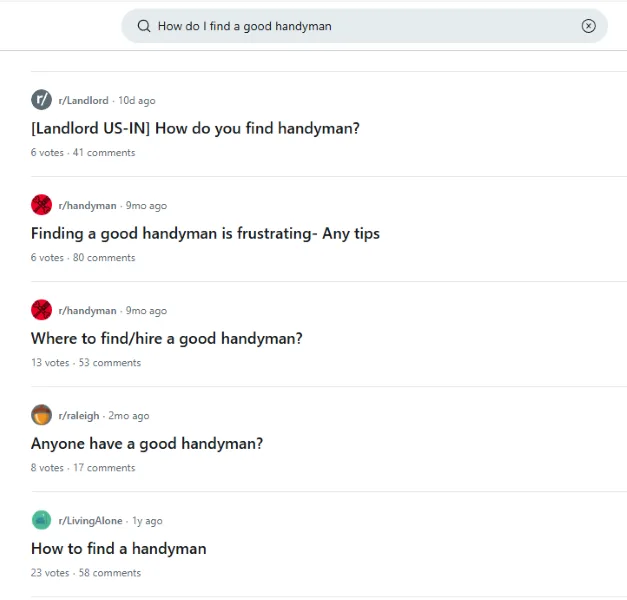
Redditors will tell you exactly what they want from a business.
The cool part is that you’re not only getting new content ideas, but you’re also seeing the sentiment around a topic unfold in real time. That’ll help you decide how to address the topic in your posts.
12. Use the 70-20-10 rule
While you’re ideating your next round of social content, consider this rule of thumb (it’s an editorial guideline we use, not a study finding):
- 70% of your posts should be informational and focused on helping your followers.
- 20% of your posts should be emotional content that connects your audience with your culture and core values.
- 10% of your posts should be promotional content to directly promote your work, products, and services.
That mix helps you maintain a great reputation with your audience while still finding new customers for what you sell (which is probably one of your social media goals!).

13. Repost content from other accounts
Just about every social media platform has a repost feature of some type. TikTok goes even further, letting you create a stitch and duet to meld your video with existing content.
Reposting is a low-lift option to increase your posting frequency. It can also get you in front of the original poster’s audience, a fun way to gain awareness.
Keep reposts to no more than about 20% of your activity (again, use editorial guidance and adjust to your results). And make sure both the content and the creator you’re reposting align with your brand.
🚨 Free resource! Get your copy of The Easy-to-Use Growth Strategy Guide (+Template)
14. Use AI to draft, not to publish
AI (artificial intelligence) tools can compress the slowest parts of social media marketing: brainstorming angles, drafting captions, resizing copy for different platforms, and summarizing a blog post into a week of posts. And adoption is no longer a fringe experiment.
As Neal Mohan, CEO of YouTube, put it in a letter:
“On average, more than 1M channels used our AI creation tools daily in December.”
The workflow that tends to hold up: let AI produce the first draft, then edit it into your brand voice, check any fact it asserts, and add the specific detail only you know (your prices, your customers, your photos). Posting raw AI output usually reads as generic. Generic is exactly what feeds are tuned to skip. Some platforms also require you to label realistic AI-generated media, so keep disclosure in mind for synthetic visuals.
Used that way, AI buys you time for the parts of social media that actually build a following: showing up in comments, filming real footage, and talking to customers.
Social media tips for content creation
It’s time to put ideas into action. Video should be your default format where you can manage it: YouTube alone captured 13.8% of all US TV watch-time in May 2026, the largest share of any distributor for the third straight month, per Nielsen’s Gauge. These social media marketing tips make every post you publish a little more engaging.
15. Tailor your content to each platform
This is huge for social media management: Tailor your message to each platform.
Yes, we recommended repurposing content. But copy-and-pasting it across networks won’t work because of style, tone, format, and audience expectations.
For example:
- LinkedIn posts are long and lesson-y, often linking to the content in the first comment.
- X posts skew shorter, often including open-ended questions and eye-catching, space-saving emojis.
- The vibe on TikTok is altogether different. Fast-paced, fun videos are the winner there.
Review this description of the most popular social media platforms and shape your future posts to fit each one.
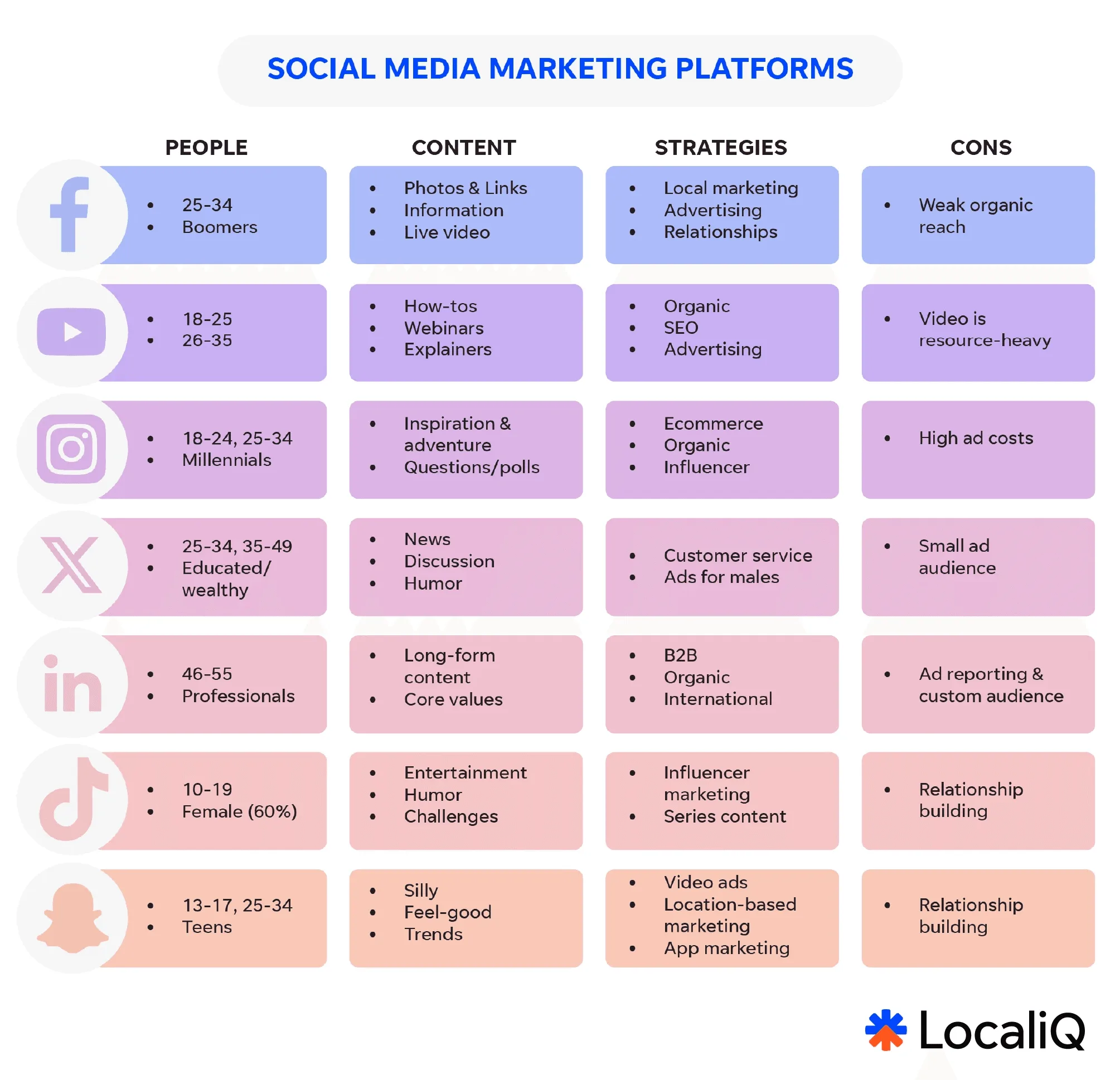
16. Make your content accessible
Making content accessible means adding features that help everyone understand and enjoy your social posts. When you do that, you’ll instantly expand your audience. The World Health Organization estimates that 1.3 billion people, about 16% of the global population, live with a significant disability. Many of them use assistive tools to read and watch content online.
There are lots of ways you can make it easier for people to view and process your content, including:
- Offer accessible descriptions and captions
- Capitalize the first letter in each word of a hashtag
- Express diversity in your images
- Add captions to videos
This guide gives several more great digital accessibility ideas.
17. Use the correct image and video sizes
Each platform has its own guidelines for images and videos. Make sure you’re familiar with them so your content publishes smoothly (and doesn’t look weird!).
We’ve published an updated guide to social media image and video specifications. This handy chart will get you started.

18. Try more video
Can you succeed on social media without video? Maybe, but you’d be swimming upstream, because video now dominates social media attention. YouTube alone captured 13.8% of all US TV watch-time in May 2026, more than any other media distributor. Short-form is growing even faster: YouTube Shorts averages 200 billion daily views.
For a small business, that settles the should-we-post-video question. Your audience is already watching video on social media every day. The question is whether any of it is yours.
It can feel tricky to hop on the video bandwagon, since most businesses assume it needs to be a full-fledged production. Those videos are great if you have the bandwidth and budget. But videos quickly shot from your phone can be just as effective. They fit the marketing channels where short-form lives.

Try starting small by brainstorming a few quick ideas you could pull off in-house, like employee or customer testimonial videos, behind-the-scenes footage of your business, product demos, and much more.

19. Post consistently, not constantly
There’s a balance between posting regularly to maximize awareness and flooding your followers’ feeds to the point of exhaustion.
The best publishing frequency is different for each platform. For example, this guide to how often you should post on TikTok found the data points to roughly once every other day.
Testing and following the analytics will tell you if you’re posting too much. Try a few different cadences and monitor the results. But mostly, make sure everything you post has real value. Too much isn’t great, but poor quality of any amount is worse.
INTERACTIVE TOOL
Posting Cadence Planner
Get a weekly posting schedule you can actually keep.
20. Add links wherever possible
One of your social media goals may be to drive traffic from your social platforms to your website. If so, try to maximize the number of places you place links.
Your bio is an important place for these links, because many people will click on your account to learn more about you.

Some social platforms restrict how many links you can include. A Linktree is helpful here. When someone clicks it, they’ll see several links to different destinations of your choosing.

A few other locations ripe for linking are:
- Post captions (if allowed)
- Instagram Stories
- YouTube video descriptions
21. Write engaging calls to action
Calls to action (CTAs) are those little blurbs of text that direct people to take an action like “Learn more,” “Download the guide,” or “Shop now.”
Whenever you want someone to do something beyond enjoying your social post, include a clear, concise, and compelling call to action.

Make your CTAs stand out and confirm what people get when they click.
This is the perfect place for some A/B testing. Try a few different CTAs, see which one motivates the most action, and double down on it.
22. Make posts people want to send to a friend
If you want more engagement on social media, optimize for shares, saves, and especially DM (direct message) sends rather than likes. Sending a post to a friend is the strongest signal that it was worth someone’s attention. Platforms increasingly reward it with reach. Instagram head Adam Mosseri has said publicly that sends are among the signals Instagram’s ranking systems weigh when deciding how far a post travels.
Content that earns sends tends to fall into a few buckets:
- Useful: Checklists, local guides, “save this for later” reference posts.
- Relatable: The inside joke your customers would tag a friend on.
- Newsy: A local change or deal your audience would want to pass along.
Before you publish, ask one question: who would send this to someone and why? If you can’t answer it, the post is probably filler.
Social media tips to get found
Getting found on social media now means showing up in two places: the feed and the search bar. Social platforms have become discovery engines, with more than 30% of adult internet users finding new brands and products through ads on social platforms. These social media marketing tips cover both paths.
23. Use hashtags strategically
Hashtags are the organizational tools of social media sites. When you add a hashtag to your post, people can see it when they search for that term.
The key is to use hashtags strategically. Research which ones are big in your industry or area. Find out what your competitors are using. Follow trending hashtags to see when your brand should jump in.
Once you have the right list, include a few in your captions. If you want to add a bunch, try putting some in the first comment so your post doesn’t look like spam. A handful of relevant hashtags tends to outperform a wall of generic ones.

24. Optimize your posts for social search
Social search optimization means writing captions, on-screen text, and profiles with the words your customers actually type, because social platforms increasingly work like search engines. GWI’s research found a 71% increase since late 2021 in people using TikTok to follow or find information about brands and products (vendor-reported, so treat it as directional, but the direction is clear).
A few habits cover most of it:
- Say the keyword out loud in videos. Platforms transcribe audio and use it for search matching.
- Put the search phrase in your caption and on-screen text. “Best brunch in Asheville” beats “yum” every time.
- Complete your profile fields. Your name, handle, and bio are searchable text. Include what you do and where.
- Name your services plainly. People search “emergency plumber,” not your clever campaign tagline.
Hashtags still help categorize; keywords help you get found. Do both, and you cover the feed and the search bar with the same post.
25. Understand each platform’s algorithm
Social media algorithms are complex systems that combine artificial intelligence and rules-based decision-making to decide what content users see when they visit the site.
The overall goal of most (maybe all) social media algorithms is to keep people on the platform longer. But each one has a slightly different focus. When you understand those nuances, you can tweak your content so it shows up more often on every social site.
Use these guides to learn about the biggest social media algorithms:
26. Optimize your bio
We talked about the importance of your bio as the de facto home page people visit to learn more about your brand. There are several things you can do to optimize it.
- Complete every field. Your name, handle, and bio are searchable text (see tip 24), so say what you do and where you do it.
- Use your logo as the profile photo and keep it identical across platforms.
- Give the link slot a real destination. A Linktree or a current promo beats a bare homepage link; tip 20 covers the linking options.
- Steal from the best: Look at other bios from businesses in your industry.
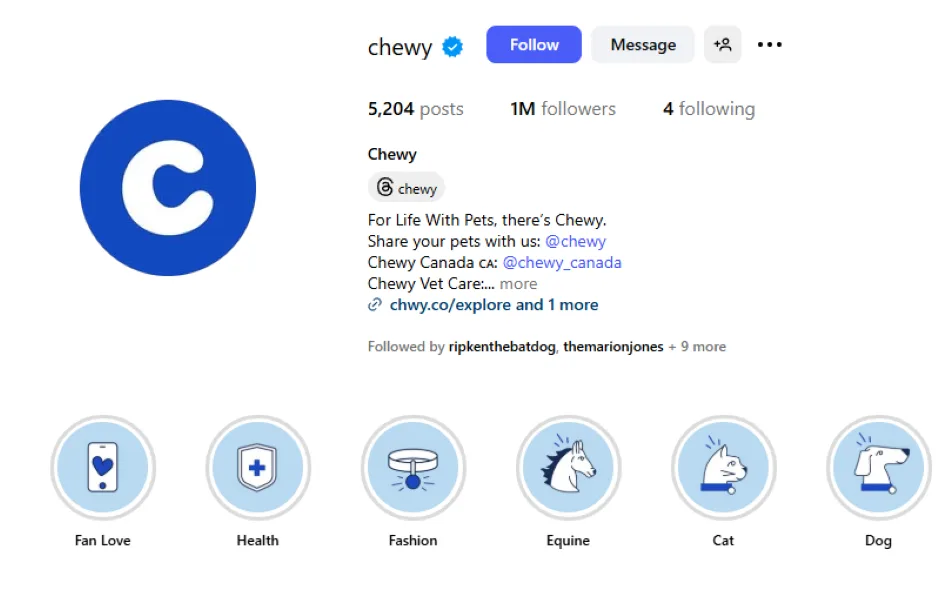
Here’s some inspiration for each of your bios:
27. Encourage user-generated content
We could have listed user-generated content (UGC) under the ideas section, because it’s a clever tactic for letting your audience create content for you. But its even bigger benefit is that when you post UGC, you expand your network exponentially.
Here’s how one beauty brand does it. They created the hashtag #giftedyysl. People who use their product add it to their posts. The brand gets access to those users’ networks.

For an extra boost, repost that content to your page and tag the original creator.
28. Launch contests and giveaways
Contests and giveaways are highly effective for boosting engagement and driving traffic to your website. They can also help you grow your account quickly.
One reason they work so well: you set the rules, so you can encourage exactly the actions you want.
For example, if you want to attract new followers, simply include “follow this page” as one of the contest rules.

Here are a few more tips for running a successful social media contest or giveaway:
- Plan well: Make sure it aligns with your brand and appeals to your target audience.
- Pick the right prize: The prize should be equal to the ask. If people share an email address and take several steps, make it worth those steps.
- Promote your contest: Push it across all your social media platforms.
- Announce the winner: Publish a congratulations post so people know it was legit and to drum up a little extra buzz.
29. Work with influencers
Influencer marketing is a powerful way to reach a larger audience. Influencers have established trust with their audience, which you can tap into. Their recommendations carry weight, so when they speak positively about your brand, people tend to listen.
The first step is to identify influencers who align with your brand and have an engaged following. Reach out with a proposal for collaboration: a sponsored post, a takeover of your account, or a joint giveaway.
Always make sure the collaboration feels authentic. Influencers should genuinely like and use your product or service. Authenticity resonates with audiences and is more likely to drive action.
Vacation rental company Airbnb collaborates with many influencers, creating authentic partnerships that build audience and drive engagement. For example, the brand partnered with fashion designer Phillip Lim to reach a younger, travel-minded demographic.

30. Create click-worthy video thumbnails
A thumbnail is the still image people see when they’re perusing videos on platforms like YouTube or the Instagram Explore page. Thumbnails give viewers a quick snapshot of what’s in the video and why they should watch. And they’re doing more work on bigger screens now: YouTube CEO Neal Mohan says TV has surpassed mobile as the primary device for YouTube viewing in the US, by watch time.

The more attention-grabbing and relevant you can make your thumbnails, the more people will click.
A few tips:
- Create an emotional impact: Use bright colors, smiling faces, and a key moment from the video.
- Build intrigue: Add a question the viewer will want answered.
- Be real: Avoid fake, click-baity images and titles that mislead people.
31. Engage with your audience
Social media is a conversation, not a lecture. Engaging through comments, likes, and shares is key. Start by replying to anyone who responds to your posts. Or try commenting on other business profiles; they’ll likely engage back to boost their own posts.

These actions also help you with the algorithms. Most use engagement as a ranking factor, so when you continue a conversation, you’re simultaneously increasing engagement.
32. Invest in paid social media ads
The organic strategies above create your foundation. Paid social media advertising amplifies reach and results. For younger audiences, it may be the single most effective awareness channel you can buy.
As Simon Kemp, founder of Kepios and author of the Digital 2026 Global Overview Report, wrote in that report’s analysis:
“Social media ads are actually the top driver of brand awareness amongst audiences aged 16 to 34.”
Every major platform offers multiple targeted ad types, letting you reach your ideal audience with precision. Budget-wise, start small, measure, and scale what works; our marketing budget guide covers how to size the spend.
Here are guides to some of the best social media ad platforms available:
Social media tips for building your brand
Social media is a great channel for building awareness and growing your brand’s digital presence. These tips will help you get the best brand-building out of social platforms.
33. Stay consistent across channels
If you’ve noticed, we’ve mentioned consistency several times throughout this list of tips (we’re consistent about consistency!). In this case, it’s because it’s a crucial aspect of constructing a brand within an audience’s consciousness.
We’ve already talked about carrying over things like logos and color schemes across ads, your website, and social. Being consistent across social media also means maintaining a voice and tone.
What you want to avoid is giving your audience whiplash if they read your Facebook post and then stumble on an Instagram Reel, and they have vastly different tones and focus on wildly unrelated ideas.
34. Include NAP info
No, this isn’t about your afternoon sleeping schedule. NAP refers to your business’s name, address, and phone number. Those are the basic pieces of information you typically want included on your website and business listings.
It’s similar for your social media profiles, although your website will often replace your phone number there. Notice how this beauty salon uses a clickable pin instead of listing its address? This makes it easy for people to map its location.

Having your version of NAP readily accessible removes friction. When someone gets inspired by the gorgeous style you just posted, they can locate your studio in a jiffy.
35. Develop social media branding guidelines
Social media branding is the process of shaping and maintaining a consistent identity, voice, and visual style across social platforms to build recognition and trust. That consistency helps people remember your business and sets you apart from competitors.
Your brand identity includes things like your logo, brand voice, colors, and fonts.
The job here is to list the aspects of your brand that matter in a brand kit or set of guidelines, then add instructions for how they’re used in social content.
Use this brand kit template to organize your social media branding guidelines.
36. Publish thought leadership content
Thought leadership content is when you share your expertise, advice or unique perspective to help people solve a problem or see a subject differently. It positions you as the go-to expert, someone customers can trust when they’re ready to buy.
There are nearly endless options. Try these for starters:
- Behind-the-scenes advice post: A local roofing company shares a short video explaining “3 signs your roof needs repair before winter.”
- Industry insight commentary: A physical therapy clinic breaks down a recent study on workplace posture and adds their take on preventive stretches.
- Myth-busting post: A local accountant posts a quick Reel on “Top 3 tax myths that cost small businesses money.”
- Future trend prediction: A landscaping company posts “5 outdoor design trends we expect to see this spring.”
Social media tips for tracking results
Last but far from least, these tips help you pull insights from your social media analytics and prove the channel is earning its keep. If you want the deeper math, our guide to marketing ROI (return on investment) walks through it.
37. Pick the right metrics
Focus on the metrics that align with the goals you set. If boosting engagement was one of your objectives, that’s a KPI (key performance indicator) you’ll track.
Over time, you’ll refine your list. These are common ones to start with:
- Impressions: Total times your post shows up on screens (even repeat views by the same person).
- Reach: The number of unique people who actually saw your post.
- Engagement rate: The percentage of people who liked, shared, commented, or interacted, out of everyone who saw it.
- Click-through rate (CTR): The percentage who clicked your link after seeing your post.
- Follower count: The number of people who follow your account.
38. Experiment often
Marketing is all about trial and error. The “flops” are just as valuable as the wins for learning what works best.
That’s why experimentation belongs on any list of best social media marketing tips. Try different content types at various times on different platforms to home in on the perfect mix for your brand.
And then do it again, because technologies and behaviors are always on the move.

Try different content themes and types to see which works best.
39. Benchmark your performance
Change over time is the critical factor in measuring social media performance. Saying you have 60,000 followers may be great. Or it may be terrible if last month you had 70K and your competitor has 1 million.
Benchmarks provide a starting point. They also tell you whether you’re keeping up with your industry as you progress.
Gathering your own benchmarks is easy: note where you are today for any given metric.
Finding competitive benchmarks takes sleuthing. Some metrics, such as follower counts, sit right on competitors’ profiles. For others, a social media tool (think Sprout Social or Sprinklr) can build a dashboard of competitors’ reach and impressions next to your own.
Our Facebook Advertising Benchmarks are a great place to measure your ad success against others in your industry.
40. Complete a social media audit
Performance audits are critical for ongoing improvement. They expose what’s working and what’s not. They also identify anything requiring immediate attention.
Use this social media audit process to make it easy. It includes a template to keep everything organized.
A few of the things you’ll do:
- Check that all images and bios across your profiles feature the same brand colors, logo, and mission.
- Identify each channel’s best-performing posts and overall results
- Review content against your brand guidelines.
- Dig into your audience characteristics.
Most of this can be done within the platforms or with social media management tools. Then set up an audit report in a spreadsheet and use it to adjust your strategy.
FAQs about social media marketing
Here are answers to a few commonly asked questions about social media marketing.
What are the most important social media marketing tips for a small business?
The social media marketing tips with the biggest payoff for small businesses: set SMART goals, pick one or two platforms where your customers already are, keep an editorial calendar, post short video regularly, and track a handful of metrics tied to revenue. Consistency on a few channels beats a thin presence on all of them.
Which social media platform is best for a small business?
The best platform is the one your customers use most. Pew Research Center’s 2025 survey found 84% of US adults use YouTube and 71% use Facebook, which makes those two the safest broad-reach picks. Instagram and TikTok win for under-40 audiences. Match the platform’s demographics to your customer base before committing.
How often should a small business post on social media?
A small business should post on social media as often as it can sustain without quality slipping; for most, that’s around three posts a week per platform. A steady cadence beats bursts followed by silence, because algorithms and followers reward accounts that show up predictably. Put it on an editorial calendar and treat it like a deadline.
What is the 70-20-10 rule for social media content?
The 70-20-10 rule is a social media content mix guideline: 70% of your posts should inform or entertain your audience, 20% should share emotional or community-driven content like customer stories, and 10% should directly promote your products. The ratio keeps your feed useful enough that followers stick around for the promotional posts. Treat it as a starting point.
Do I need video to succeed on social media?
You can succeed on social media without video, but you’ll reach far more people with it. YouTube alone captured 13.8% of all US TV watch time in May 2026, per Nielsen’s Gauge. YouTube Shorts average 200 billion daily views, per YouTube’s 2026 letter. Phone-shot vertical video performs well on every major platform, so start with one short video a week.
Do hashtags still work on social media?
Hashtags still help platforms categorize your content, but they matter less than they used to. Keyword-rich captions, on-screen text, and spoken keywords now drive much of social search visibility. Use a handful of specific, relevant hashtags per post, then put your effort into writing captions with the words customers actually search.
How do I measure social media marketing success?
Measure social media success against the goals you set: reach and follower growth for awareness, engagement rate for content quality and click-through rate plus leads for revenue impact. Review monthly, benchmark against your industry, and run a quarterly audit. If a metric can’t change a decision you make, stop tracking it.
Grow with these social media tips
Billions of people go to social media apps to connect, search, and be entertained. They’re also open to learning about new brands, products, and providers. You can tap into this huge, segmented community with the right social media strategy.
The 40 social media marketing tips we’ve laid out here will help you plan, produce, and promote the type of content that stops scrollers and encourages them to learn more about your business. Refer to them often, especially when you see your social growth plateau.

Recommended for you






Unlock your business potential
We offer innovative technology and unparalleled expertise to move your business forward.