


Using AI as part of your marketing is easier said than done. It’s been proven that AI can streamline workflows by helping with marketing ideation, creation, tracking, and more. But it can feel intimidating to use (and trust) AI if you don’t know where to start.
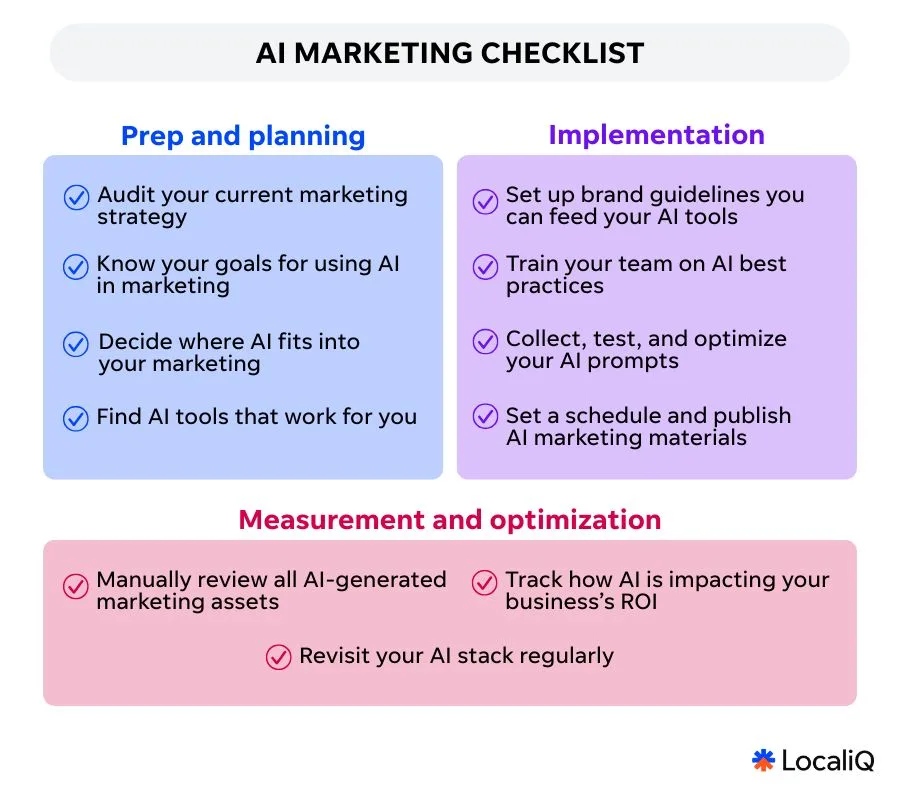
This handy AI marketing checklist walks you through that process in 11 simple steps, complete with everything you need to jumpstart, test, optimize, and measure your AI marketing strategy.
Contents
- Audit your current marketing strategy
- Know your goals for using AI in marketing
- Decide where AI fits into your marketing
- Find AI tools that work for you
- Set up brand guidelines you can feed your AI tools
- Train your team on AI best practices
- Collect, test, and optimize your AI prompts
- Set a schedule and publish AI marketing materials
- Manually review all AI-generated marketing assets
- Track how AI is impacting your business’s ROI
- Revisit your AI stack regularly
The ultimate AI marketing checklist for any business
Follow this AI marketing checklist for an easy, step-by-step approach to harnessing the power of AI for your business’s promotions.
⚡Fast-track your AI marketing success with this free list of over 200 of the best AI prompts any business can use!
1. Audit your current marketing strategy
Before you jump into using AI for your marketing, you’ll want to first assess your current marketing strategy to see if there are any gaps you could fill with AI. You could start with a SWOT analysis that audits your business’s strengths, weaknesses, opportunities, and threats in marketing. That way, you can get an understanding of where AI could possibly plug in.

2. Know your goals for using AI in marketing
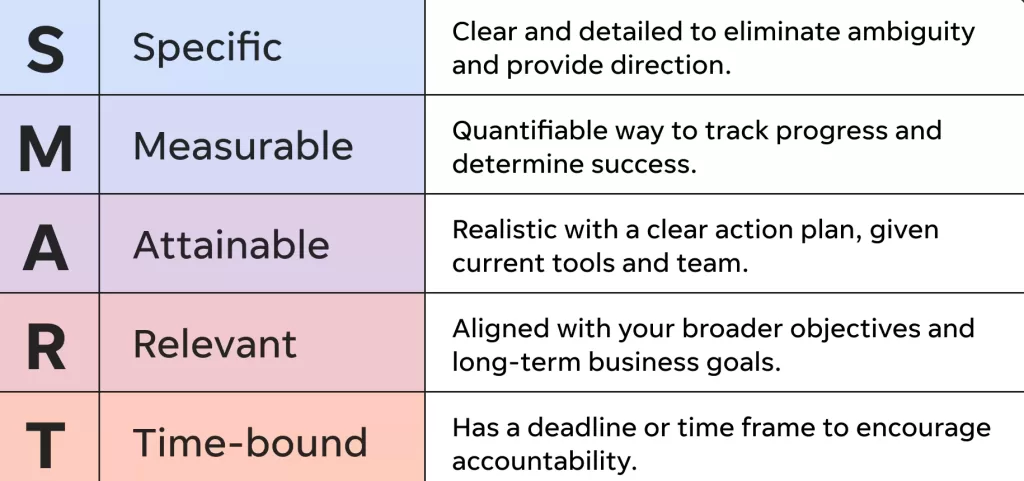
Consider what you want to achieve when using AI for your marketing. You’ll want to put purpose behind your AI efforts to ensure everything is aligned. The SMART goal structure can be helpful to jumpstart your AI marketing efforts.
Knowing your “why” behind using AI in marketing can also help shape your goals. For example, 84% of businesses are using AI to save time, generate ideas (78%), and simplify repetitive processes (53%).

🚨Get even more data like this in our Small Business Marketing Trends Report!
3. Decide where AI fits into your marketing
Now that you’ve gotten a lay of the land in terms of where your marketing currently stands and what you hope AI can help you accomplish, time to start deciding which of your business’s marketing channels could benefit most from AI. Here are some examples of where you can use AI in your marketing:
- Social media content creation and messaging
- Content marketing ideation and optimization
- PPC ad copywriting and reporting
- Email marketing copywriting and segmentation
- Live chat on your site and/or SMS
- ationmessaging
The list goes on! Just be sure to know which channels take priority when it comes to incorporating AI into your strategy.
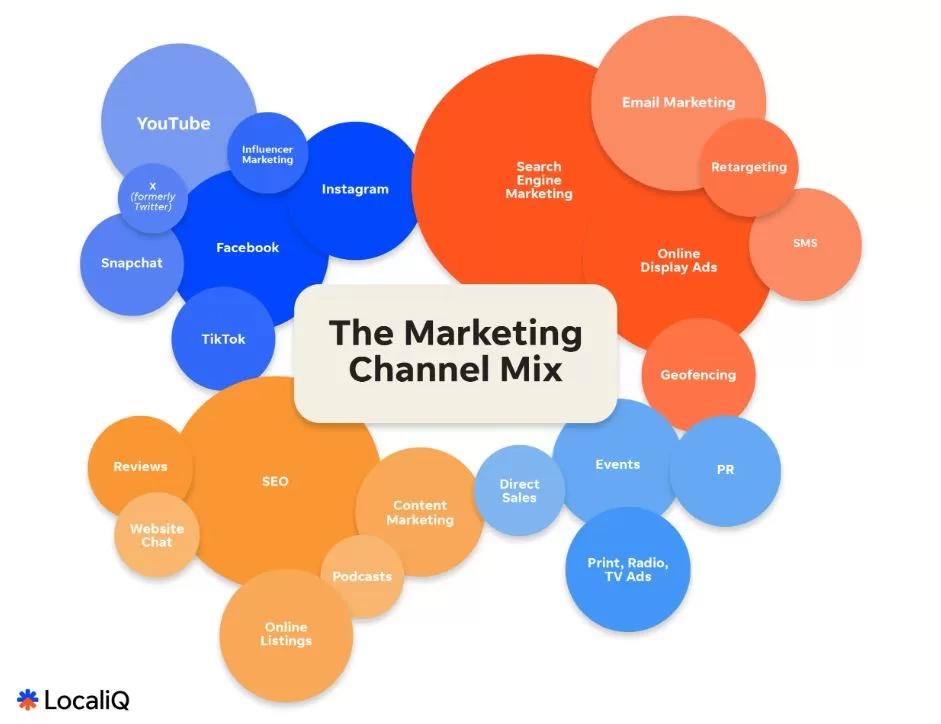
You could use AI in any of these areas of your marketing.
💡Could your PPC ads benefit from AI? Find out with a free, instant account report using our Google Ads Grader!
4. Find AI tools that work for you
It may take some trial and error, but you’ll want to evaluate all your AI tool options and try a couple of different tools to find a suite of AI solutions that work in harmony with your business.
Some examples of AI tools include ChatGPT, Microsoft Copilot, Claude, Perplexity, Google Gemini, Jasper, Meta AI, and more. There is no right or wrong answer to which AI tools you decide to use, as some tools are better than others depending on the task.
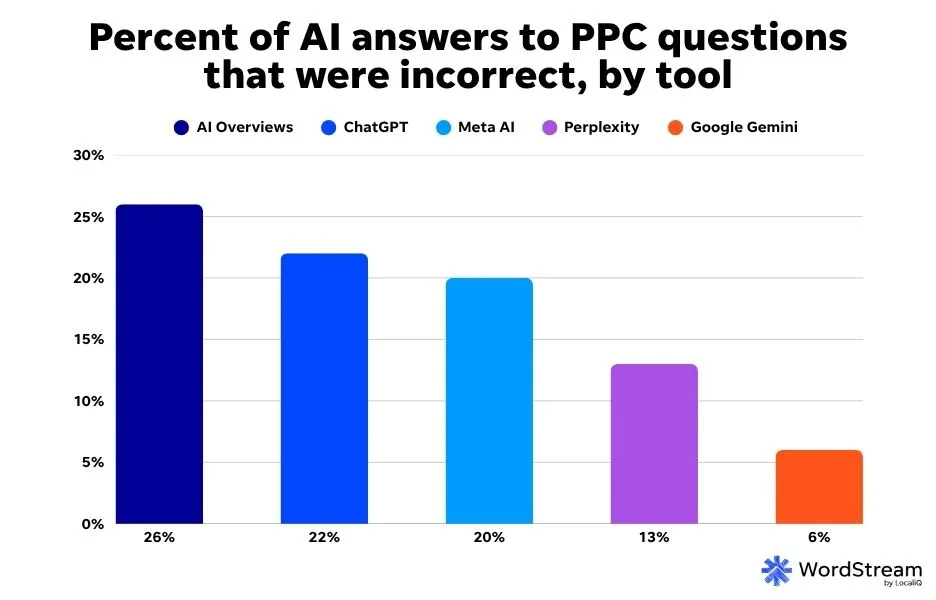
For instance, if you were to use AI in your PPC campaigns, we found that some tools are more accurate than others when it comes to outputting responses to online advertising prompts.
5. Set up brand guidelines you can feed your AI tools
One of the most important parts of using AI for your business’s marketing is making sure that any of the tools you use maintain brand consistency in their outputs. When you’re drafting your AI prompt, you can paste in some notes on your brand guidelines or attach your brand kit, or some tools might also ask you to input information on your brand for more personalized results.
Be sure to tell any AI tool the following details about your business, no matter the task:
- Industry
- All core products and services offered
- Your office or store locations
- Any mission statements or taglines
For creative tasks, you might also include:
- Your brand font
- Your brand colors
- Your logo
- Sizing specs
You could arrange this in a bulleted list, attach a brand guide you’ve created, and include it in your prompts (more on those later).
6. Train your team on AI best practices
As you implement AI in your marketing, you’ll want to get a handle on AI-boosted content that’s still authentic to your brand versus what types of AI outputs you’ll want to avoid. This might mean reviewing with your team what to look out for when using AI, like:
- Unreliable or inconsistent source references
- Misspellings
- Repetitive or inaccurate information
- Inaccurate dates/times
And that’s just the start. There are a ton of AI fails people are catching onto, so be sure you know what to look out for when working with AI-generated content to safeguard your brand reputation. That way, you don’t end up publishing an uncanny AI-image like the one below with a hand that looks like it’s missing a few fingers!

7. Collect, test, and optimize your AI prompts
Now it’s time to shape the AI prompts you or your team will input into your tools on a regular basis. You can brainstorm prompts using prompt idea lists to know what to ask of your tools for each marketing function you want it to perform.
Remember, your AI marketing results will only be as good as the prompts you use to get them. In other words, a high-quality AI response will trigger a higher-quality response from any AI tool you use. So, be open to testing and tweaking your prompts as you go.
Additionally, as you optimize your AI prompts, be sure to always include your target audience demographics and desired response structure.

8. Set a schedule and publish AI marketing materials
Time for the fun part of our AI marketing checklist, where you can start taking action on using any AI-generated marketing content. Try using a marketing calendar or set a timeline to plan what AI-powered campaigns will go live when. AI could even help you during this execution part, too.
It will likely take some trial and error to find an AI workflow that aligns with your business’s marketing strategy. But the initial time to launch AI-optimized promotions is well worth the future time saved, among other benefits, in the long run.

An example social media tool with AI features that assist with finding the best times to publish content.
9. Manually review all AI-generated marketing assets
How you review the AI-powered parts of your marketing has the biggest impact on your business’s success with it. Be sure to double-check that any AI-generated content you’re using is relevant to your brand, accurate, and appealing to your target audience. This helps to guarantee that all your business’s marketing maintains a “human touch,” which can be especially important as consumers become more aware of good and bad AI content.
10. Track how AI is impacting your business’s ROI
You’ll want to keep a closer eye whenever you publish social media posts, share blog posts, or email your nurture list primarily using AI. It’s best to always have some manually-created campaigns in rotation to compare to your AI-powered campaigns. That way, you could use your own historical data, plus industry benchmarks, to see if your AI marketing assets are making a dent in your business’s bottom line.
11. Revisit your AI stack regularly
AI tools are changing all the time, and as your marketing needs evolve, so should your approach to AI in marketing. You could evaluate the efficacy of your AI marketing strategy monthly, quarterly, or annually. So, no matter your bandwidth, be sure to prioritize time to check that your AI marketing assets stay cohesive and on track towards your long-term goals.
You might find that you need to refresh the types of content you’re asking for from AI, or decide that you need to switch tools entirely. Pivoting your strategy will be an ongoing part of the process.
Use this AI marketing checklist to manage your strategy like a pro
AI can speed up so many tedious marketing tasks, and it enables businesses to build promotions at scale. Using AI in your marketing will help you keep up with audience demands for refreshing and unique content. This checklist gives you everything you need to approach AI in marketing the right way while protecting what makes your business human. For more ways to use AI in marketing, see how our solutions can help!

Recommended for you






Unlock your business potential
We offer innovative technology and unparalleled expertise to move your business forward.